Srimad Valmiki Ramayana
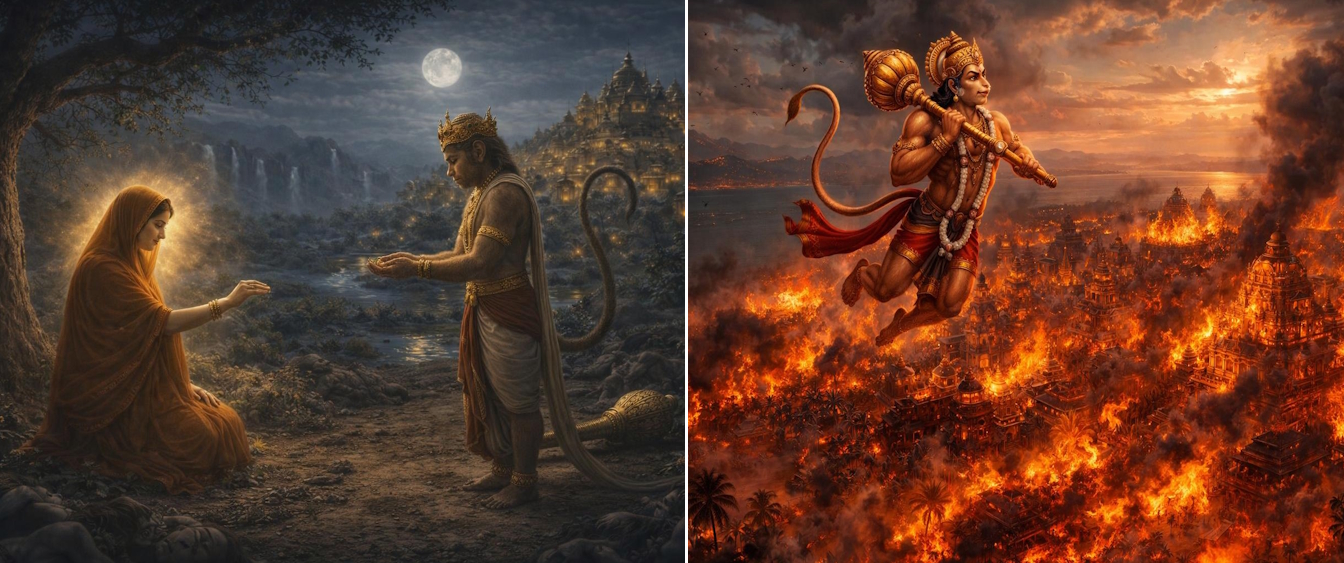
सा राम राम महिषी राघवस्य प्रिया सदा ।
वन सम्चार कुशला नूनम् एष्यति जानकी ॥ ॥५-१४-४५॥
sā rāma rāma mahiṣī rāghavasya priyā sadā |
vana samcāra kuśalā nūnam eṣyati jānakī ॥5-14-45॥
Translation
That Queen of Rama, who is always dear to Raghava and skilled in wandering in the forest, Janaki will surely come (here).
हिंदी अनुवाद
वह राम की पटरानी, जो राघव को सदा प्रिय हैं और वन में विचरण करने में कुशल हैं, जानकी निश्चित रूप से यहाँ आएँगी।
English Commentary
The phrase vana samcāra kuśalā (skilled in forest wandering) is critical here. It acknowledges Sita's resilience. Though born a princess of Mithila and wed into Ayodhya, her exile years in Chitrakoot and Dandakaranya have adapted her to forest life. Hanuman realizes she is not a helpless recluse but someone capable of navigating this grove. The repetition of her relationship to Rama—Rāghavasya priyā sadā (always dear to Raghava)—reinforces the motivation of the mission. It suggests that despite her expertise in forest living, her separation from the one who holds her dear is her true torment, not the wilderness itself.
हिंदी टीका
इस श्लोक में 'वन संचार कुशला' (वन में घूमने में निपुण) विशेषण अत्यंत महत्वपूर्ण है। यद्यपि सीता एक राजकुमारी हैं, परन्तु चित्रकूट और दंडकारण्य में लंबे प्रवास के कारण वे वन-जीवन की अभ्यस्त हो चुकी हैं। हनुमान जी यह तर्क लगा रहे हैं कि वन के कष्ट सीता के लिए नवीन नहीं हैं, इसलिए वे अपनी नित्य क्रियाओं के लिए बाहर निकलेंगी। 'राघवस्य प्रिया सदा' (राघव की नित्य प्रिया) कहकर हनुमान जी उस प्रेम को याद करते हैं जो वियोग में और भी प्रगाढ़ हो गया है, यह दर्शाता है कि राम के प्रेम के सहारे ही सीता जीवित हैं।