Srimad Valmiki Ramayana
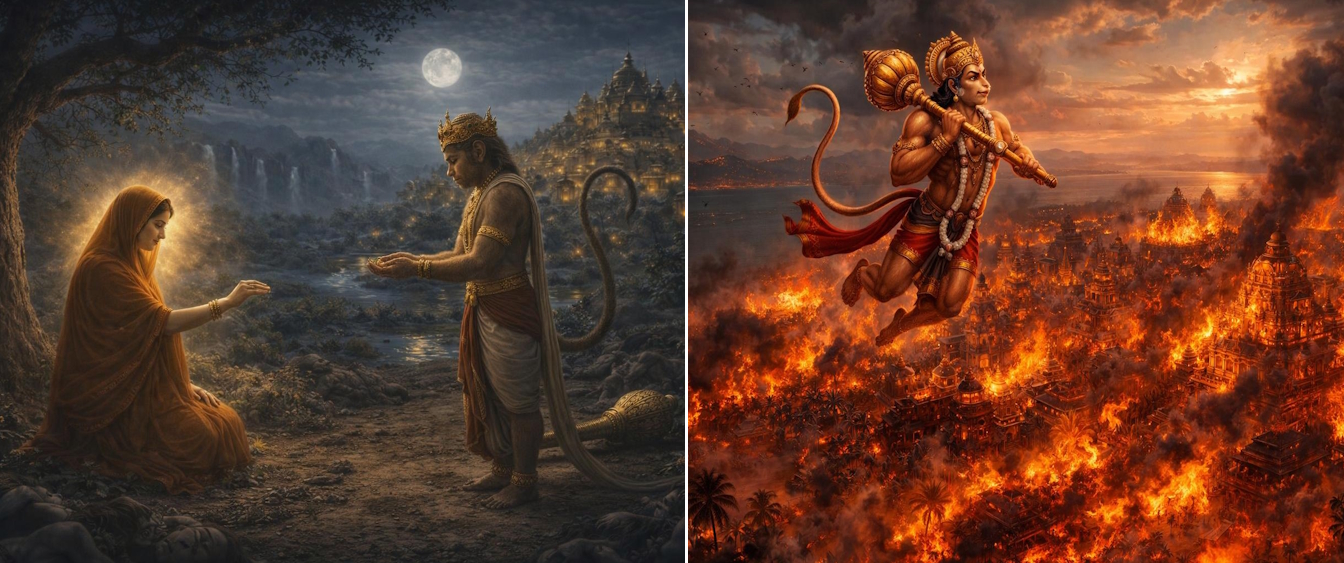
भर्ता नाम परम् नार्या भूषणम् भूषणाद् अपि ।
एषा हि रहिता तेन शोभन अर्हा न शोभते ॥५-१६-२६॥
bhartā nāma param nāryā bhūṣaṇam bhūṣaṇād api |
eṣā hi rahitā tena śobhana arhā na śobhate ॥5-16-26॥
Translation
The husband is indeed the supreme ornament for a woman, greater than any jewelry; bereft of him, she does not shine, though she is worthy of beauty.
हिंदी अनुवाद
स्त्री के लिए पति ही आभूषणों से भी बढ़कर परम आभूषण होता है। यह (सीता) सुंदर दिखने योग्य होने पर भी, उस (पति) से रहित होने के कारण सुशोभित नहीं हो रही हैं।
English Commentary
Hanuman philosophizes on the concept of beauty and partnership. He asserts that for a devoted woman, the husband is the param bhūṣaṇam (supreme ornament), transcending physical jewelry. Sita is intrinsically capable of radiance (śobhana arhā), yet she appears lackluster (na śobhate) because she is separated from Rama. This is not a commentary on her physical features, but on her aura. The joy and completeness provided by the partner are what truly illuminate a person; without that 'light' (Rama), her gold-like complexion is dimmed by grief.
हिंदी टीका
यह श्लोक भारतीय संस्कृति के उस मूल्य को दर्शाता है जहाँ पति-पत्नी का संबंध बाह्य सौंदर्य से ऊपर माना गया है। हनुमान जी कहते हैं कि सीता प्राकृतिक रूप से सुंदर ('शोभन अर्हा') हैं, लेकिन वे चमक नहीं रही हैं ('न शोभते')। इसका कारण यह है कि स्त्री का वास्तविक तेज और आनंद उसके पति (प्रियतम) के सानिध्य में है। पति को 'भूषणाद् अपि भूषणम्' (गहनों का भी गहना) कहा गया है। जिस प्रकार बिना प्रकाश के मणि नहीं चमकती, उसी प्रकार राम के बिना सीता का सौंदर्य मलिन पड़ गया है।