Srimad Valmiki Ramayana
सा भर्त्स्यामाना भीमाभी राक्षसीभिर्वरानना ।
सा बाष्पमपमार्जन्ती शिंशपां तामुपागमत् ।
।
५.२२.१२।। ॥५-२२-१२॥
sā bhartsyamānā bhīmābhī rākṣasībhirvarānanā |
sā bāṣpamapamārjantī śiṃśapāṃ tāmupāgamat ॥5-22-12॥
Translation
Being threatened by those terrible Rakshasis, that beautiful-faced woman (Sita), wiping away her tears, went towards that Shimshapa tree.
हिंदी अनुवाद
भयानक राक्षसियों द्वारा डराई जाती हुई, वह सुमुखी (सीता) अपने आँसू पोंछती हुई उस शिंशपा वृक्ष के पास चली गईं।
English Commentary
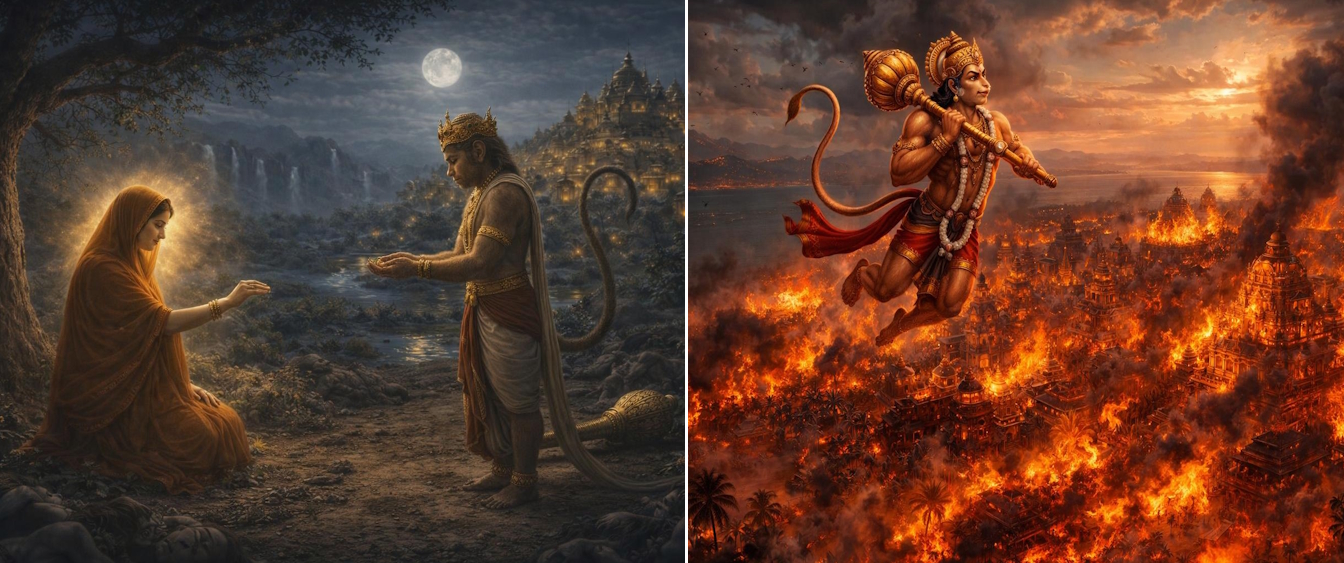
Seeking physical refuge from the encircling threats, Sita retreats to the trunk of the Shimshapa tree. The act of wiping her tears ('bāṣpamapamārjantī') indicates a moment of gathering herself amidst the chaos. The tree represents the only steadfast object in her environment. Ironically and poignantly, by moving closer to the tree for safety, she physically moves closer to Hanuman, her unknown savior. The verse highlights her isolation, forcing her to seek comfort in nature when surrounded by hostile beings.
हिंदी टीका
चारों ओर से घिरी सीता आश्रय की खोज में शिंशपा वृक्ष के तने के पास जाती हैं। 'वरानना' (सुंदर मुख वाली) और 'भीमाभी' (भयानक) का विरोधाभास यहाँ भी है। 'बाष्पमपमार्जन्ती' (आँसू पोंछती हुई) क्रिया यह दर्शाती है कि वे रो रही हैं, लेकिन उन्होंने हार नहीं मानी है; वे खुद को संभाल रही हैं। वृक्ष का सहारा लेना एक स्वाभाविक मानवीय प्रतिक्रिया है—सुरक्षा के लिए किसी ठोस वस्तु की ओट लेना। संयोग से, हनुमान जी उसी वृक्ष पर हैं, तो सीता अनजाने में अपने रक्षक के और निकट आ गई हैं।