Srimad Valmiki Ramayana
उपवासकृशां दीनां कामरूप निशाचर ।
सन्तापयसि मां भूयः सन्तप्तां तन्न शोभनम् ।
।
॥५-३४-१६॥
Upavāsakṛśāṃ dīnāṃ kāmarūpa niśācara । Santāpayasi māṃ bhūyaḥ santaptāṃ tanna śobhanam । । ॥5-34-16॥
Translation
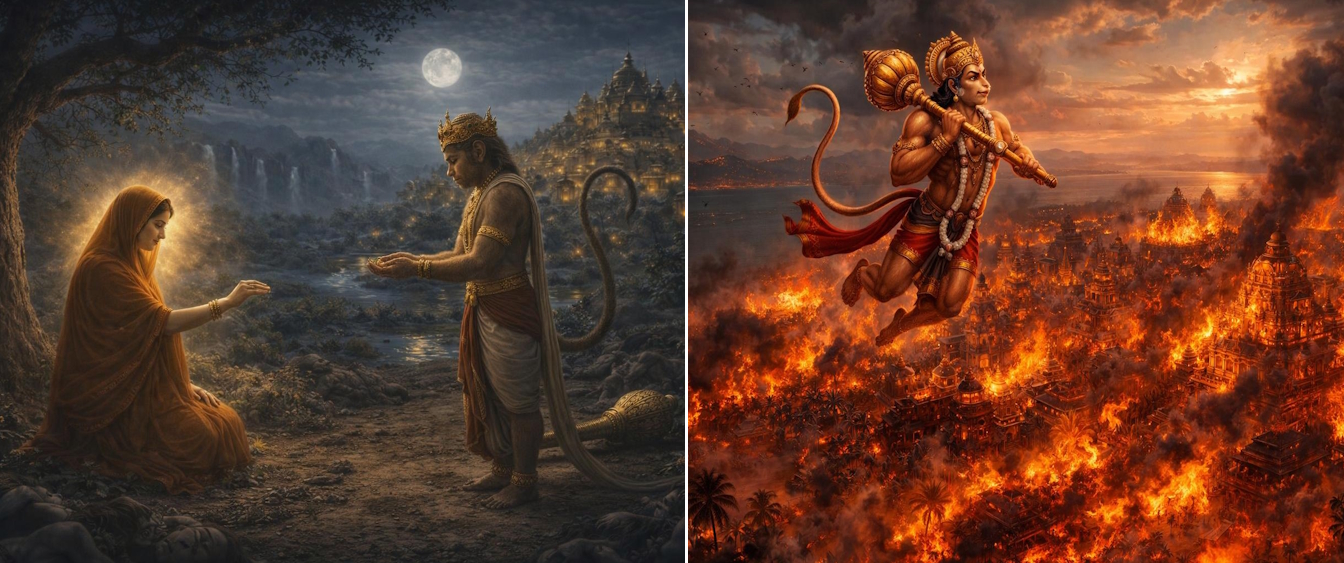
"O Night-roamer who changes form at will! I am emaciated by fasting and miserable. That you torment me again, who am already tormented, is not good."
हिंदी अनुवाद
"हे इच्छानुसार रूप बदलने वाले निशाचर! मैं उपवास से दुर्बल और दीन हूँ। पहले से ही सतायी हुई मुझ अबला को तुम फिर से सता रहे हो, यह तुम्हें शोभा नहीं देता।"
English Commentary
Sita appeals to the humanity of the "demon" she thinks stands before her. She highlights her physical vulnerability—upavasa-krisham (emaciated from fasting)—and her emotional state—dinam (wretched). By calling him Kamarupa Nishachara (shape-shifting night-wanderer), she acknowledges his power but questions the morality of using it against a helpless woman. "Tormenting the already tormented" is an act of cruelty that she condemns, trying to shame him into stopping his "game."
हिंदी टीका
यह सीता जी की करुण पुकार है। वे अपनी दयनीय स्थिति का वर्णन करती हैं—"उपवासकृशां" (भूख से कमजोर)। वे रावण (जो वे हनुमान को समझ रही हैं) से कह रही हैं कि एक मरणासन्न स्त्री को छलने में कौन सी बहादुरी है? 'कामरूप' सम्बोधन का अर्थ है—तुम बहुरूपिये हो। सीता जी यहाँ नैतिक आधार (Moral Ground) पर बात कर रही हैं कि शत्रुता में भी धर्म और मर्यादा होनी चाहिए। निरीह प्राणी को सताना 'राक्षस धर्म' हो सकता है, लेकिन यह 'शोभनीय' नहीं है।