Srimad Valmiki Ramayana
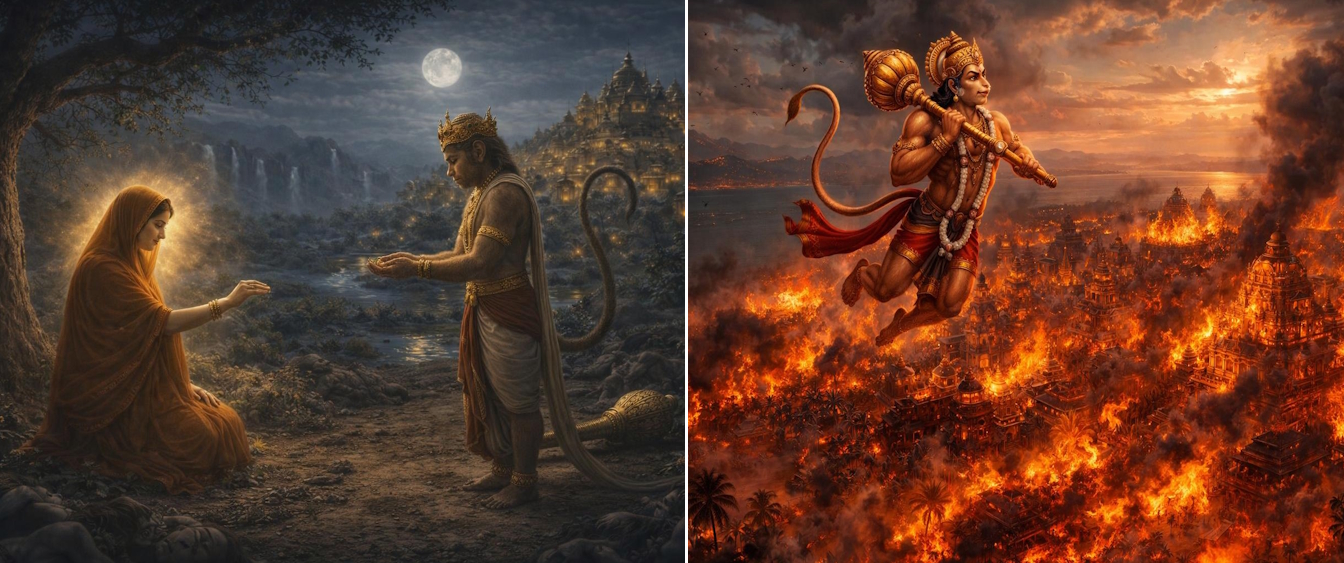
दिष्ट्या हि मम न व्यर्थं देवि सागरलङ्छनम् ।
प्राप्स्याम्यहमिदं दिष्ट्या त्वद्दर्शनकृतं यशः ।
।
५.३५.७८।। ॥५-३५-७८॥
diṣṭyā hi mama na vyarthaṃ devi sāgaralaṅghanam |
prāpsyāmyahamidam diṣṭyā tvaddarśanakṛtaṃ yaśaḥ ॥5-35-78॥
Translation
Fortunately, my crossing of the ocean has not been in vain, O Noble Lady. Fortunately, I shall attain the fame brought about by seeing you.
हिंदी अनुवाद
हे देवि! सौभाग्य से मेरा सागर लांघना व्यर्थ नहीं गया। सौभाग्य से ही मैं आपके दर्शन से प्राप्त होने वाले इस यश को प्राप्त करूँगा।
English Commentary
Hanuman expresses the soldier's relief that his mission is accomplished. The fear of a "vyartham" (wasteful/fruitless) effort is gone. His feat of "sagara-langhanam" (leaping the ocean) has been validated by its result. He acknowledges that finding Sita will bring him "Yash" (fame/glory), but he frames this fame as being "tvad-darshana-kritam" (created by the sight of you), attributing his glory to her presence rather than just his own strength. The repetition of "Dishtya" (luckily/fortunately) emphasizes his deep sense of gratitude that destiny favored his audacious attempt.
हिंदी टीका
किसी भी योद्धा या दूत के लिए सबसे बड़ा भय अपने प्रयास का व्यर्थ जाना होता है। हनुमान जी प्रसन्न हैं कि उनका महान कार्य—'सागरलङ्घनम्'—सफल रहा। यदि सीता न मिलतीं, तो यह पराक्रम निरर्थक होता। वे स्वीकार करते हैं कि सीता के दर्शन से उन्हें 'यश' (कीर्ति) प्राप्त होगा। यह हनुमान जी की विनम्रता है कि वे अपनी कीर्ति का श्रेय अपने पराक्रम को नहीं, बल्कि 'त्वद्दर्शन' (सीता के दर्शन) को देते हैं। 'दिष्ट्या' का बार-बार प्रयोग उनकी कृतज्ञता और राहत को दर्शाता है।