Srimad Valmiki Ramayana
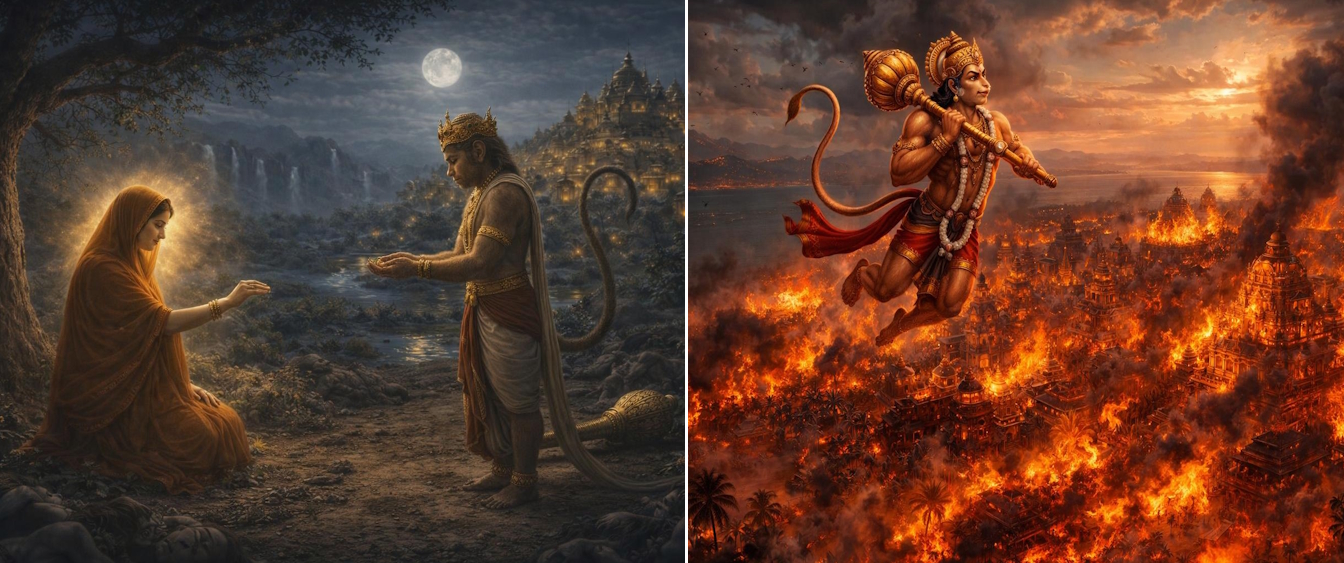
एवं मया महाभागा दृष्टा जनकनन्दिनी ।
उग्रेण तपसा युक्ता त्वद्भक्त्या पुरुषर्षभ ।
।
॥५-६५-१८॥
evaṃ mayā mahābhāgā dṛṣṭā janakanandinī |
ugreṇa tapasā yuktā tvadbhaktyā puruṣarṣabha ॥5-65-18॥
Translation
Thus, O Best among men, I saw the illustrious daughter of Janaka, engaged in fierce penance and endowed with devotion towards you.
हिंदी अनुवाद
हे पुरुषर्षभ (पुरुषों में श्रेष्ठ)! इस प्रकार मैंने महाभाग जनकनन्दिनी को उग्र तपस्या और आप में (अनन्य) भक्ति से युक्त देखा।
English Commentary
Hanuman elevates Sita’s suffering to the level of spiritual austerity. He describes her not merely as a prisoner, but as one performing ugra tapas (fierce penance). Her deprivation—lack of food, sleep, and comfort—is transformed into a spiritual endeavor fueled by her devotion (tvadbhaktyā). Calling her Janakanandinī reminds Rama of her high birth and the spiritual heritage of King Janaka. By addressing Rama as Puruṣarṣabha (Bull among men/Best of men), Hanuman subtly challenges him: the wife is performing her penance through endurance; now the husband must perform his duty through action and valor.
हिंदी टीका
हनुमान जी सीता को 'महाभागा' (महान भाग्य वाली) कहते हैं, जो विरोधाभासी लग सकता है क्योंकि वे कष्ट में हैं। परन्तु उनका 'भाग्य' उनका चरित्र और राम की पत्नी होना है। यहाँ सीता को एक 'तपस्विनी' के रूप में चित्रित किया गया है। वे केवल रो नहीं रही हैं, बल्कि 'उग्रेण तपसा युक्ता' (उग्र तपस्या से युक्त) हैं। उनका वियोग ही उनका तप है। वे भोग-विलास को त्यागकर, भूमि पर शयन कर, राम के ध्यान में लीन हैं। हनुमान जी राम को 'पुरुषर्षभ' (बैल समान शक्तिशाली पुरुष) कहकर संबोधित करते हैं, मानो उन्हें याद दिला रहे हों कि अब इस तपस्विनी के तप का फल देने का समय आ गया है।