Srimad Valmiki Ramayana
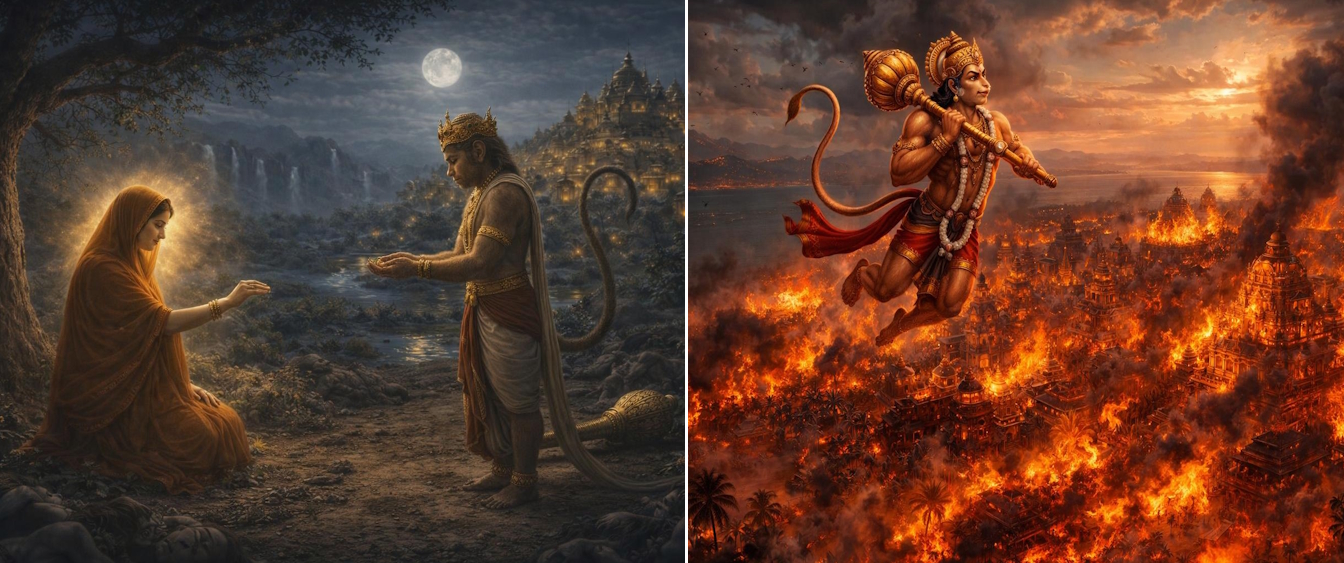
ततः स तां कपिरभिपत्य पूजितां चरन् पुरीं दशमुखबाहुपालिताम् ।
अदृश्य तां जनकसुतां सुपूजितां सुदुःखितां पतिगुणवेगनिर्जिताम् ॥ ॥५-७-१६॥
Tataḥ sa tāṃ kapirabhipatya pūjitāṃ caran purīṃ daśamukhabāhupālitām । Adṛśya tāṃ janakasutāṃ supūjitāṃ suduḥkhitāṃ patiguṇaveganirjitām ॥ ॥5-7-16॥
Translation
While wandering through that cherished city protected by Ravana's arms, the monkey (Hanuman) did not see Janaka's daughter (Sita)—who was worthy of worship, deeply sorrowful, and conquered (captivated) solely by the force of her husband's virtues.
हिंदी अनुवाद
रावण (दशमुख) की भुजाओं द्वारा पालित उस पूजित नगरी में घूमते हुए, जब हनुमान जी ने जनकनन्दिनी सीता को नहीं देखा—जो (सज्जनों द्वारा) पूजनीय थीं, अत्यंत दुखी थीं और अपने पति (राम) के गुणों के वेग से जीती हुई (पूर्णतः समर्पित) थीं—(तो वे दुखी हुए)।
English Commentary
This verse shifts the mood from awe to melancholy. Hanuman turns his focus from architecture to his mission. The description of Sita is poignant: she is 'pati-guna-vega-nirjitam'—conquered not by Ravana's force, but by the momentum of her husband's virtues (her devotion). The contrast is stark: amidst the 'cherished' and protected luxury of Lanka, the one person who matters is 'unseen' and 'deeply sorrowful.' This highlights the hollowness of Ravana's wealth in the face of Sita's suffering.
हिंदी टीका
यह श्लोक सुन्दरकाण्ड के मूड (भाव) को बदलता है। अब तक हनुमान जी वास्तुकला से प्रभावित थे, लेकिन अब उनका ध्यान अपने मुख्य लक्ष्य (सीता) पर आता है। सीता के लिए विशेषण 'पतिगुणवेगनिर्जिताम्' अत्यंत मार्मिक है—वे रावण के बल से नहीं जीती गई थीं, बल्कि राम के गुणों से जीती हुई (प्रेम में बंधी) थीं। वैभव के बीच सीता की अनुपस्थिति हनुमान जी के मन में विषाद उत्पन्न करती है। भौतिक चमक-दमक के बीच एक 'सुदुःखितां' (दुखी) आत्मा की खोज का कंट्रास्ट यहाँ उभारा गया है।