Srimad Valmiki Ramayana
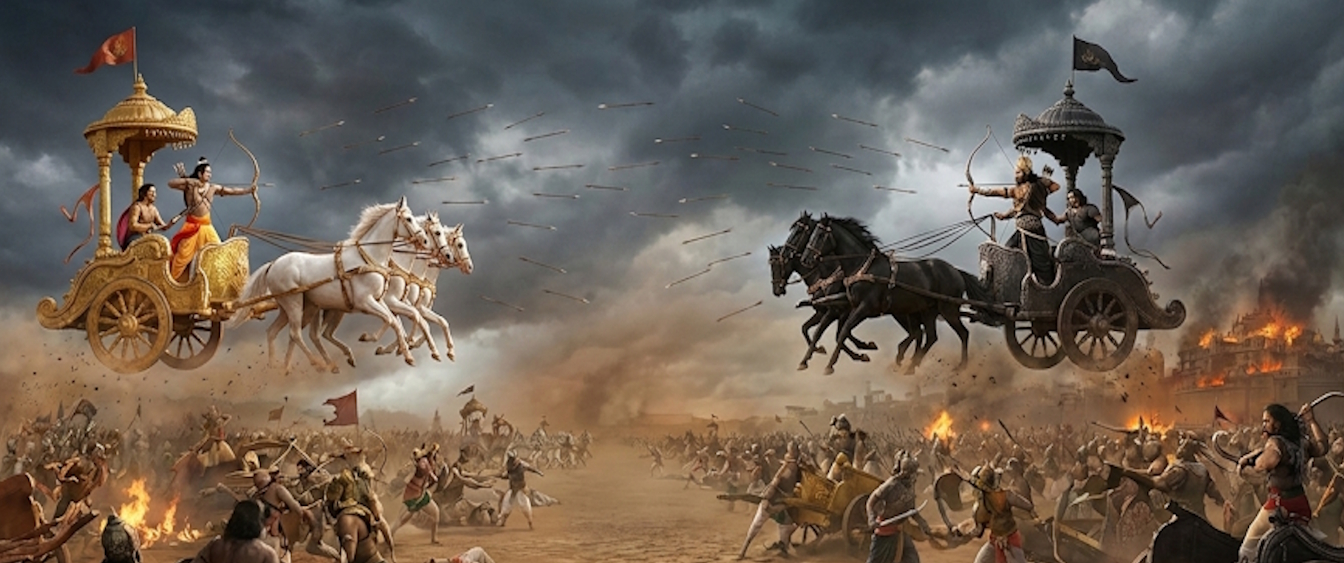
रामवृक्षं रणे हन्मि सीतापुष्पफलप्रदम् ।
प्रशाखा यस्य सुग्रीवो जाम्बवान् कुमुदो नलः ॥६-१००-४॥
rāmavṛkṣaṃ raṇe hanmi sītāpuṣpaphalapradam |
praśākhā yasya sugrīvo jāmbavān kumudo nalaḥ ॥6-100-4॥
Translation
"In the battle, I shall destroy that tree in the form of Shri Rama, for whom Sita is the flower and fruit, and whose major branches are Sugriva, Jambavan, Kumuda, and Nala."
हिंदी अनुवाद
मैं युद्ध में उस श्री राम रूपी वृक्ष को काट डालूँगा, जिसके लिए सीता पुष्प और फल देने वाली है, और जिसकी शाखाएं सुग्रीव, जाम्बवान, कुमुद और नल हैं।
English Commentary
Ravana employs a striking metaphor here, visualizing the enemy force as a tree. Shri Rama is the trunk or the tree itself ('rāmavṛkṣaṃ'). Sita represents the objective or the yield—the flower and fruit. The commanders like Sugriva are the branches. Ravana's logic is strategic: by destroying the core tree (Shri Rama), the branches will fall, and the fruit (Sita) will be lost to them forever.
हिंदी टीका
रावण यहाँ एक सुंदर रूपक (metaphor) का प्रयोग करता है। वह शत्रु सेना को एक 'वृक्ष' के रूप में देखता है जिसका मूल तना श्रीश्री राम हैं। सीता उस वृक्ष की प्राप्ति (फल और पुष्प) हैं। सुग्रीव आदि सेनापति उस वृक्ष की शाखाएं हैं। रावण का आशय है कि वह मूल वृक्ष (श्री राम) को ही नष्ट कर देगा, जिससे शाखाएं और फल सब स्वतः नष्ट हो जाएंगे।