Srimad Valmiki Ramayana
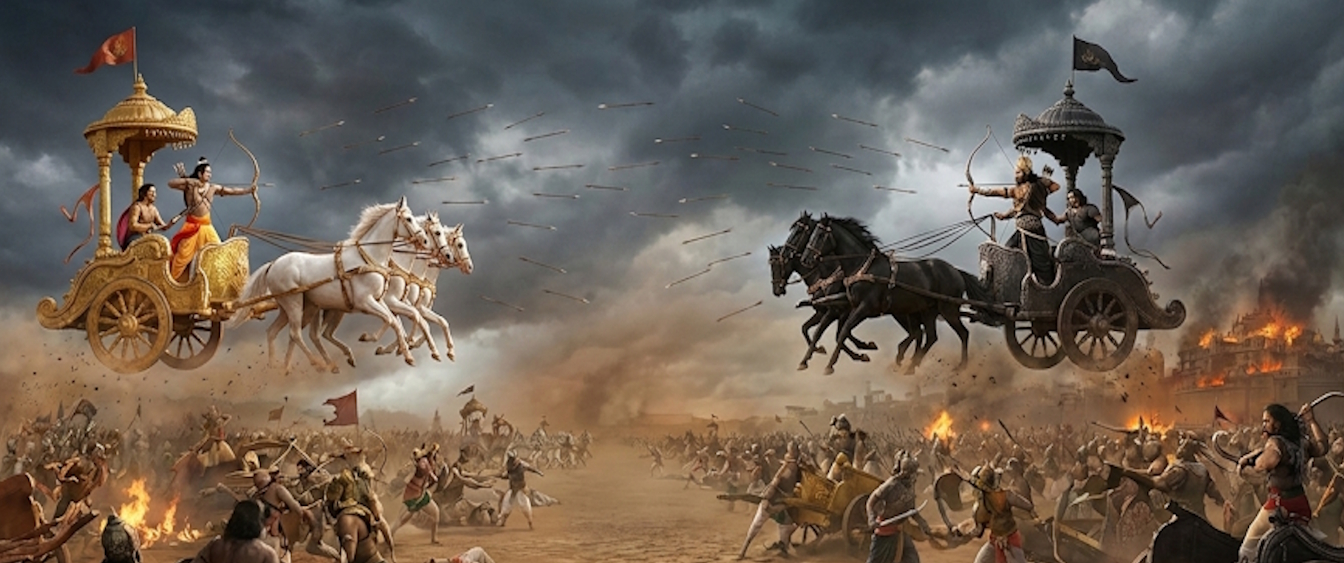
स दिशो दश घोषेण रथस्यातिरथो महान् ।
नादयन् प्रययौ तूर्णं राघवं चाभ्यवर्तत ॥६-१००-६॥
sa diśo daśa ghoṣeṇa rathasyātiratho mahān |
nādayan prayayau tūrṇaṃ rāghavaṃ cābhyavartata ॥6-100-6॥
Translation
That great Atiratha (supreme warrior), making the ten directions resonate with the sound of his chariot, advanced quickly and moved towards Raghava.
हिंदी अनुवाद
वह महान अतिरथी (रावण) अपने रथ की ध्वनि (घोष) से दसों दिशाओं को गुंजायमान करता हुआ शीघ्रता से बढ़ा और राघव (श्री राम) की ओर दौड़ा।
English Commentary
Ravana is classified as an 'Atiratha', a warrior superior even to a Maharatha. The thunderous sound ('ghoṣeṇa') of his chariot filling the ten directions serves as a psychological weapon to intimidate the enemy. His focus is singular and unwavering: he charges directly towards his primary adversary, Lord Shri Rama.
हिंदी टीका
रावण को 'अतिरथी' कहा गया है, जो महारथी से भी ऊपर की श्रेणी है। उसके रथ का घोष इतना भयानक था कि दसों दिशाएं गूंज उठीं। यह ध्वनि युद्धघोष है जो शत्रु के मन में भय उत्पन्न करने के लिए है। उसका लक्ष्य स्पष्ट है—सीधे श्रीश्री राम ('राघव')।