Srimad Valmiki Ramayana
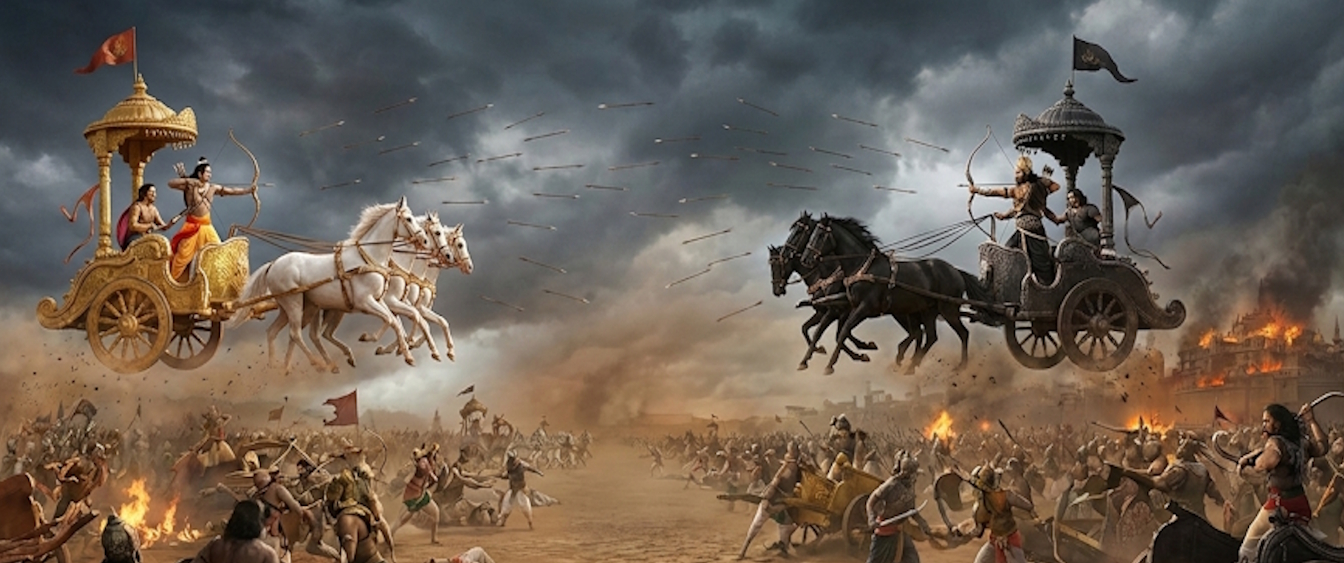
तेजोविषाणः कुलवंशवंशः कोपप्रसादापरगात्रहस्तः ।
इक्ष्वाकुसिंहावगृहीतदेहः सुप्तः क्षितौ रावणगन्धहस्ती ॥६-११२-११॥
tejoviṣāṇaḥ kulavaṃśavaṃśaḥ kopaprasādāparagātrahastaḥ |
ikṣvākuciṃhāvagṛhītadehaḥ suptaḥ kṣitau rāvaṇagandhahastī ॥6-112-11॥
Translation
With splendor as its tusks, lineage and ancestry as its backbone, anger and grace as its other limbs and trunk, this scent-elephant (Gandhahasti) that is Ravana sleeps on the ground, his body seized by the Lion of the Ikshvaku dynasty (Shri Rama).
हिंदी अनुवाद
तेज जिसके दाँत (मूसल) थे, कुल और वंश जिसकी रीढ़ की हड्डी थे, क्रोध और प्रसाद (कृपा) जिसके अन्य अंग और सूंड थे, ऐसा यह रावण रूपी गंधहस्ती (मदमस्त हाथी) इक्ष्वाकु वंश के सिंह (श्री राम) द्वारा दबोच कर पृथ्वी पर सुला दिया गया है।
English Commentary
Ravana is visualized here as a 'Gandhahasti'—a superior elephant exuding a scent that terrifies rivals. His splendor (tejas) served as tusks, and his noble lineage gave him structural strength. His capacity for both extreme anger and benevolence formed his limbs. Yet, this majestic beast has been brought down by the 'Ikshvaku-Simha' (Lion of the Ikshvakus), Shri Rama. This imagery confirms Shri Rama's supremacy as the Lion who conquers the wildest and most powerful forces of nature.
हिंदी टीका
यहाँ रावण की तुलना 'गंधहस्ती' से की गई है (वह हाथी जिसकी गंध मात्र से अन्य हाथी भाग जाते हैं)। उसका तेज ही उसके घातक दाँत थे। उसका उच्च कुल उसकी शक्ति का आधार था। वह क्रोध और कृपा दोनों में समर्थ था। किन्तु जैसे जंगल में एक हाथी, चाहे वह कितना ही विशाल क्यों न हो, सिंह (श्री राम) के सामने परास्त हो जाता है, वैसे ही रावण इक्ष्वाकु कुलभूषण श्री राम के हाथों मारा गया। यह श्री राम के पौरुष की महिमा और रावण के विशाल व्यक्तित्व दोनों को स्थापित करता है।