Srimad Valmiki Ramayana
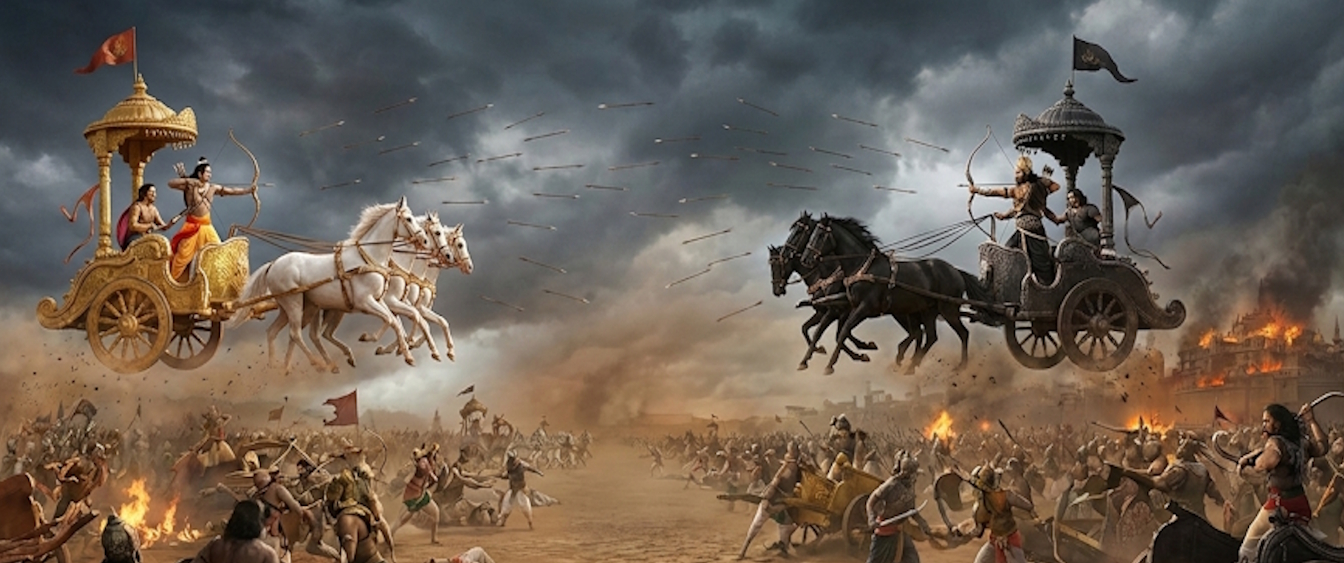
राक्षसा वयमात्मा च त्रयं तुल्यं निपातितम् ।
न कामकारः कामं वा तव राक्षसपुङ्गव ॥६-११३-२३॥
rākṣasā vayamātmā ca trayaṃ tulyaṃ nipātitam |
na kāmakāraḥ kāmaṃ vā tava rākṣasapuṅgava ॥6-113-23॥
Translation
Because of which the Rakshasas, we women, and you yourself—these three have been equally brought down. O best among Rakshasas! This was not a matter of your free will or choice (but a disastrous obsession).
हिंदी अनुवाद
जिसके कारण राक्षस सेना, हम सब और स्वयं तुम— ये तीनों एक साथ नष्ट हो गए हैं। हे राक्षसों में श्रेष्ठ! यह तुम्हारी स्वेच्छा का कार्य (कामकारः) नहीं था, बल्कि (विनाशकारी इच्छा थी)।
English Commentary
The Rakshasa women summarize the total destruction. The 'equal fall of the three' (army, wives, and king) implies that when a ruler falls, his people and family inevitably fall with him. The word 'Kamakarah' suggests that Ravana had become a slave to his lust, and such a person loses the power of independent, wise decision-making.
हिंदी टीका
राक्षसियाँ यहाँ सम्पूर्ण विनाश का सारांश दे रही हैं। 'त्रयं तुल्यम्' (तीनों समान रूप से) पतन का अर्थ है कि राजा के गिरने से प्रजा और परिवार भी साथ ही गिरते हैं। 'कामकारः' शब्द यह बताता है कि रावण अपनी वासना का दास बन चुका था, और जो व्यक्ति वासना का दास हो, वह स्वतंत्र निर्णय लेने की शक्ति खो देता है।