Srimad Valmiki Ramayana
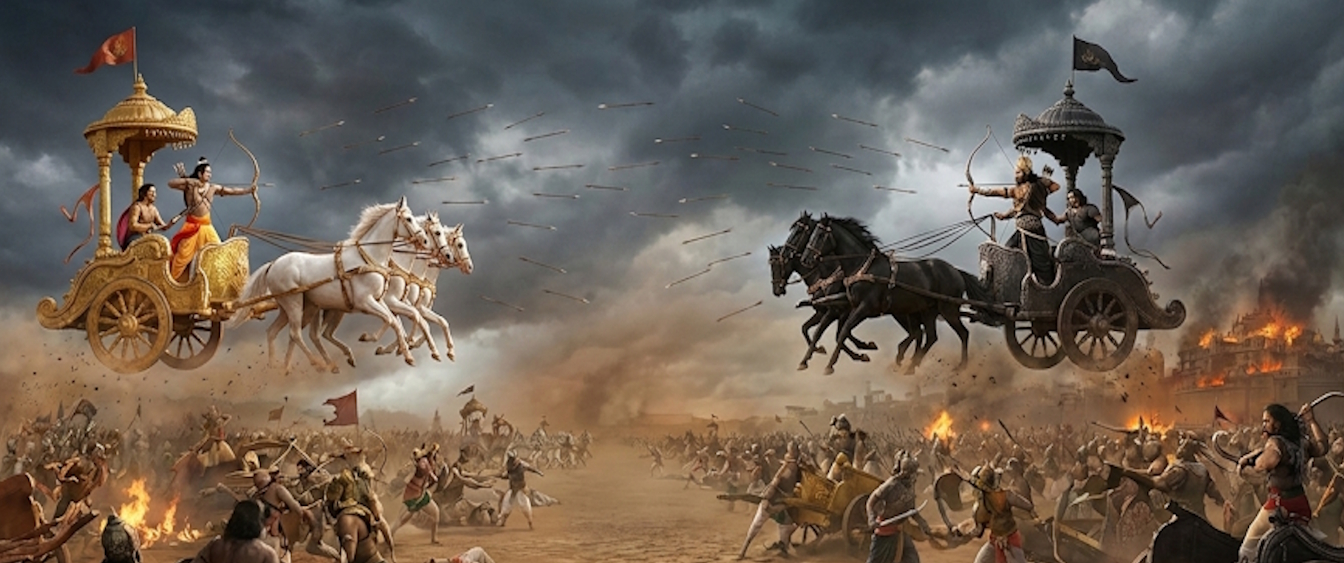
दशग्रीवं हतं दृष्ट्वा रामेणाचिन्त्यकर्मणा ।
पतिं मन्दोदरी तत्र कृपणा पर्यदेवयत् ॥६-११४-२॥
daśagrīvaṃ hataṃ dṛṣṭvā rāmeṇācintyakarmaṇā |
patiṃ mandodarī tatra kṛpaṇā paryadevayat ॥6-114-2॥
Translation
Seeing the ten-headed Ravana slain by Shri Rama, whose deeds are inconceivable, Mandodari, filled with pitiable grief, began to lament there.
हिंदी अनुवाद
अचिन्त्य (सोच से परे) कर्म करने वाले श्री राम द्वारा मारे गए दशग्रीव (रावण) को देखकर, मन्दोदरी वहां अत्यंत दुखी होकर विलाप करने लगीं।
English Commentary
The epithet 'acintyakarmana' (one of inconceivable deeds) describes Shri Rama here. Ravana's defeat was statistically and mythologically impossible given his boons and power. By accomplishing the impossible, Shri Rama proved his divine potency. Mandodari's lamentation is triggered by this stark reality: the invincible ten-headed king has fallen to a power that defies all worldly logic. It marks the moment where the illusion of Ravana's immortality is shattered by the 'unthinkable' action of the Lord.
हिंदी टीका
श्री राम के लिए 'अचिन्त्यकर्मणा' विशेषण का प्रयोग अत्यंत महत्वपूर्ण है। रावण की शक्ति तर्क और गणना से परे थी, उसे हराना सामान्य मनुष्यों या देवताओं के लिए असंभव माना जाता था। श्री राम ने जो किया, वह कल्पना से परे था। मन्दोदरी, जो रावण के बल को जानती थीं, समझ गई थीं कि उसका वध करने वाला कोई साधारण मानव नहीं हो सकता। यह विलाप केवल दुख की अभिव्यक्ति नहीं, अपितु एक असंभव घटना के सत्य होने पर उत्पन्न हुआ विस्मय और आघात भी है।