Srimad Valmiki Ramayana
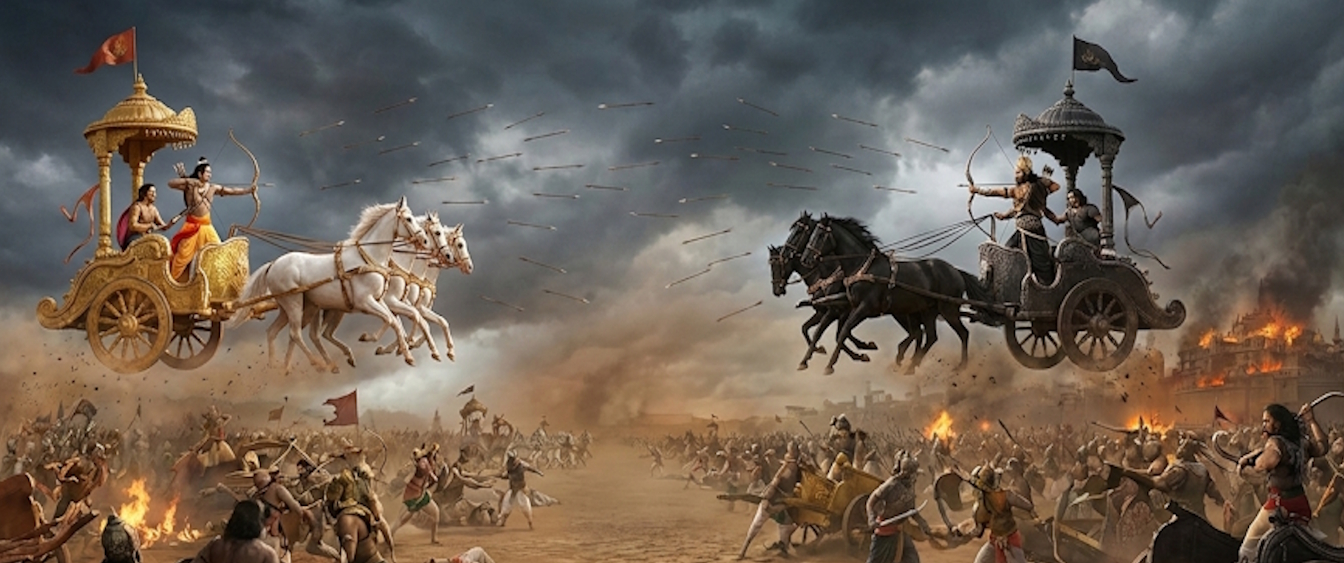
कथं त्रैलोक्यमाक्रम्य श्रिया वीर्येण चान्वितम् ।
अविषह्यं जघान त्वां मानुषो वनगोचरः ॥६-११४-६॥
kathaṃ trailokyamākramya śriyā vīryeṇa cānvitam |
aviṣahyaṃ jaghāna tvāṃ mānuṣo vanagocaraḥ ॥6-114-6॥
Translation
How did a human wandering in the forest kill you, who had invaded the three worlds, were endowed with fortune and valor, and were unbearable to enemies?
हिंदी अनुवाद
तीनों लोकों पर आक्रमण करने वाले, राजलक्ष्मी और पराक्रम से युक्त तथा किसी के लिए भी असह्य आपको, वन में विचरने वाले एक मनुष्य ने कैसे मार डाला?
English Commentary
Mandodari contrasts Ravana's imperial grandeur and invincibility (avishahyam) with Shri Rama's apparent simplicity as a 'forest wanderer' (vanagohcharah). From a materialistic perspective, this outcome is impossible. A homeless exile defeating the conqueror of three worlds defies conventional logic. This compels Mandodari (and the audience) to look beyond the physical—acknowledging that Shri Rama's strength stems from a source superior to material wealth and military might.
हिंदी टीका
यहाँ विरोधाभास (Contrast) स्पष्ट है। एक ओर 'त्रैलोक्यमाक्रम्य' (तीनों लोकों को जीतने वाला) और 'श्रिया वीर्येण चान्वितम्' (ऐश्वर्य और शक्ति से संपन्न) रावण, और दूसरी ओर 'वनगोचरः' (वनवासी) श्री राम। मन्दोदरी सांसारिक दृष्टि से देख रही हैं जहाँ संसाधन और सत्ता ही शक्ति के मानक हैं। वे यह समझने का प्रयास कर रही हैं कि एक तपस्वी वेशधारी राजकुमार ने उस महाशक्ति को कैसे नष्ट कर दिया जिसके पास सब कुछ था। उत्तर स्पष्ट है—धर्म और सत्य का बल संसाधनों से बड़ा होता है।