Srimad Valmiki Ramayana
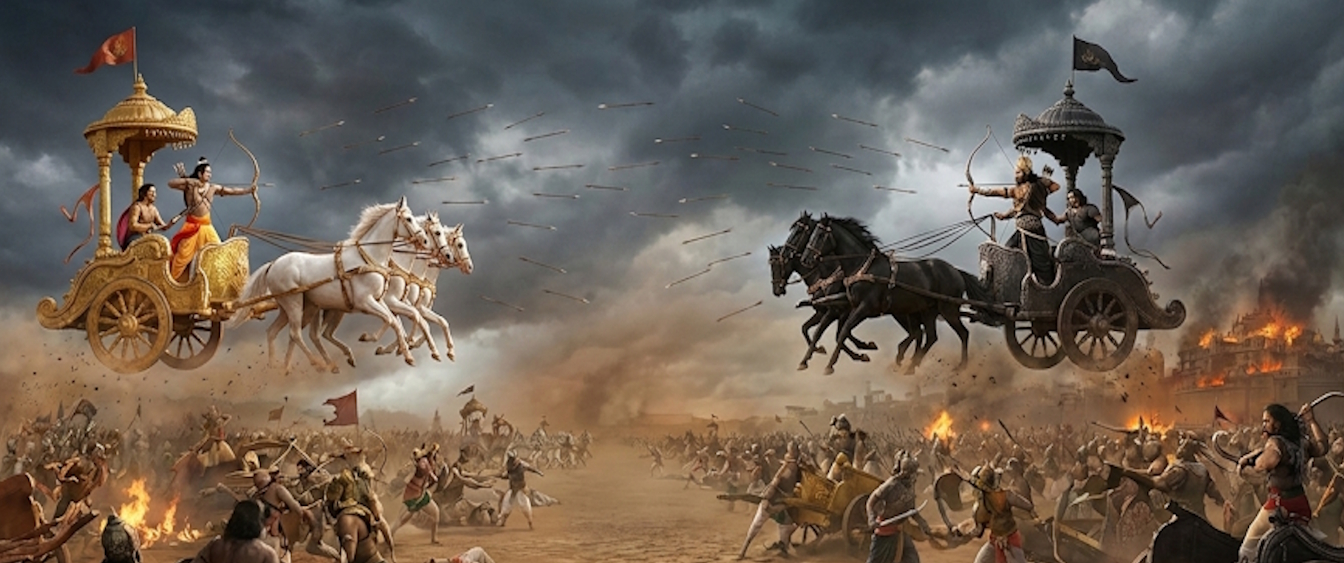
ते रावणवधं दृष्ट्वा देवगन्धर्वदानवाः ।
जग्मुः स्वैस्वैर्विमानैस्ते कथयन्तः शुभाः कथाः ॥६-११५-१॥
te rāvaṇavadhaṃ dṛṣṭvā devagandharvadānavāḥ |
jagmuḥ svasvairvimānaiste kathayantaḥ śubhāḥ kathāḥ ॥6-115-1॥
Translation
Having witnessed the slaying of Ravana, the Gods, Gandharvas, and Danavas departed in their respective celestial cars, discussing the auspicious accounts (of the victory).
हिंदी अनुवाद
रावण के वध को प्रत्यक्ष देखकर वे देवता, गन्धर्व और दानव अपने-अपने विमानों द्वारा (अपने लोकों को) चले गए और वे उस युद्ध की मंगलमयी कथाओं की चर्चा कर रहे थे।
English Commentary
The reaction of cosmic forces to the end of the war is described here. Ravana was a menace not just to the earth but also to the heavens. His death signaled the end of an era of unrighteousness. The phrase 'Shubhah Kathah' (auspicious stories) indicates that discussions of peace and Dharma were resuming in the world. The departure of the celestial beings signifies that Shri Rama’s primary purpose of incarnation—the destruction of Ravana—had been accomplished.
हिंदी टीका
युद्ध के समाप्त होने पर ब्रह्मांडीय शक्तियों की प्रतिक्रिया यहाँ वर्णित है। रावण केवल पृथ्वी के लिए नहीं, बल्कि स्वर्ग के लिए भी एक बड़ा संकट था। उसकी मृत्यु के साथ ही 'अधर्म' के एक युग का अंत हुआ। 'शुभाः कथाः' (शुभ कथाएँ) शब्द यह संकेत देते हैं कि अब संसार में पुनः शांति और धर्म की चर्चा आरम्भ हो गई थी। देवताओं का विदा होना इस बात का प्रतीक है कि श्री राम का मुख्य अवतार-कार्य अब पूर्ण हो चुका था।