Srimad Valmiki Ramayana
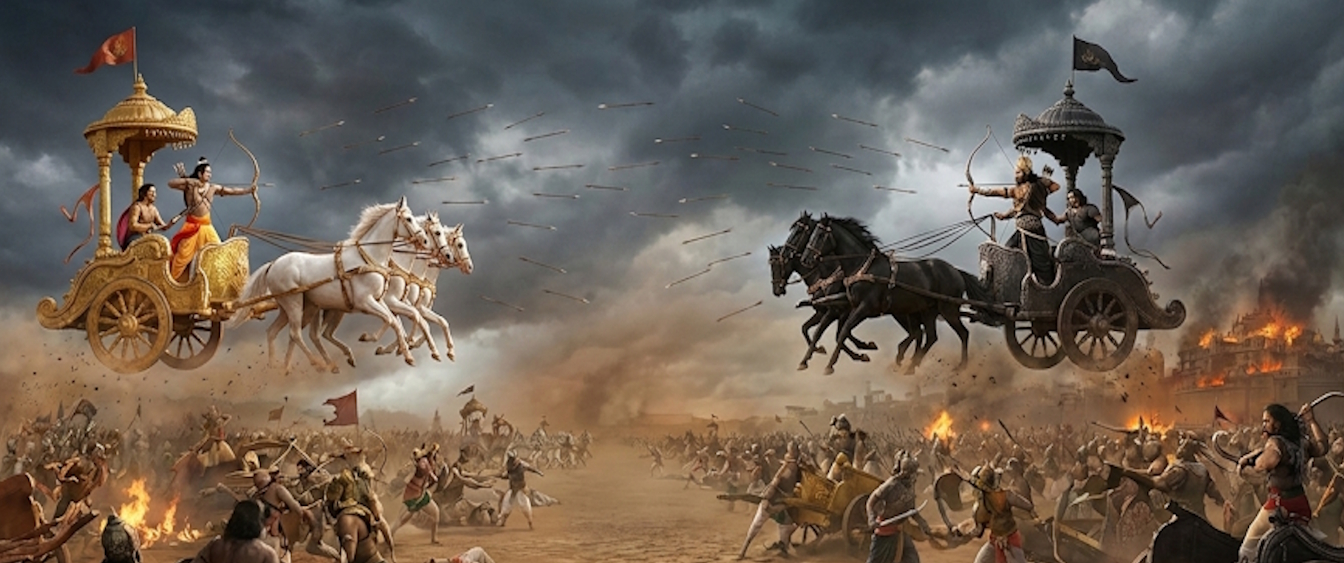
एषासि निर्जिता भद्रे शत्रुं जित्वा मया रणे ।
पौरुषाद्यदनुष्ठेयं तदेतदुपपादितम् ॥६-११८-२॥
eṣāsi nirjitā bhadre śatruṃ jitvā mayā raṇe |
pauruṣādyadanuṣṭheyaṃ tadetadupapāditam ॥6-118-2॥
Translation
O Gentle Lady! I have won you back by conquering the enemy in battle. That which was to be accomplished through human effort (Paurusha) has been achieved by me.
हिंदी अनुवाद
हे भद्रे! मैंने युद्ध में शत्रु को जीतकर तुम्हें पुनः प्राप्त कर लिया है (जीत लिया है)। पौरुष (पुरुषार्थ/पराक्रम) से जो कार्य किया जाना चाहिए था, वह मैंने संपन्न कर दिया है।
English Commentary
Shri Rama addresses Sita as 'Bhadre' (gentle/auspicious one), yet his words focus entirely on martial achievement. He frames the rescue not as a romantic reunion but as the fulfillment of Paurusha (manly effort/valor). By stating 'I have won you back,' he emphasizes the objective success of the campaign. Shri Rama is deliberately depersonalizing the event, shifting the focus from personal attachment to the satisfaction of the warrior code (Kshatriya Dharma), which demands the retrieval of what was stolen to restore honor.
हिंदी टीका
श्री राम का संबोधन 'भद्रे' (कल्याणमयी) सौम्य है, किन्तु उनका कथन रूखा है। वे सीता की मुक्ति को अपने 'पौरुष' (पुरुषार्थ) की सिद्धि के रूप में प्रस्तुत कर रहे हैं। यहाँ उनका स्वर एक प्रेमी का न होकर एक विजेता योद्धा का है। वे यह स्पष्ट करना चाहते हैं कि एक क्षत्रिय के रूप में शत्रु का विनाश और अपने अपमान का बदला लेना उनका प्राथमिक कर्तव्य था, जिसे उन्होंने पूरा कर दिया है। यह सीता को यह आभास दिलाने का प्रयास है कि यह युद्ध केवल उनके प्रेम के लिए नहीं, अपितु कुल के सम्मान के लिए था।