Srimad Valmiki Ramayana
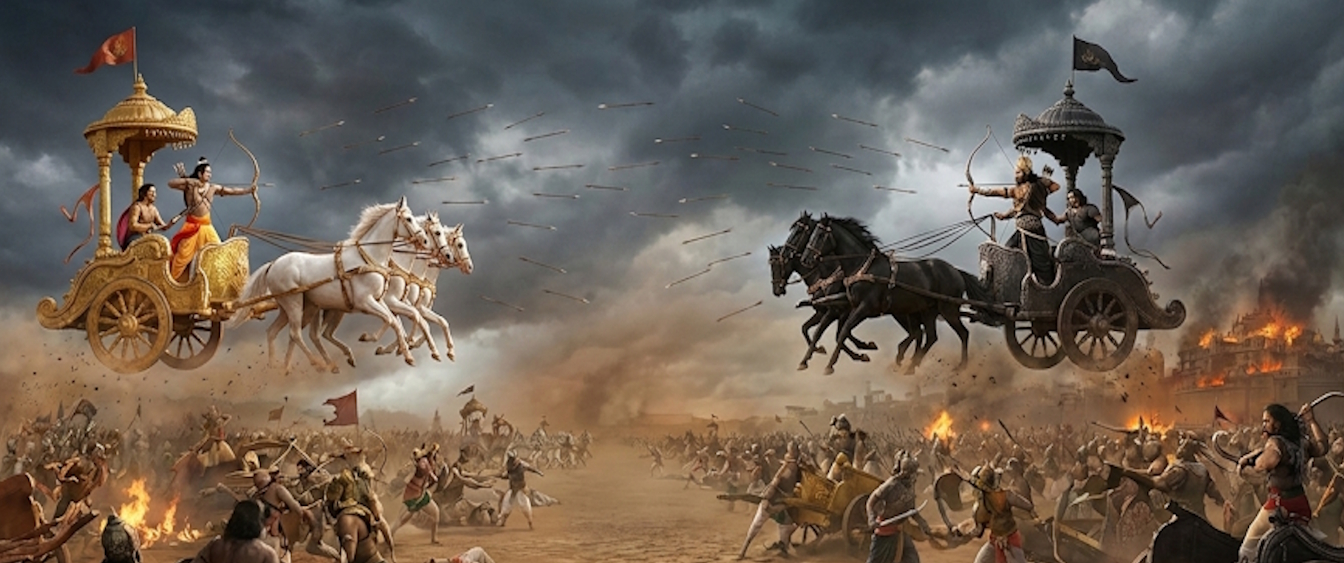
गतोऽस्म्यन्तममर्षस्य धर्षणा संप्रमार्जिता ।
अवमानश्च शत्रुश्च मया युगपदुद्धृतौ ॥६-११८-३॥
gato'smyantamamarṣasya dharṣaṇā saṃpramārjitā |
avamānaśca śatruśca mayā yugapaduddhṛtau ॥6-118-3॥
Translation
I have reached the end of my anger; the insult has been completely wiped away. Both the disgrace and the enemy have been uprooted by me simultaneously.
हिंदी अनुवाद
मैं अपने क्रोध (अमर्ष) के पार जा चुका हूँ (मेरा क्रोध शांत हो गया है); मेरा तिरस्कार (अपमान) पूरी तरह धुल गया है। मैंने अपमान और शत्रु—दोनों को एक साथ जड़ से उखाड़ फेंका है।
English Commentary
Shri Rama declares the cessation of his amarsha (indignation/wrath). He equates the enemy with the insult (avamana); destroying one meant destroying the other. This verse is crucial for understanding Shri Rama's public stance: he fought to restore the honor of his lineage. By stating that the insult is wiped out, he implies that the account is settled. It suggests a detachment from the 'object' of the insult (Sita) and a focus on the abstract concept of honor, which is harsh yet consistent with the strict codes of ancient nobility.
हिंदी टीका
श्री राम यहाँ अपनी विजय के उद्देश्य को परिभाषित कर रहे हैं। रावण का वध करके उन्होंने दो लक्ष्य प्राप्त किए—शत्रु का नाश और 'धर्षणा' (तिरस्कार) का मार्जन। इक्ष्वाकु वंश के राजा के लिए पत्नी का हरण एक व्यक्तिगत हानि से अधिक एक 'अवमान' (कलंक) था। श्री राम घोषणा करते हैं कि अब वह कलंक मिट चुका है। उनके वचनों में एक प्रकार की निष्ठुरता झलकती है, जो यह संकेत देती है कि उनका लक्ष्य 'अपमान' मिटाना था, न कि अनिवार्य रूप से 'पत्नी' को वापस पाना। यह सीता की अग्नि-परीक्षा की भूमिका है।