Srimad Valmiki Ramayana
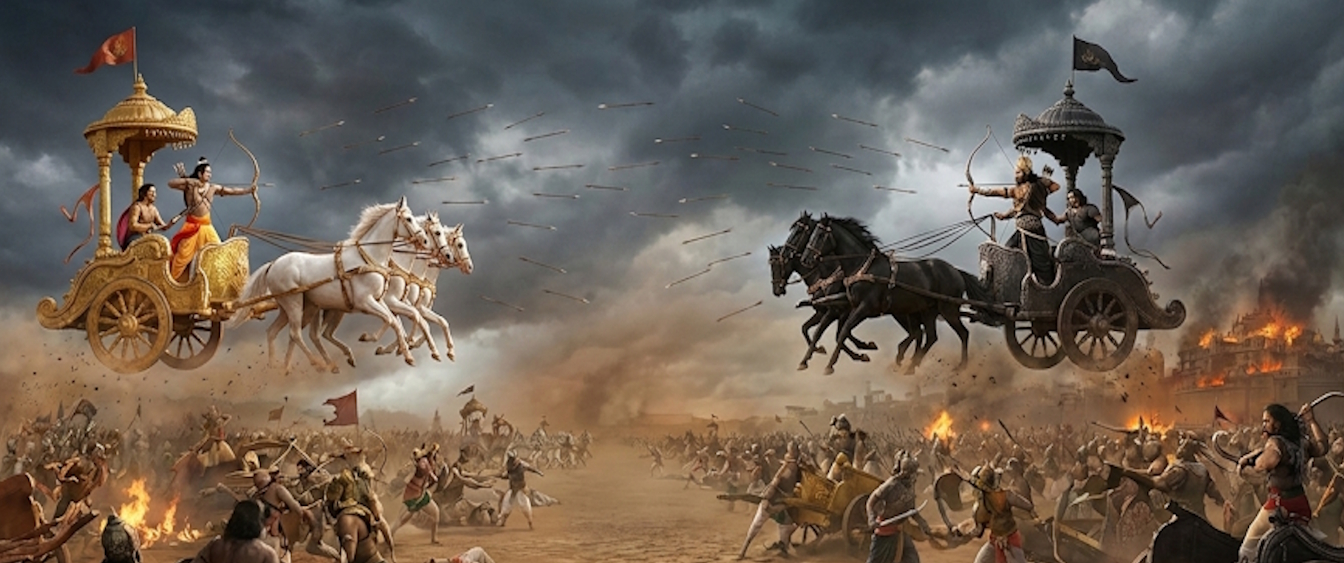
ज्याशब्दतुमुलां घोरमार्तभीतमहास्वनाम् ।
नाराचतलसंनादां तां ममाहितवाहिनीम् ॥६-२४-४६॥
jyāśabdatumulāṃ ghorāmārtabhītamahāsvanām |
nārācatalasaṃnādāṃ tāṃ mamāhitavāhinīm ॥6-24-46॥
Translation
...having the tumultuous twang of the bowstring, accompanied by terrible cries of pain and fear as its great notes, and the impact of iron arrows as its resonance; into that enemy army (I shall play it).'
हिंदी अनुवाद
...जिसकी प्रत्यंचा (डोरी) का शब्द तुमुल (तेज) होगा, जो घोर आर्तनाद (चीखें) और भय के महान स्वरों से युक्त होगी, और नाराच (लोहे के बाण) के आघात जिसका नाद (Sound/Resonance) होंगे; उस (वीणा) को मैं शत्रु सेना में (बजाऊंगा)।'
English Commentary
Ravana details the composition of his 'War-Music'. The twang of the bowstring is the rhythm, while the screams of the dying and terrified enemies form the melody. This blends the Macabre (Bibhatsa) and Furious (Raudra) rasas. Finding entertainment in the brutality of war underscores his demonic nature.
हिंदी टीका
रावण अपने 'युद्ध-संगीत' का विवरण देता है। धनुष की टंकार 'लय' है, और घायल शत्रुओं की चीखें 'स्वर' हैं। यह वीभत्स रस और रौद्र रस का मिश्रण है। रावण युद्ध की क्रूरता (हिंसा) में भी एक प्रकार का आनंद (Entertainment) खोज रहा है, जो उसकी राक्षसी प्रवृत्ति का परिचायक है।