Srimad Valmiki Ramayana
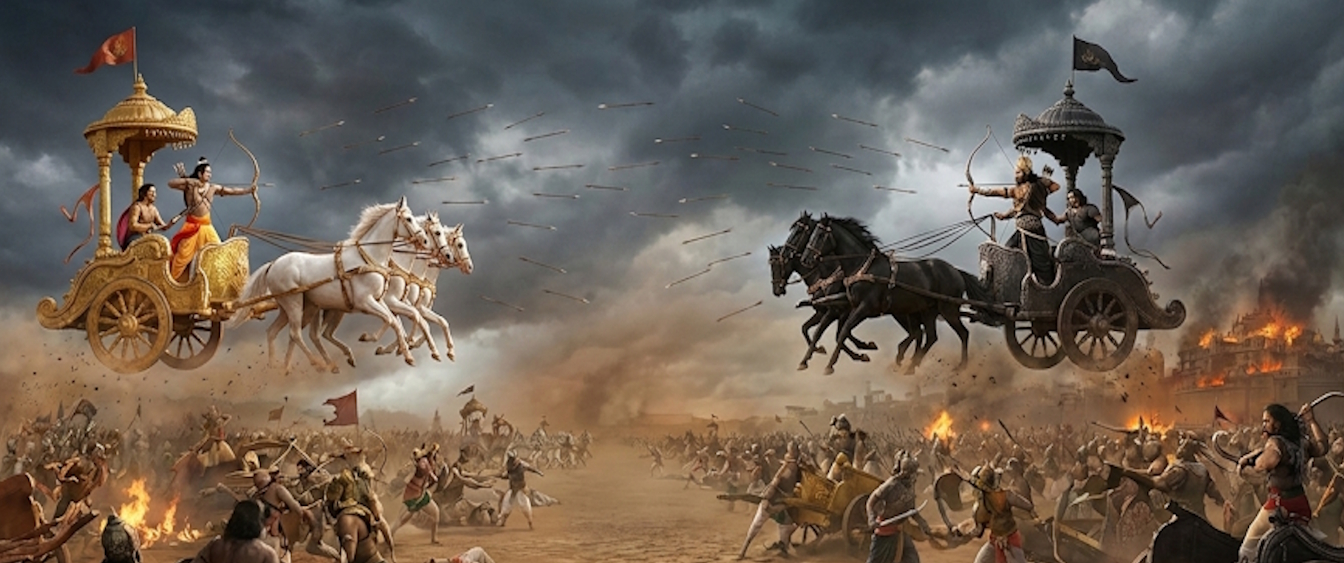
श्रुतो वानरसैन्यानां कम्पयन् धरणीतलम् ।
श्रुत्वा तु तद्वानरसैन्यशब्दं लङ्कागता राक्षसंराजभृत्याः ॥६-३४-२८॥ नष्टौजसो दैन्यपरीतचेष्टाः श्रेयो न पश्यन्ति नृपस्य दोषैः ॥ ॥६-३४-२८॥
śruto vā narasainyānāṃ kampayan dharaṇītalam |
śrutvā tu tadvānarasainyaśabdaṃ laṅkāgatā rākṣasarājabhṛtyāḥ |
naṣṭaujaso dainyaparītaceṣṭāḥ śreyo na paśyanti nṛpasya doṣaiḥ ॥6-34-28॥
Translation
The sound of the monkey army, shaking the surface of the earth, was heard. Hearing that sound of the monkey army, the servants of the Rakshasa King in Lanka lost their luster/energy and their actions became filled with misery. Due to the King's faults, they saw no welfare/good fortune for themselves.
हिंदी अनुवाद
वानर सेना का वह शब्द (गर्जना) पृथ्वी तल को कम्पित करता हुआ सुनाई दिया। उस वानर सेना के शब्द को सुनकर लंका में स्थित राक्षसराज के सेवक (सैनिक) निस्तेज (नष्टौजस) हो गए और दीनता से युक्त चेष्टा करने लगे। राजा (रावण) के दोषों के कारण वे अपना कल्याण नहीं देख पा रहे थे।
English Commentary
The earth-shaking roar of the Vanara army demoralizes the Rakshasas instantly. They become nashtaujaso (drained of vitality/luster). The verse concludes with a profound observation on leadership: nripasya doshaih (due to the king's faults). The soldiers realize they are doomed not because they lack bravery, but because their leader lacks Dharma. They see no shreyo (welfare/salvation), marking the internal collapse of Lanka's morale before the physical battle even begins.
हिंदी टीका
वानर सेना की गर्जना ने धरती हिला दी। इसका मनोवैज्ञानिक प्रभाव राक्षसों पर गहरा पड़ा—वे 'नष्टौजस' (ओज/तेज खो बैठे) और 'दैन्य' (दीनता) से भर गए। वाल्मीकि जी अंत में 'मोरल' (Moral) देते हैं—'नृपस्य दोषैः' (राजा के दोषों से)। प्रजा जानती है कि राजा के पाप के कारण उनका विनाश निश्चित है, इसलिए उन्हें कोई 'श्रेय' (कल्याण) नहीं दिख रहा। एक अधर्मी राजा पूरी प्रजा को ले डूबता है।