Srimad Valmiki Ramayana
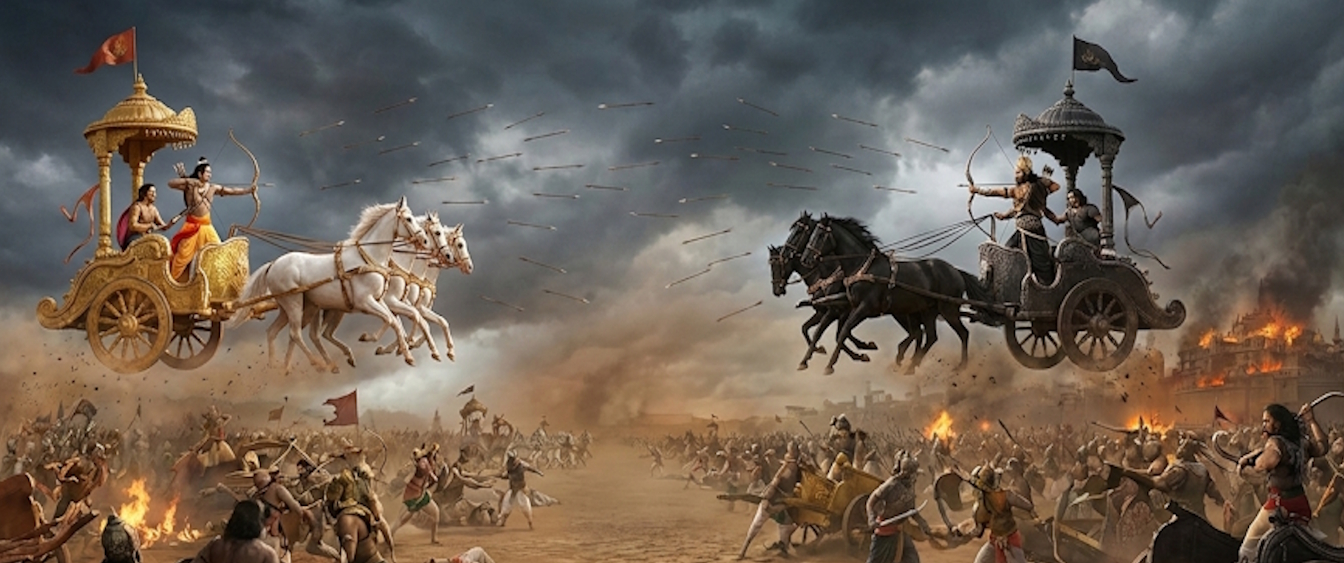
द्विधा भज्येयमप्येवं न नमेयं तु कस्यचित् ।
एष मे सहजो दोषः स्वभावो दुरतिक्रमः ॥६-३६-११॥
dvidhā bhajyeyamapyevaṃ na nameyaṃ tu kasyacit |
eṣa me sahajaḥ doṣaḥ svabhāvo duratikramaḥ ॥6-36-11॥
Translation
'I may break in two, but I will not bow down to anyone. This is my inherent fault/defect, a nature that is difficult to overcome.'
हिंदी अनुवाद
'मैं दो टुकड़ों में टूट तो सकता हूँ, किन्तु किसी के सामने झुक नहीं सकता। यह मेरा सहज (जन्मजात) दोष है, और मेरा यह स्वभाव बदलना कठिन (दुरतिक्रम) है।'
English Commentary
This is a defining moment of self-awareness. Ravana admits his obstinacy is a dosha (flaw), yet calls it sahaja (inborn) and duratikrama (insurmountable). 'I would rather break than bend' is the motto of his ego. It highlights the tragedy of a powerful soul enslaved by its own rigid nature (svabhava), choosing destruction over humility.
हिंदी टीका
यह रावण के चरित्र का सबसे प्रसिद्ध और परिभाषित करने वाला श्लोक है। वह स्वीकार करता है कि यह उसका 'दोष' है, लेकिन साथ ही इसे अपना 'स्वभाव' बताता है जिसे बदला नहीं जा सकता। 'न नमेयं' (मैं नहीं झुकूंगा) उसका जीवन दर्शन है। यह एक दुखद नायक (Tragic Hero) की तरह है जो अपनी कमी को जानता है पर उसे सुधारने में असमर्थ है।