Srimad Valmiki Ramayana
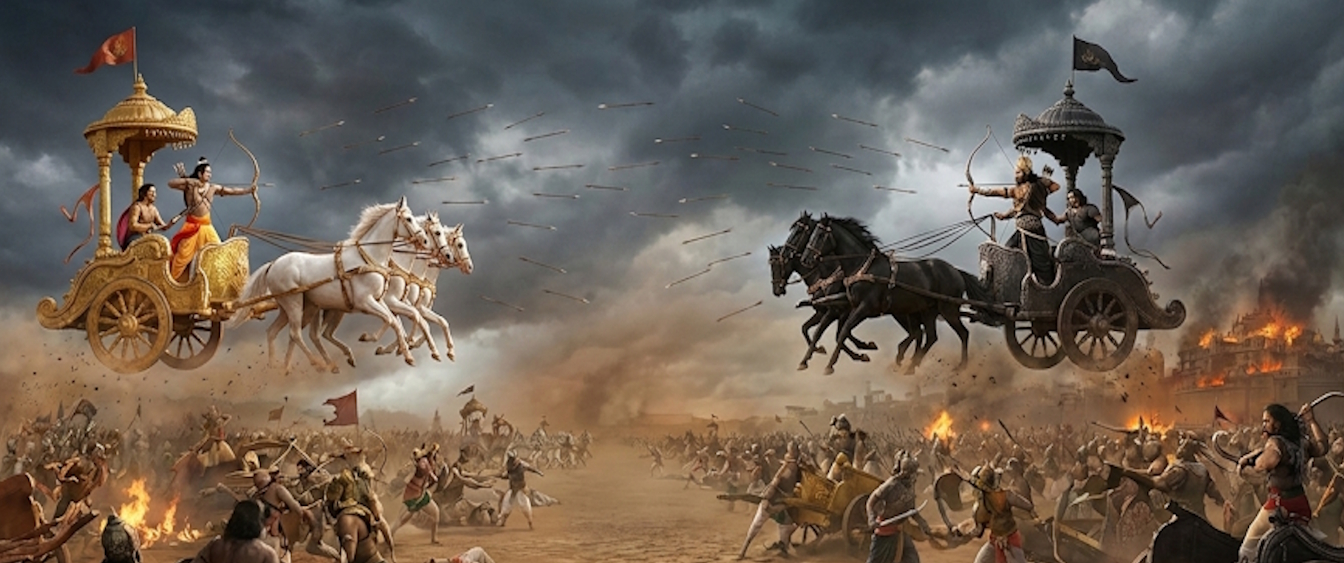
एको हि कुरुते पापं कालपाशवशं गतः ।
नीचेनात्मापचारेण कुलं तेन विनश्यति ॥६-३८-७॥
eko hi kurute pāpaṃ kālapāśavaśaṃ gataḥ |
nīcenātmāpacāreṇa kulaṃ tena vinaśyati ॥6-38-7॥
Translation
'Caught in the noose of Time (Death), indeed only one person commits the sin; yet, due to that base misconduct, the entire lineage perishes.'
हिंदी अनुवाद
'कालपाश (मृत्यु/भाग्य) के वश में होकर पाप तो एक ही व्यक्ति करता है, किन्तु उसके उस नीच आचरण से (पूरा) कुल नष्ट हो जाता है।'
English Commentary
This is a universal maxim (Niti). Shri Rama considers Ravana to be 'kālapāśavaśaṃ gataḥ' (caught in the noose of Time/Destiny). When destruction looms, an individual's intellect is corrupted, leading to sin, the consequences of which destroy the entire family and nation. Both Duryodhana and Ravana serve as prime examples of this truth.
हिंदी टीका
यह एक सार्वभौमिक नीति वाक्य है। श्री राम रावण को 'कालपाशवशं गतः' (काल के फंदे में फंसा हुआ) मानते हैं। जब विनाश का समय आता है, तो व्यक्ति की बुद्धि भ्रष्ट हो जाती है, वह पाप करता है, और उसका खामियाजा उसके पूरे परिवार और राष्ट्र को भुगतना पड़ता है। दुर्योधन और रावण दोनों इसके उदाहरण हैं।