Srimad Valmiki Ramayana
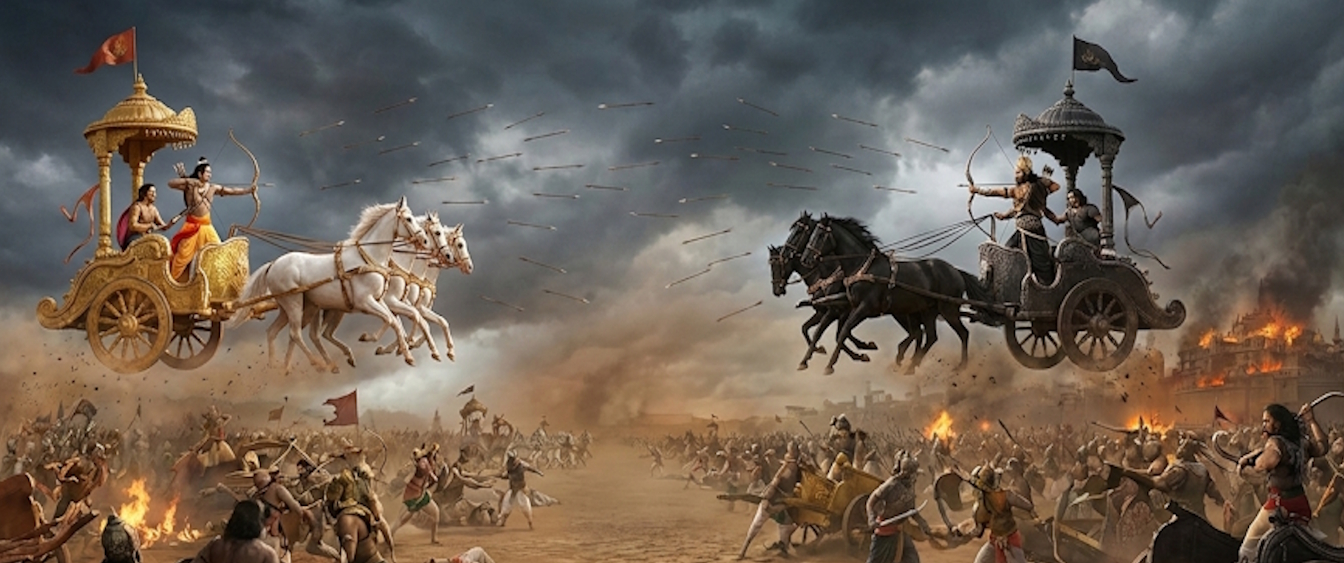
निःससर्प महाघोषं भीमघोष इवार्णवः ।
तस्य दाशरथेः पार्श्वे शूरास्ते कपिकुञ्जराः ॥६-४-४१॥
niḥsasarpa mahāghoṣaṃ bhīmaghoṣa ivārṇavaḥ । tasya dāśaratheḥ pārśve śūrāste kapikuñjarāḥ ॥6-4-41॥
Translation
Making a loud noise like the terrible roar of the ocean, that army moved forward. Those brave bulls among monkeys marched by the side of Dasharatha's son (Shri Rama).
हिंदी अनुवाद
वह विशाल वानर सेना सागर की भयानक गर्जना के समान भारी शोर करती हुई आगे बढ़ी। दशरथनन्दन श्री राम के समीप वे शूरवीर वानर-कुंजर (श्रेष्ठ वानर) चल रहे थे।
English Commentary
Auditory imagery of the march. The army's movement generates a 'mahaghosha' (great noise) comparable to the ocean ('arnava'). This metaphor links the army to its destination. The presence of elite guards by Shri Rama's side highlights standard royal protocol.
हिंदी टीका
सेना के प्रस्थान का श्रवण-चित्र (Auditory Imagery)। सेना का शोर समुद्र जैसा है, जो उनके गंतव्य (समुद्र) का पूर्वाभास देता है। श्री राम के 'पार्श्वे' (बगल में) अंगरक्षकों का होना उनकी सुरक्षा को सुनिश्चित करता है।