Srimad Valmiki Ramayana
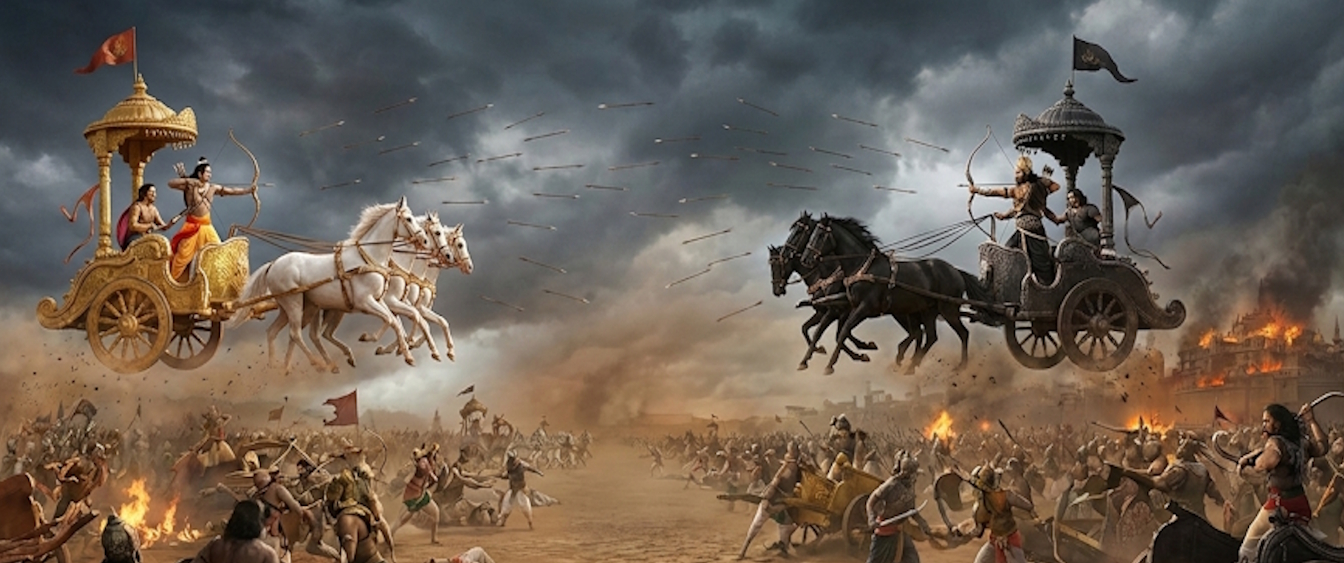
आलिङ्ग्य चावल्य च बाहुयोक्त्रैः संयोजयामासतुराहवे तौ ।
संरम्भशिक्षाबलसंप्रयुक्तौ सञ्चरतुः संप्रति युद्धमार्गे ॥६-४०-१८॥
āliṅgya cāvalya ca bāhuyoktraiḥ saṃyojayāmāsaturāhave tau |
saṃrambhaśikṣābalasaṃprayuktau sañcaratuḥ saṃprati yuddhamārge ॥6-40-18॥
Translation
They entwined each other with the nooses of their arms and tried to bend each other in the fight. Endowed with fury, training, and strength, they now moved through various maneuvers of combat.
हिंदी अनुवाद
उन्होंने एक-दूसरे को अपनी भुजाओं के फंदे (पाश) में जकड़ लिया और युद्ध में एक-दूसरे को मोड़ने लगे। क्रोध, अभ्यास (शिक्षा) और बल से युक्त होकर वे अब युद्ध की विविध कलाओं (मार्गों) का प्रदर्शन करने लगे।
English Commentary
Likening their arms to 'Yoktra' (binding ropes/nooses) illustrates the unbreakable grip they held on each other. The word 'Shiksha' (training/education) is vital here, indicating that the duel was a display of formal martial arts and not just a brawl. They were executing sophisticated maneuvers ('Yuddhamarga'), proving they were both masters of their craft.
हिंदी टीका
भुजाओं की तुलना 'योक्त्र' (जुए या फंदे) से करना उनकी पकड़ की मजबूती को दर्शाता है। यहाँ 'शिक्षा' शब्द महत्वपूर्ण है, जो यह बताता है कि यह केवल जंगली लड़ाई नहीं थी, बल्कि दोनों ही युद्ध कला में विधिवत शिक्षित थे। वे युद्ध के 'मार्गों' (पद्धतियों) का प्रयोग कर रहे थे, जो उनके उच्च कोटि के योद्धा होने का प्रमाण है।