Srimad Valmiki Ramayana
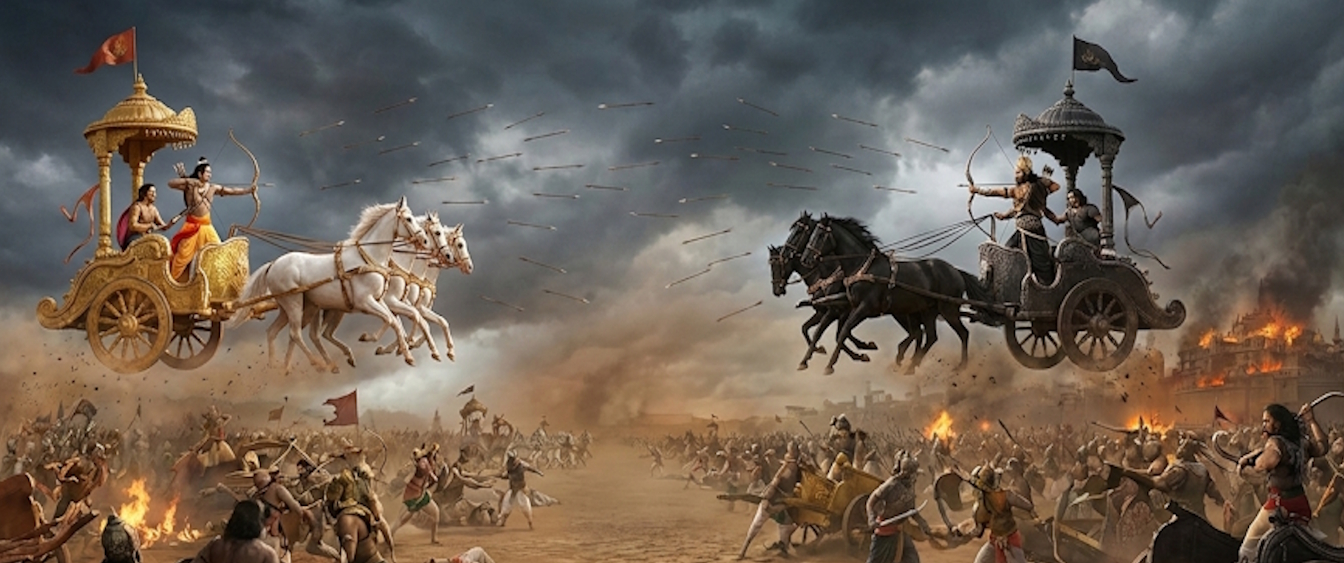
आवृत्य बलवांस्तस्थौ सुग्रीवश्च हरीश्वरः ।
गोलाङ्गूलो महाकायो गवाक्षो भीमदर्शनः ॥६-४२-२८॥
āvṛtya balavāṃstasthau sugrīvaśca harīśvaraḥ |
golāṅgūlo mahākāyo gavākṣo bhīmadarśanaḥ ॥6-42-28॥
Translation
Blocking (positions), the mighty King of Monkeys Sugriva, and the huge-bodied, terrible-looking Golangula (cow-tailed monkey/Langur) Gavaksha stood there.
हिंदी अनुवाद
वानरराज बलवान सुग्रीव, और महाकाय तथा भयानक दिखने वाला गोलांगूल (लंगूर) गवाक्ष भी (श्री राम के पास/या अन्य मोर्चे पर) घेरकर खड़े हो गए।
English Commentary
Sugriva, the supreme commander of the Vanaras, positions himself strategically (likely near Shri Rama to coordinate). Gavaksha, identified as a 'Golangula' (a species like Langurs/Baboons with cow-like tails), adds to the diversity and ferocity of the force. His description as 'bhimadarshanah' (terrible to behold) serves to intimidate the enemy.
हिंदी टीका
राजा सुग्रीव और गवाक्ष भी मोर्चे पर डट गए। सुग्रीव श्री राम के पास या एक स्वतंत्र 'मोबाइल कमांड' के रूप में रहे होंगे। गवाक्ष को 'गोलांगूल' (गाय जैसी पूंछ वाला/लंगूर) कहा गया है, जो वानरों की विभिन्न प्रजातियों की उपस्थिति को दर्शाता है। 'भीमदर्शनः' (डरावने दिखने वाला) उनके रौद्र रूप का परिचायक है।