Srimad Valmiki Ramayana
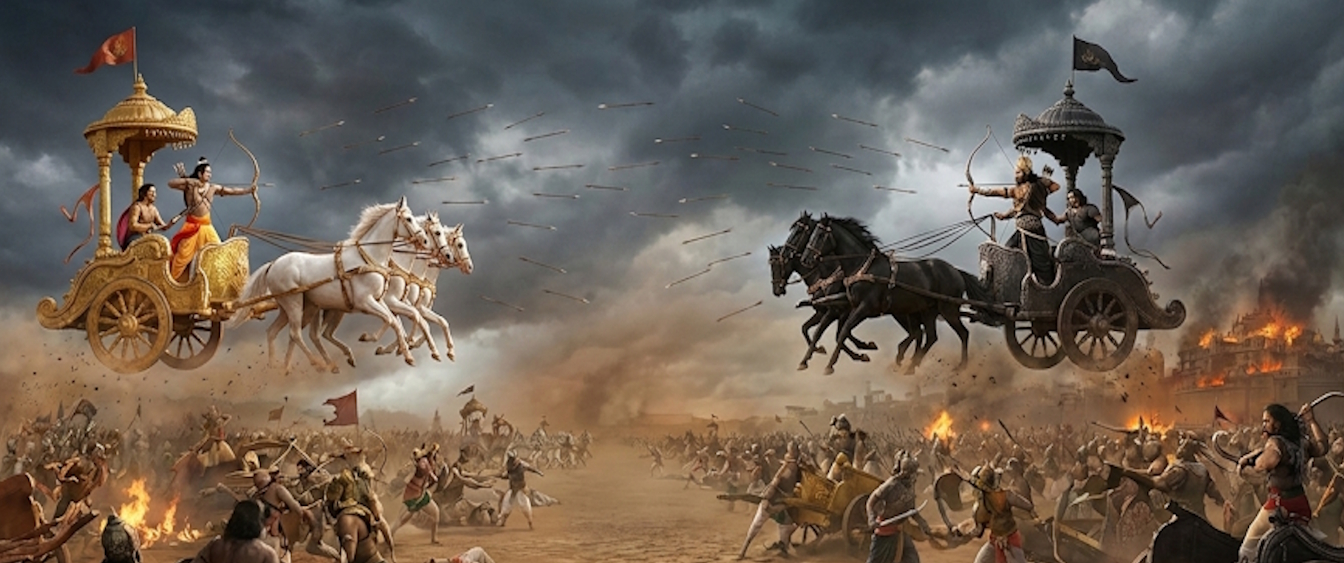
बभूवायोधनं घोरं गोमायुगणसंकुलम् ।
कबन्धानि समुत्पेतुर्दिक्षु वानररक्षसाम् ॥६-४३-४७॥ विमर्दे तुमुले तस्मिन् देवासुररणोपमे ॥ ॥६-४३-४७॥
babhūvāyodhanaṃ ghoraṃ gomāyugaṇasaṃkulam |
kabandhāni samutpeturdikṣu vānararakṣasām |
|
6-43-47||
vimarde tumule tasmin devāsuraraṇopame ॥6-43-47॥
Translation
That battlefield became terrible, crowded with packs of jackals; and headless trunks of Vanaras and Rakshasas began to rise in all directions in that tumultuous and fierce conflict, which was comparable to the war between Gods and Demons.
हिंदी अनुवाद
वह युद्ध भूमि गीदड़ों के समूहों से भर गई और अत्यंत भयानक हो गई; वहाँ वानरों और राक्षसों के धड़ दिशाओं में नाचने लगे। उस तुमुल और भयंकर संघर्ष में, जो देवताओं और असुरों के संग्श्री राम के समान था—
English Commentary
This verse brings the 'Vibhatsa' (ghastly) rasa to its climax. The rising of 'Kabandhas' (headless trunks) is a traditional epic motif signifying extreme carnage where the spirit of battle persists even after decapitation. By comparing this clash to the 'Devasura Ran' (the primordial war between Gods and Asuras), Sage Valmiki elevates the narrative from a regional conflict to a cosmic event. The presence of scavenging jackals underscores the grim finality of the battlefield. It reveals that the war led by Shri Rama is the ultimate confrontation between the forces of Light and Darkness.
हिंदी टीका
इस श्लोक में युद्ध की विभीषिका अपनी पराकाष्ठा पर है। 'कबन्ध' अर्थात बिना सिर के धड़ों का उठना अत्यंत भीषण रक्तपात का संकेत माना जाता है। यहाँ महर्षि वाल्मीकि जी इस महासंग्श्री राम की तुलना 'देवासुर रण' से कर रहे हैं, जो इसके ब्रह्मांडीय महत्व को दर्शाता है। गीदड़ों का आगमन मृत्यु और विनाश के वातावरण को और अधिक भयावह बना देता है। यह वर्णन स्पष्ट करता है कि श्री राम और रावण के बीच का यह युद्ध केवल दो राजाओं का युद्ध नहीं, बल्कि सात्विक और तामसिक शक्तियों का अंतिम और निर्णायक महामिलन है।