Srimad Valmiki Ramayana
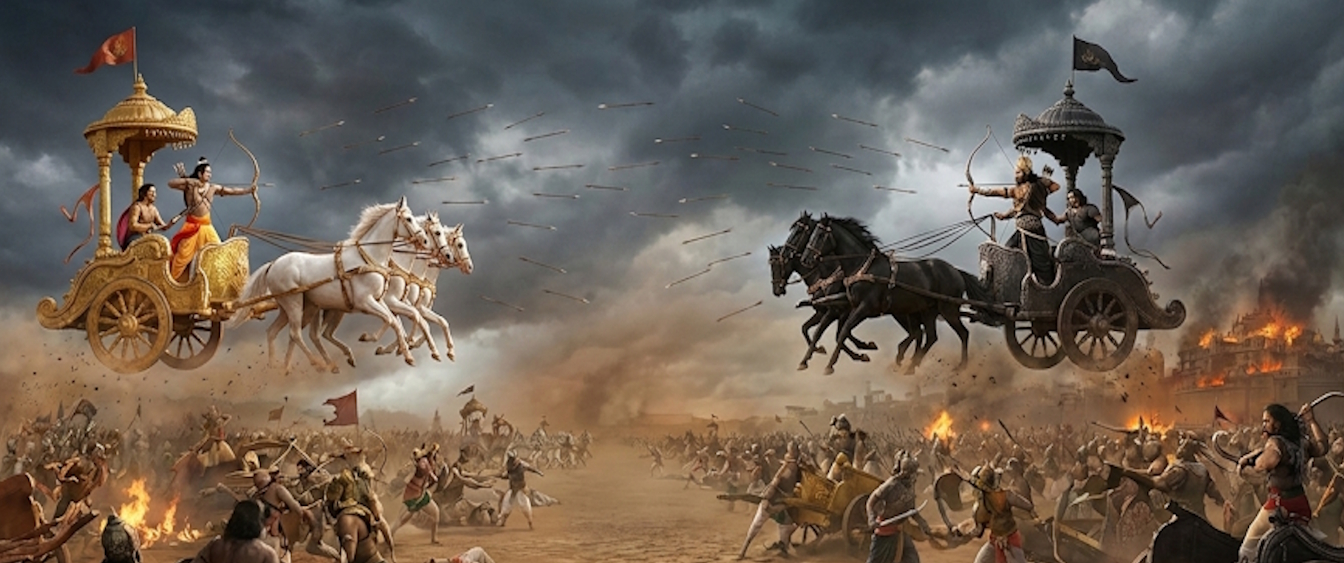
न हि कोपपरीतानि हर्षपर्युत्सुकानि च ।
भवन्ति युधि योधानां मुखानि निहते पतौ ॥६-४८-२४॥
na hi kopaparītāni harṣaparyutsukāni ca |
bhavanti yudhi yodhānāṃ mukhāni nihate patau ॥6-48-24॥
Translation
'For when the master is killed in battle, the faces of the warriors do not remain filled with anger and eager with joy (as they appear now).'
हिंदी अनुवाद
'युद्ध में स्वामी (पति) के मारे जाने पर योद्धाओं के मुख क्रोध से भरे हुए और हर्ष से उत्साहित नहीं होते (जैसे अभी दिख रहे हैं)।'
English Commentary
Trijata's first argument is behavioral analysis. An army whose leader falls loses morale instantly. However, the Vanara warriors still show 'kopa' (anger/aggression) and 'harsha' (zeal/joy of battle). This fighting spirit indicates that their commander is not dead, merely temporarily incapacitated.
हिंदी टीका
त्रिजटा का पहला तर्क: श्री राम की सेना के हाव-भाव। यदि श्री राम मर गए होते, तो सेना भाग रही होती या शोक में होती। लेकिन सैनिक अभी भी 'कोपपरीतानि' (क्रोधित) और 'हर्षपर्युत्सुकानि' (उत्साहित) हैं। इसका अर्थ है कि नेतृत्व अभी भी जीवित है और युद्ध जारी है।