Srimad Valmiki Ramayana
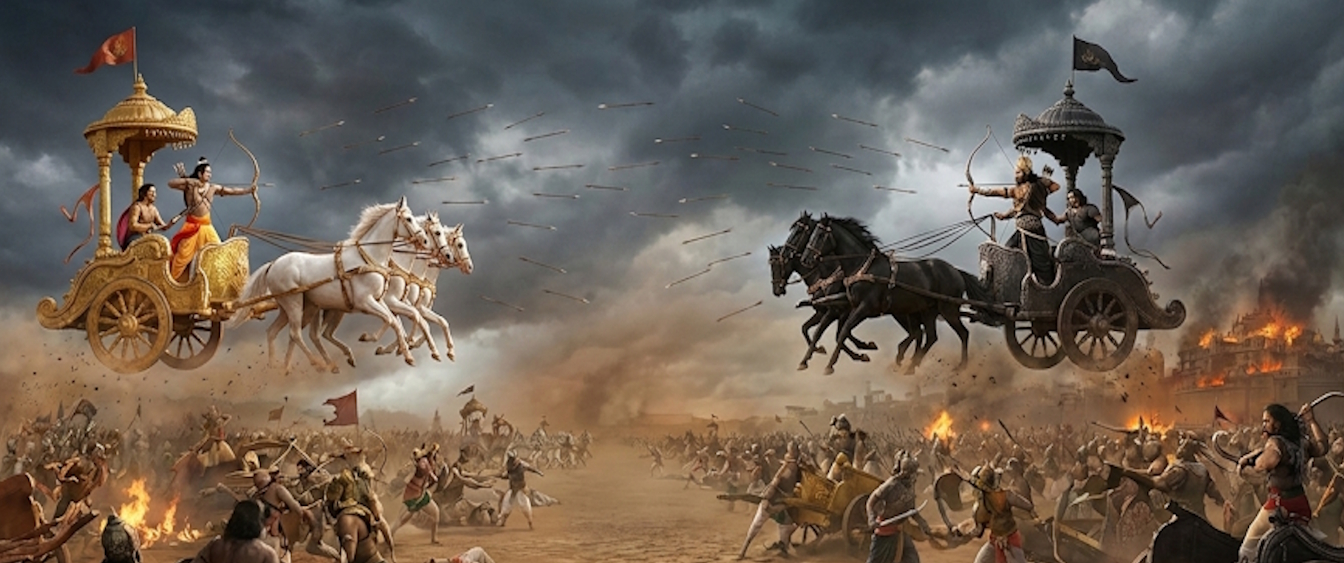
बलस्य च निघातेन अङ्गदस्य जयेन च ।
राक्षसः क्रोधमाविष्टो वज्रदंष्ट्रो महाबलः ॥६-५४-१॥
balasya ca nighātena aṅgadasya jayena ca |
rākṣasaḥ krodhamāviṣṭo vajradaṃṣṭro mahābalaḥ ॥6-54-1॥
Translation
Witnessing the destruction of his army and the victory of Angada, the mighty Rakshasa Vajradamshtra was filled with intense anger.
हिंदी अनुवाद
अपनी सेना के विनाश और अंगद की विजय को देखकर महाबली राक्षस वज्रदंष्ट्र अत्यंत क्रोधित हो उठा।
English Commentary
This verse sets the stage for the imminent duel by describing the reaction of the Rakshasa commander, Vajradamshtra. Seeing his army decimated and witnessing the prowess of the monkey prince Angada, his pride strikes a chord of fury. The term 'filled with intense anger' suggests that he was completely possessed by rage, a common trait in the Rakshasa temperament which often clouds judgment but fuels immediate aggression. By addressing him as 'mighty' (Mahabala), the poet establishes him as a formidable foe, indicating that the upcoming battle will be a clash of titans.
हिंदी टीका
इस श्लोक में राक्षस सेनापति वज्रदंष्ट्र की प्रतिक्रिया का वर्णन है। युद्ध में अपनी सेना का संहार और शत्रु पक्ष के नायक अंगद का पराक्रम देखकर एक अभिमानी योद्धा का क्रोधित होना स्वाभाविक है। यहाँ 'क्रोधमाविष्टो' शब्द यह दर्शाता है कि उसका क्रोध साधारण नहीं था, अपितु वह क्रोध के आवेश में पूर्णतः डूब गया था। यह क्रोध ही उसे विनाश की ओर ले जाने वाला प्रेरक बल बनेगा। यहाँ राक्षस के बल का उल्लेख (महाबलः) इसलिए किया गया है ताकि आगे होने वाले भीषण युद्ध की भूमिका बांधी जा सके, क्योंकि एक शक्तिशाली शत्रु ही अंगद जैसे वीर के लिए उपयुक्त प्रतिद्वंद्वी हो सकता है।