Srimad Valmiki Ramayana
ततो हरिगणान् भग्नान् दृष्ट्वा वालिसुतस्तदा ।
क्रोधेन वज्रदंष्ट्रं तमुदीक्षन्तमुदैक्षत ॥६-५४-१७॥
krodhena vajradaṃṣṭraṃ tamudīkṣanmudaikṣata |
vajradaṃṣṭro'ṅgadaścobhau saṃgatau harirākṣasau ॥6-54-17॥
Translation
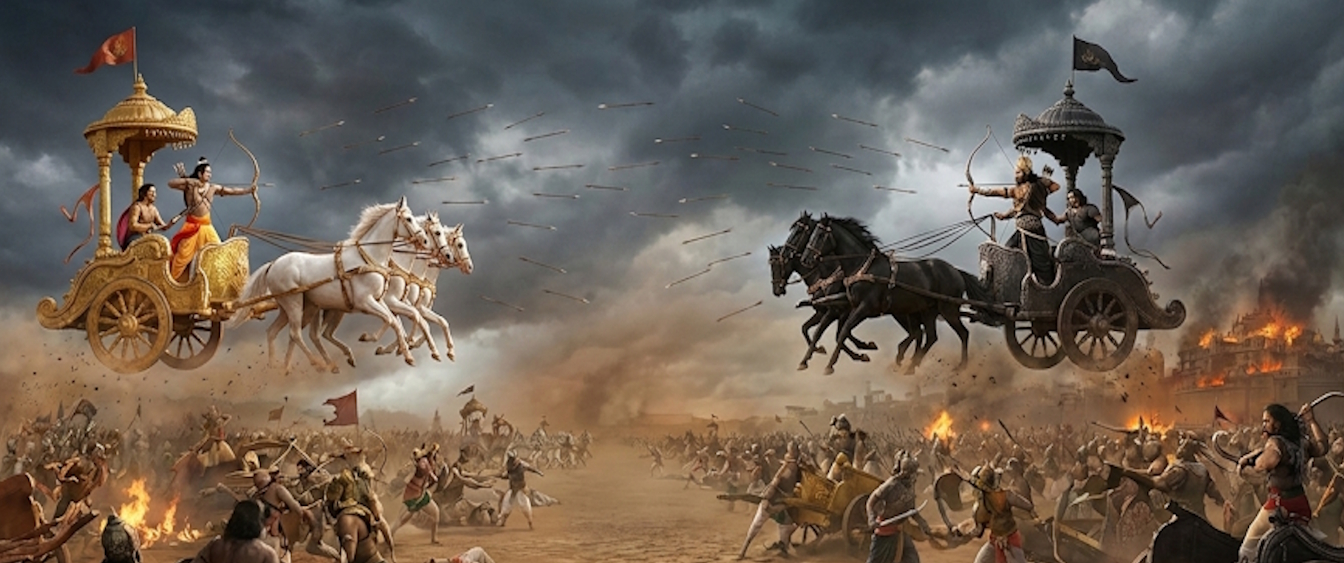
Angada glared at Vajradamshtra with anger. Then, both the monkey and the Rakshasa, Vajradamshtra and Angada, encountered each other.
हिंदी अनुवाद
अंगद ने क्रोधपूर्वक उस वज्रदंष्ट्र को देखा। तब वज्रदंष्ट्र और अंगद, दोनों वानर और राक्षस आपस में भिड़ गए।
English Commentary
The visual locking of eyes marks the beginning of the duel. Angada's gaze is filled with 'krodha' (anger), mirroring the Rakshasa's earlier rage. The narrative zooms in from the chaotic battlefield to these two protagonists. The meeting of the 'Hari' (Monkey) and 'Rakshasa' represents the clash of archetypal forces. The anticipation is built for a combat that will decide the fate of this skirmish.
हिंदी टीका
यहाँ 'उदीक्षन्' (घूरना/देखना) शब्द अंगद के क्रोध और चुनौती को व्यक्त करता है। वह शत्रु के भय से प्रभावित नहीं हुए, बल्कि क्रोध से उसका उत्तर दिया। अब युद्ध का केंद्र बिंदु बदल गया है—सेनाओं की लड़ाई अब दो महायोद्धाओं के द्वंद्व में परिवर्तित हो गई है। 'संगतौ' शब्द उनके टकराव या मुठभेड़ को दर्शाता है। यह श्लोक एक रोमांचक द्वंद्व की भूमिका है जहाँ दो समान रूप से शक्तिशाली योद्धा आमने-सामने हैं।