Srimad Valmiki Ramayana
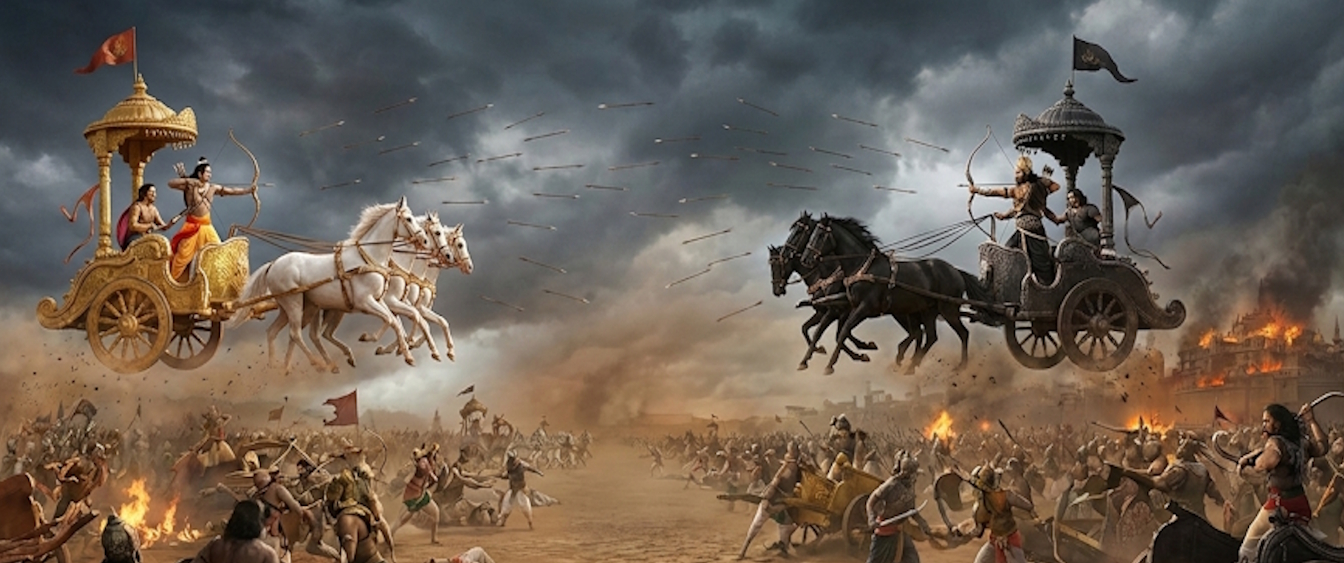
विचित्रांश्चेरतुर्मार्गान् रुषितौ कपिराक्षसौ ।
जघ्नतुश्च तदा ऽन्योन्यं निर्दयं जयकाङ्क्षिणौ ॥६-५४-३२॥
jaghnatauśca tadānyonyaṃ nirdayaṃ jayakāṅkṣiṇau |
vraṇaiḥ sāstrairhaśobhetāṃ puṣpitāviva kiṃśukau ॥6-54-32॥
Translation
Desiring victory, they struck each other mercilessly. With their bleeding wounds, they looked beautiful like blossoming Kimshuka trees.
हिंदी अनुवाद
जीत की इच्छा रखने वाले वे दोनों निर्दयतापूर्वक एक-दूसरे पर प्रहार कर रहे थे। रक्त बहते हुए घावों के कारण वे दोनों फूले हुए पलाश (किंशुक) के वृक्षों के समान शोभा पा रहे थे।
English Commentary
Driven by the thirst for victory, mercy is abandoned. The comparison to 'blossoming Kimshuka trees' is a classic poetic device in Sanskrit epics. The bright red flowers of the Kimshuka tree resemble the open, bleeding wounds ('vranaih sastraih') of the warriors. It aestheticizes the gore, portraying the warriors not as victims of violence, but as glorious figures adorned by the crimson marks of their bravery.
हिंदी टीका
विजय की अभिलाषा ('जयकाङ्क्षिणौ') दया को समाप्त कर देती है। वे 'निर्दय' होकर प्रहार कर रहे थे। कवि ने पुनः एक सुंदर प्राकृतिक उपमा का प्रयोग किया है—रक्त रंजित योद्धाओं की तुलना 'पुष्पित किंशुक' (टेसू/पलाश) के वृक्षों से की है, जो लाल फूलों से लदे होते हैं। यह उपमा युद्ध की वीभत्सता में भी सौंदर्य और वीर रस की गरिमा को खोज लेती है।