Srimad Valmiki Ramayana
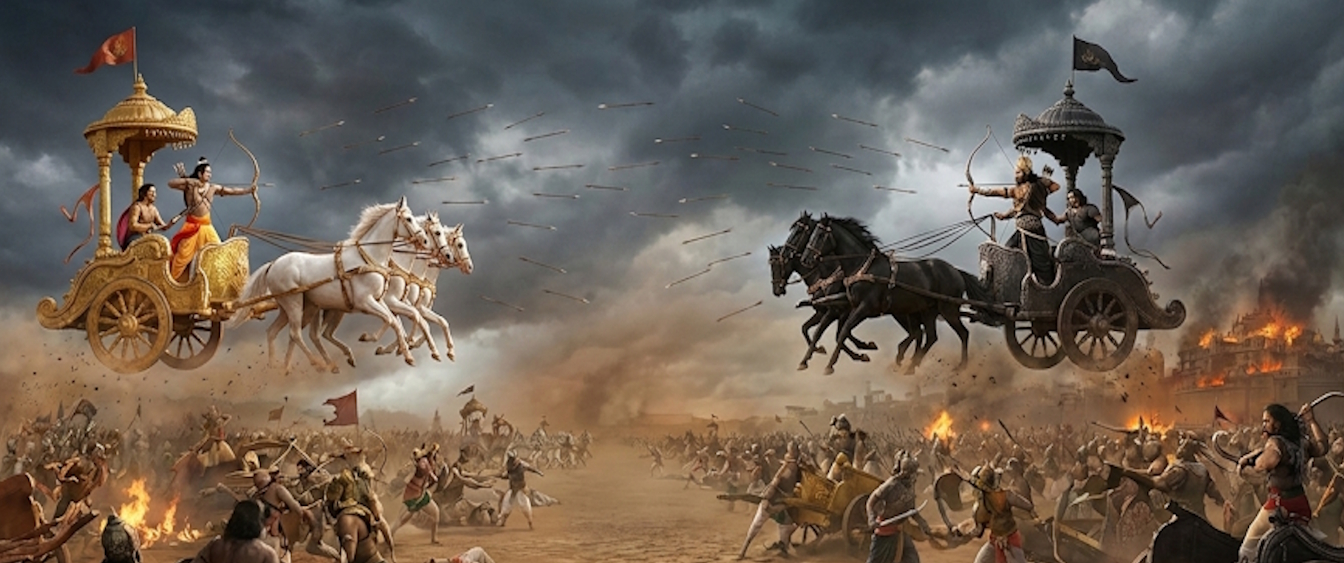
निहत्य तं वज्रधरप्रभावः स वालिसूनुः कपिसैन्यमध्ये ।
जगाम हर्षं महितो महाबलः सहस्रनेत्रस्त्रिदशैरिवावृतः ॥६-५४-३८॥
nihatya taṃ vajradharapra bhāvaḥ sa vālisunuḥ kapisainyamadhye |
jagāma harṣaṃ mahito mahābalaḥ sahasranetrastridaśairivavṛtaḥ ॥6-54-38॥
Translation
Having killed him, the mighty son of Vali, possessing the prowess of Indra (wielder of the thunderbolt), rejoiced in the midst of the monkey army. He was honored like the thousand-eyed Indra surrounded by the gods.
हिंदी अनुवाद
इन्द्र के समान प्रभाव वाले, महाबली वालिपुत्र अंगद उस राक्षस को मारकर वानर सेना के बीच बहुत हर्षित हुए। उस समय देवताओं से घिरे हुए हजार नेत्रों वाले इन्द्र की भाँति उनकी पूजा (प्रशंसा) हो रही थी।
English Commentary
The sarga concludes with a glorification of Angada. He is likened to Indra ('Vajradhara' - wielder of the Vajra), fitting for one who defeated Vajradamshtra. Standing amidst his cheering troops, he mirrors the celestial imagery of Indra surrounded by Devas. This simile elevates Angada to a divine status, celebrating his victory as a triumph of cosmic significance. It restores joy ('harsham') and confidence to the Vanara army.
हिंदी टीका
सर्गांत श्लोक में अंगद की महिमा का गान है। उनकी तुलना पुनः 'वज्रधर' (इन्द्र) से की गई है, क्योंकि उन्होंने वज्रदंष्ट्र (जिसका नाम ही वज्र से जुड़ा है) को हराया। वानर सेना के बीच घिरे हुए अंगद वैसे ही शोभायमान हो रहे थे जैसे देवताओं के बीच इन्द्र। यह विजय केवल एक शत्रु का नाश नहीं, बल्कि धर्म पक्ष में उत्साह और आशा का संचार थी। अंगद का 'हर्ष' उनके कर्तव्य पूर्ति का संतोष है।