Srimad Valmiki Ramayana
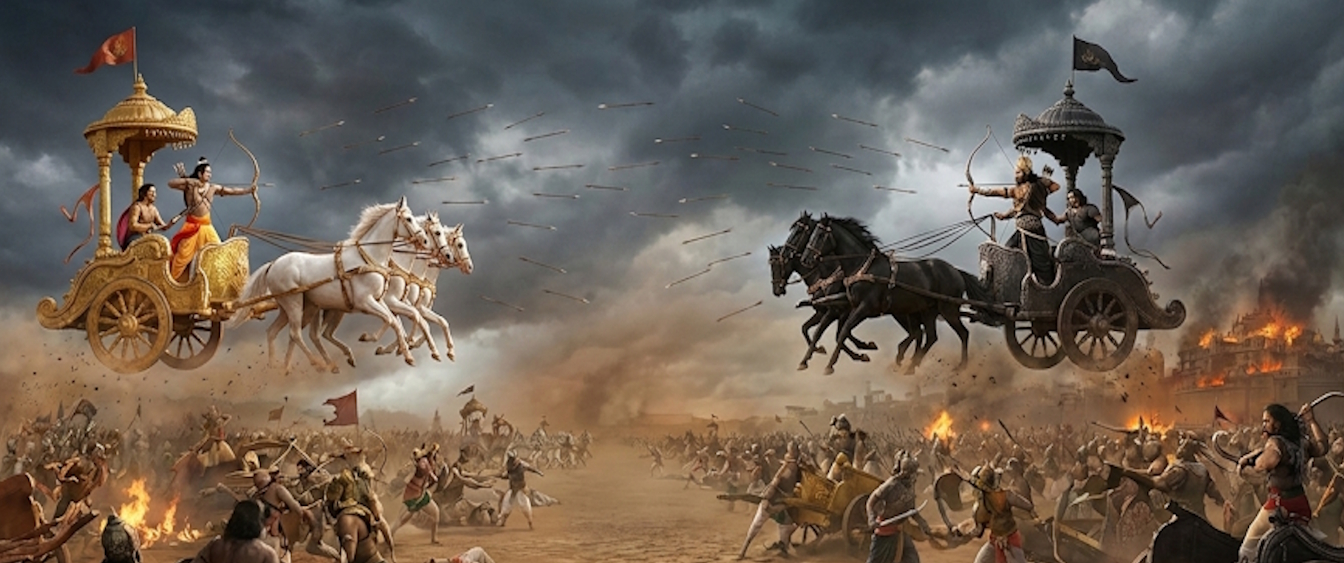
हरयो राक्षसाश्चैव शेरते गां समाश्रिताः ।
कङ्कगृध्रवलैराढ्या गोमायुगणसङ्कुलाः ॥६-५४-९॥
harayo rākṣasāścaiva śerate gāṃ samāśritāḥ |
kaṅkagṛdhrabalādyaśca gomāyugaṇasaṃkulāḥ ॥6-54-9॥
Translation
Both monkeys and Rakshasas lay dead upon the earth. The battlefield was crowded with herons, vultures, crows, and packs of jackals.
हिंदी अनुवाद
वानर और राक्षस दोनों ही पृथ्वी पर सोए (मरे) पड़े थे। वह रणभूमि कंक, गिद्ध और कौओं आदि पक्षियों तथा सियारों के झुंडों से भर गई थी।
English Commentary
This verse depicts the aftermath of the intense clash. In death, both the divine Vanaras and the demonic Rakshasas share the same fate, lying on the ground ('gam samashritah'). The presence of scavengers like vultures and jackals introduces a somber and gruesome atmosphere (Bibhatsa Rasa). It serves as a memento mori, highlighting the destructive nature of war where the bodies of the brave ultimately become food for beasts, stripping away the glory to reveal the raw end of life.
हिंदी टीका
मृत्यु के समक्ष सब समान हैं। युद्धभूमि में वानर और राक्षस दोनों ही धराशायी होकर पृथ्वी की गोद में सोए हुए हैं। मांसाहारी पक्षियों और जानवरों (कंक, गिद्ध, सियार) का एकत्र होना युद्ध के परिणाम—विनाश और मृत्यु—का सूचक है। यह दृश्य जीवन की क्षणभंगुरता और युद्ध के भयानक परिणाम को दर्शाता है। जहाँ कुछ क्षण पूर्व वीर हुंकार भर रहे थे, अब वहाँ केवल शव और उन्हें खाने वाले जीव हैं। यह वीर रस के साथ-साथ वीभत्स रस का भी समावेश है।