Srimad Valmiki Ramayana
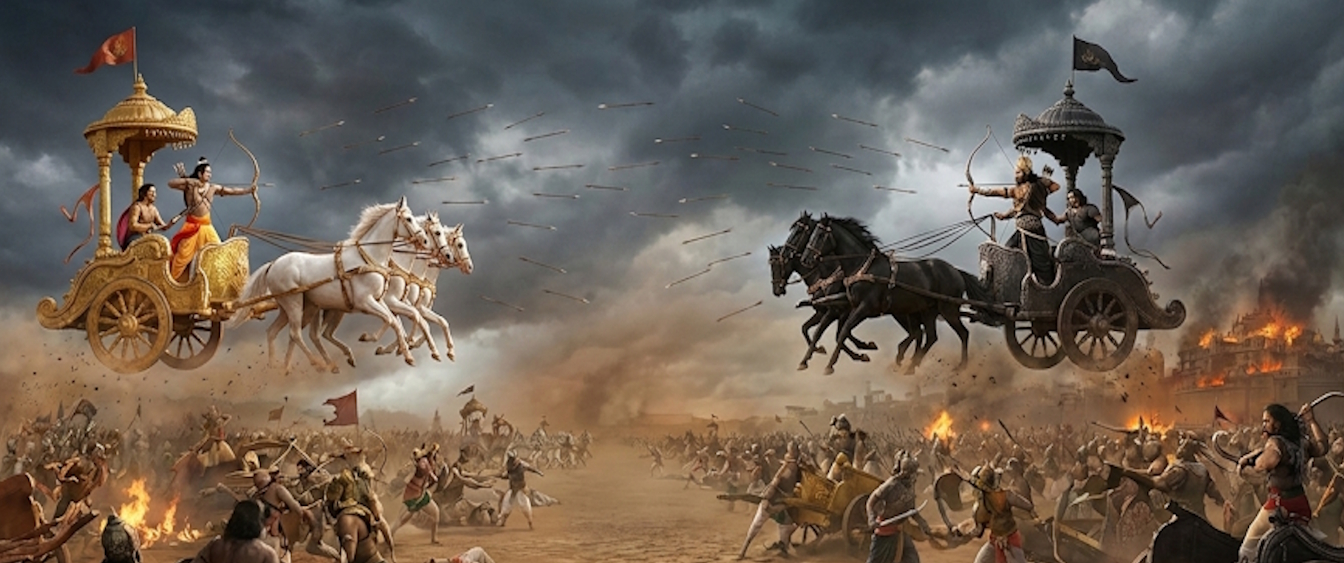
विद्रुते च बले तस्मिन् रामः सौमित्रिणा सह ।
अवशस्ते निरालम्बः प्रहस्त वशमेष्यति ॥६-५७-१०॥
na sahiṣyanti te nādaṃ siṃhanādamiva dvipāḥ |
vidrute ca bale tasmin rāmaḥ saumitriṇā saha ॥6-57-10॥
Translation
They will not withstand your roar, just as elephants cannot withstand the roar of a lion. And when that army has fled, Shri Rama, along with the son of Sumitra (Lakshmana)...
हिंदी अनुवाद
जैसे हाथी शेर की दहाड़ को सहन नहीं कर पाते, वैसे ही वे तुम्हारी गर्जना को सहन नहीं कर सकेंगे। और उस सेना के भाग जाने पर, लक्ष्मण सहित श्री राम...
English Commentary
Using the metaphor of lions scaring elephants, Ravana predicts a rout. His tactical goal is to strip Shri Rama of his support. He believes that Shri Rama and Lakshmana are dependent on the Vanara horde ('bale tasmin') and that without the army, the princes will be vulnerable. This reveals Ravana's strategic focus on breaking the enemy's morale and formation, aiming to isolate the leadership.
हिंदी टीका
रावण एक पारंपरिक उपमा देता है—सिंह और हाथी की। वह राक्षसों को सिंह और वानरों को हाथी मानता है। उसका मुख्य उद्देश्य सेना को हटाना है। उसका सोचना है कि श्री राम और लक्ष्मण की शक्ति उनकी सेना में है। यदि सेना 'विद्रुते' (भाग गई), तो दोनों भाई अकेले पड़ जाएंगे। रावण अभी भी श्री राम के निजी पराक्रम को पूरी तरह स्वीकार नहीं कर पा रहा है और उन्हें साधारण मनुष्यों की भाँति सेना-आश्रित मान रहा है।