Srimad Valmiki Ramayana
चपला ह्यविनीताश्च चलचित्ताश्च वानराः ।
न सहिष्यन्ति ते नादं सिंहनादमिव द्विपाः ॥६-५७-९॥
nardatāṃ rākṣasendrāṇāṃ śrutvā nādaṃ draviṣyati |
capalā hyavinītāśca calacittāśca vānarāḥ ॥6-57-9॥
Translation
...will flee upon hearing the roar of the Rakshasa leaders. For monkeys are fickle, indisciplined, and of unsteady minds.
हिंदी अनुवाद
...राक्षसराजों (वीर राक्षसों) की गर्जना का शब्द सुनकर भाग जाएगी; क्योंकि वानर चंचल, उद्दण्ड और अस्थिर चित्त वाले होते हैं।
English Commentary
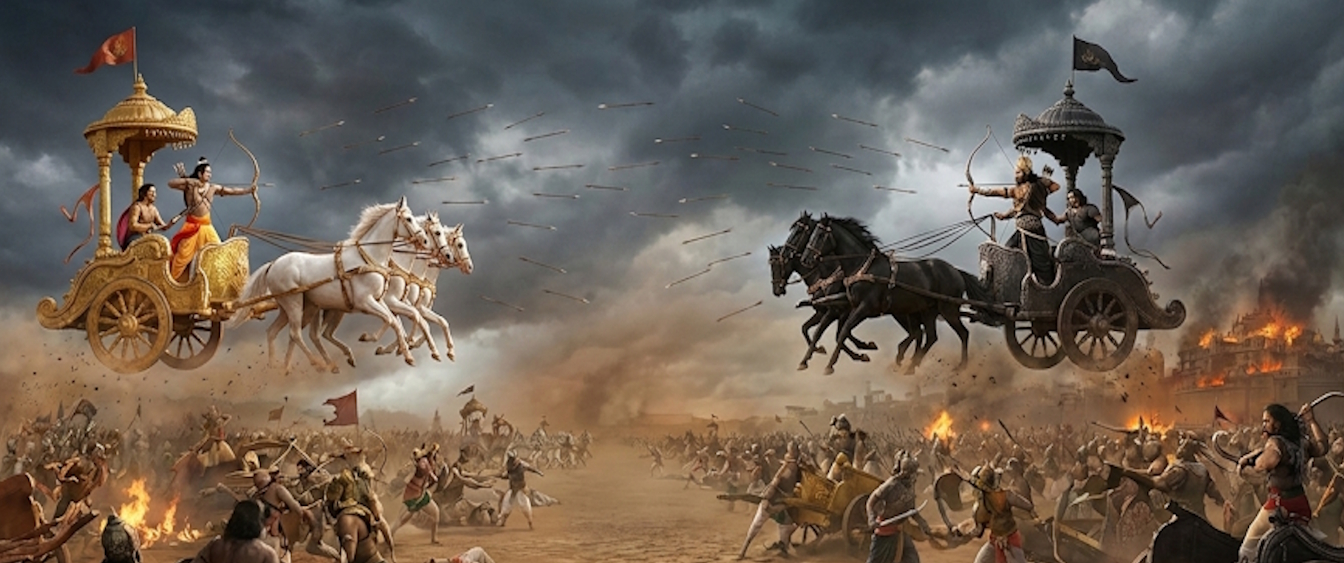
Ravana rationalizes his optimism by relying on the instinctual nature of monkeys. He describes them as 'avinita' (untrained/ill-mannered) and 'chala-chitta' (fickle-minded). He expects panic to set in at the first roar of the Rakshasas. This miscalculation highlights the blindness caused by arrogance; he sees only the species of his enemy, not their spirit or the divine command they follow.
हिंदी टीका
रावण अपनी बात को तर्क से सिद्ध करने का प्रयास करता है। वह वानरों के प्राकृतिक स्वभाव—चंचलता, अविनीत होना (अनुशासनहीनता) और अस्थिर चित्त—का वर्णन करता है। उसका मानना है कि 'सिंहनाद' या युद्धघोष सुनकर ही वे भाग खड़े होंगे। यहाँ रावण की रणनीतिक भूल स्पष्ट है; वह वानरों को केवल जानवर समझ रहा है, जबकि वे श्रीश्री राम के प्रभाव से अनुशासित सैनिकों में बदल चुके हैं।