Srimad Valmiki Ramayana
आपत् संशयिता श्रेयो न तु निस्संशयीकृता ।
प्रतिलोमानुलोमं वा यद्वा नो मन्यसे हितम् ॥६-५७-११॥
avaśaste nirālambaḥ prahasta vaśameṣyati |
āpatsaṃśayitā śreyō na tu niḥsaṃśayīkṛtā ॥6-57-11॥
Translation
...will become helpless and unsupported, O Prahasta, and will come under your control. In a calamity, a course involving risk is better than one leading to certain doom (by inaction).
हिंदी अनुवाद
...हे प्रहस्त! वे विवश और निराश्रित होकर तुम्हारे वश में आ जाएंगे। आपत्ति (संकट) में संशययुक्त होना (जोखिम उठाना) ही श्रेयस्कर है, न कि (हाथ पर हाथ रखकर) निश्चित विनाश की प्रतीक्षा करना।
English Commentary
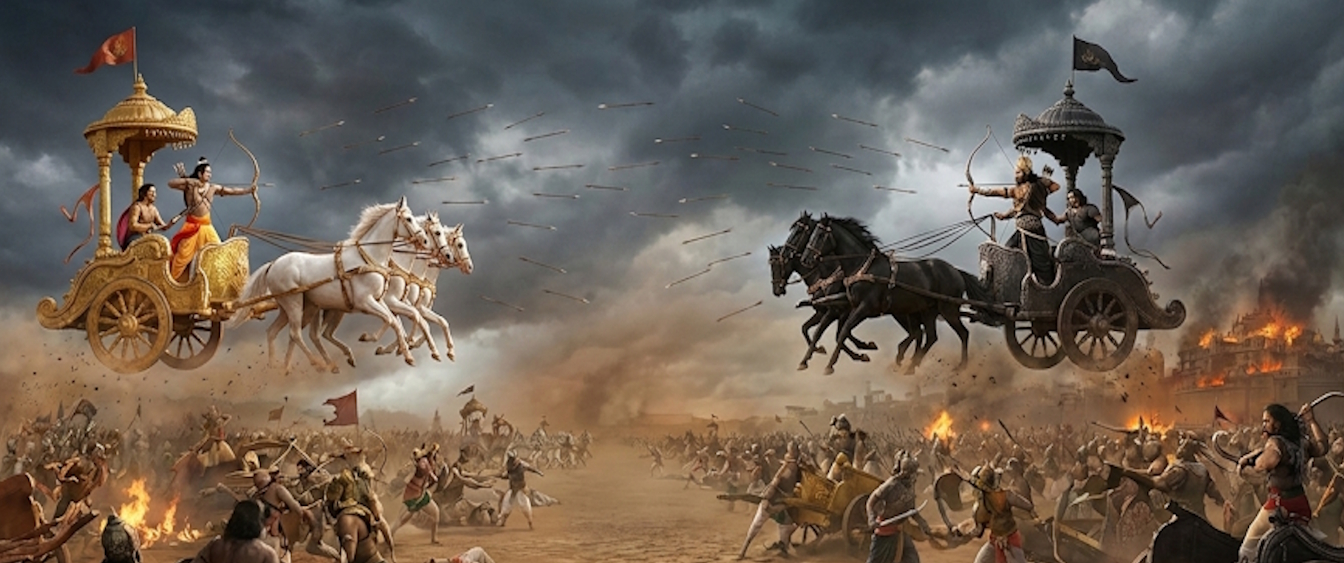
Ravana concludes with a philosophical justification for war. He argues that passive defense leads to certain defeat ('nihsamshayikrita' - made free of doubt/certain doom), whereas attacking involves risk ('samshayita') but offers a chance of victory. Therefore, taking the risk is the superior ('shreyas') path. It reflects the desperate logic of a besieged king choosing to go down fighting rather than waiting to be starved out.
हिंदी टीका
रावण अपनी योजना का समापन एक नीति-वाक्य के साथ करता है। उसका कहना है कि यदि हम हाथ पर हाथ रखकर बैठे रहे, तो विनाश निश्चित ('निःसंशयीकृता') है। इसके विपरीत, युद्ध करने में जीत या हार का 'संशय' (जोखिम) है, परन्तु बचने की संभावना भी है। इसलिए आक्रमण करना ही श्रेष्ठ ('श्रेयः') है। यह डूबते हुए व्यक्ति का तर्क है जो अस्तित्व बचाने के लिए हर संभव जोखिम उठाने को तैयार है।