Srimad Valmiki Ramayana
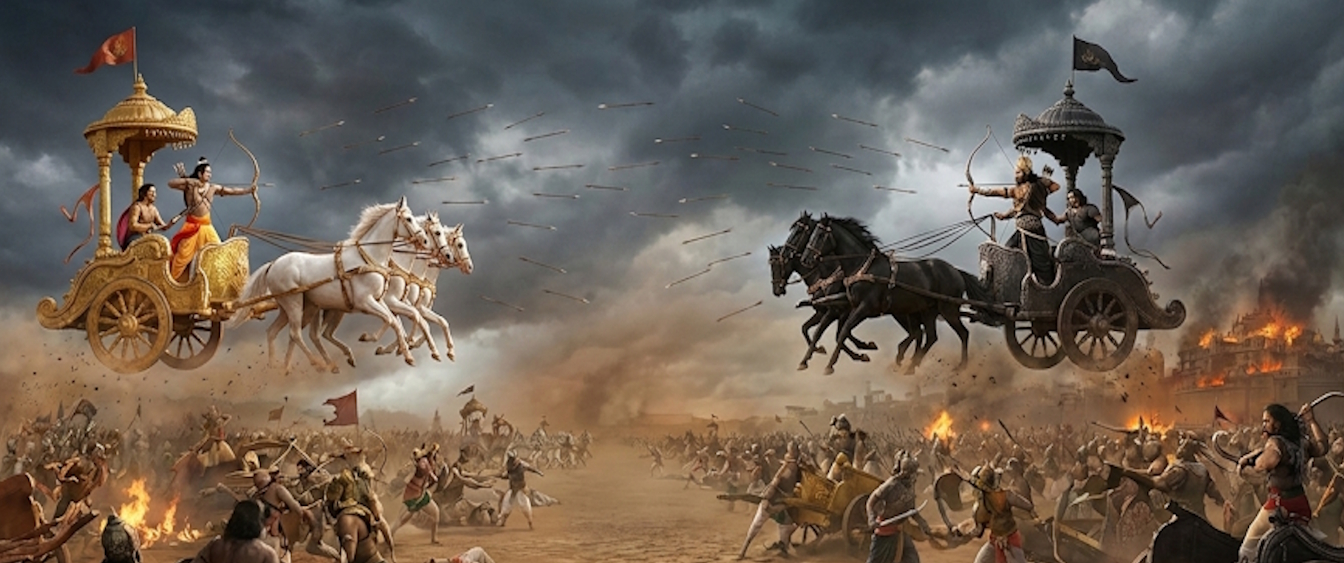
ततो दुन्दुभिनिर्घोषः पर्जन्यनिनदोपमः ।
वादित्राणां च निनदः पूरयन्निव सागरम् ।
शुश्रुवे शङ्खशब्दश्च प्रयाते वाहिनीपतौ ॥६-५७-२९॥
tato dundubhinirghoṣaḥ parjanyaninadopamaḥ |
vāditrāṇāṃ ca ninadaḥ pūrayanniva sāgaram ॥6-57-29॥
Translation
Then, the sound of drums resembling the thunder of clouds, and the noise of musical instruments, seemed to fill the ocean.
हिंदी अनुवाद
तब बादलों की गर्जना के समान नगाड़ों (दुन्दुभि) का घोष और अन्य वाद्ययंत्रों की ध्वनि सागर को भरती हुई (गुंजाती हुई) सी प्रतीत हुई।
English Commentary
The auditory landscape of the march is overwhelming. The drums ('dundubhi') mimic thunder, a common metaphor for power in Indian epics. The sound is so immense it seems to 'fill the ocean,' dominating the natural sounds of the waves surrounding Lanka. This sonic barrage is intended to announce dominance and intimidate the Vanaras waiting outside.
हिंदी टीका
युद्धघोष की तीव्रता का वर्णन। नगाड़ों की आवाज 'पर्जन्य' (बादल) की तरह थी और वह इतनी तेज थी कि लगा जैसे सागर का कोलाहल भी उसमें डूब गया हो या वह सागर को भर रही हो। यह ध्वनि शत्रु के मन में भय उत्पन्न करने और अपनी सेना में जोश भरने के लिए थी। लंका एक द्वीप है, इसलिए सागर के साथ ध्वनि का टकराना एक यथार्थवादी चित्रण है।