Srimad Valmiki Ramayana
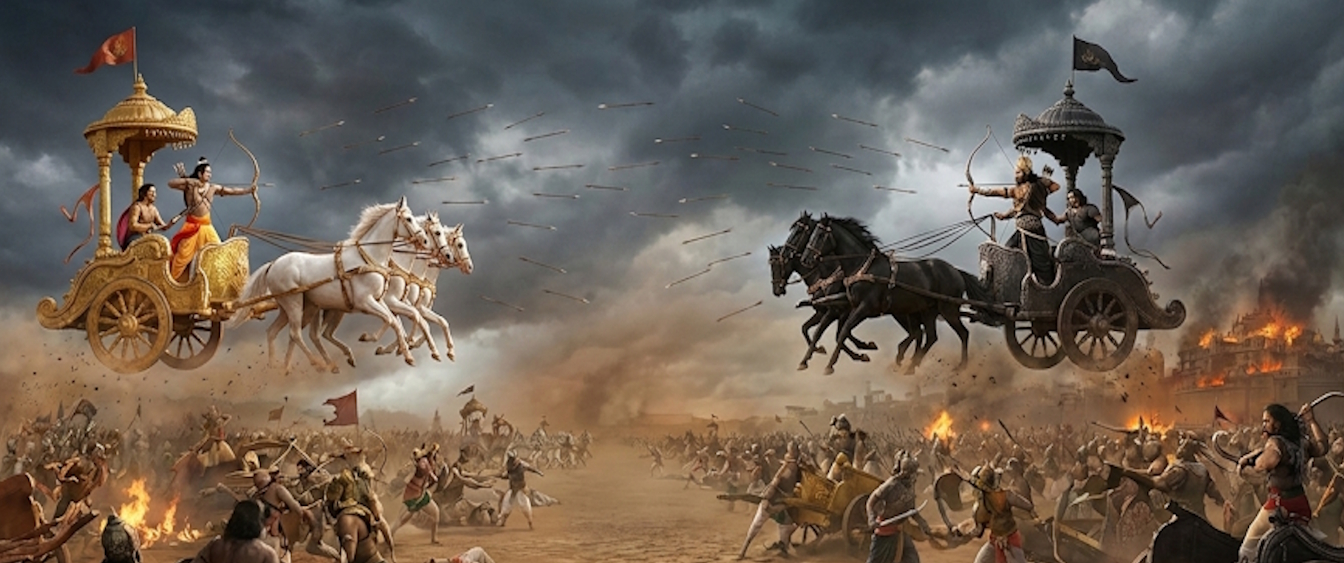
ततः प्रहस्तः कपिराजवाहिनीमभिप्रतस्थे विजयाय दुर्मतिः ।
विवृद्धवेगां च विवेश तां चमूं यथा मुमूर्षुः शलभो विभावसुम् ॥६-५७-४६॥
tataḥ prahastaḥ kapirājavāhinīmabhipatasthe vijayāya durmatiḥ |
vivṛddhavegāṃ ca viveśa tāṃ camūṃ yathā mumūrṣuḥ śalabho vibhāvasum ॥6-57-46॥
Translation
Then, that evil-minded/foolish Prahasta rushed towards the army of the Monkey King for victory. And he entered that army, which was increasing in speed, just as a moth wishing to die enters a fire.
हिंदी अनुवाद
तब वह दुर्मति (दुर्बुद्धि) प्रहस्त विजय की इच्छा से वानरराज की सेना की ओर दौड़ा। और जैसे मरने की इच्छा वाला पतिंगा (शलभ) आग में प्रवेश करता है, वैसे ही उसने उस वेग से बढ़ती हुई सेना में प्रवेश किया।
English Commentary
The sarga concludes with a powerful and tragic simile. Prahasta is labeled 'durmati' (foolish/wicked mind) for believing he could conquer the divine cause. His entry into the Vanara army is compared to a moth ('shalabha') flying into a fire ('vibhavasum') with a death wish ('mumurshuh'). This imagery encapsulates the futility of the Rakshasa resistance against Shri Rama; despite their grandeur and bravery, they are merely fuel for the fire of Dharma. Prahasta's fate is sealed as he steps into the blaze.
हिंदी टीका
सर्गांत श्लोक में प्रहस्त की नियति पर मुहर लगा दी गई है। उसे 'दुर्मति' कहा गया है—या तो अपनी दुष्टता के कारण या इस मूर्खता के कारण कि वह श्री राम की सेना से जीत सकता है। उपमा अत्यंत सशक्त है—'यथा मुमूर्षुः शलभो विभावसुम्'—जैसे मौत का मारा पतिंगा आग में कूदता है, वैसे ही प्रहस्त वानर सेना में कूद पड़ा। यह उसकी वीरता नहीं, बल्कि आत्मघाती विनाश है। यह श्लोक उसके आसन्न वध की भविष्यवाणी करता है।