Srimad Valmiki Ramayana
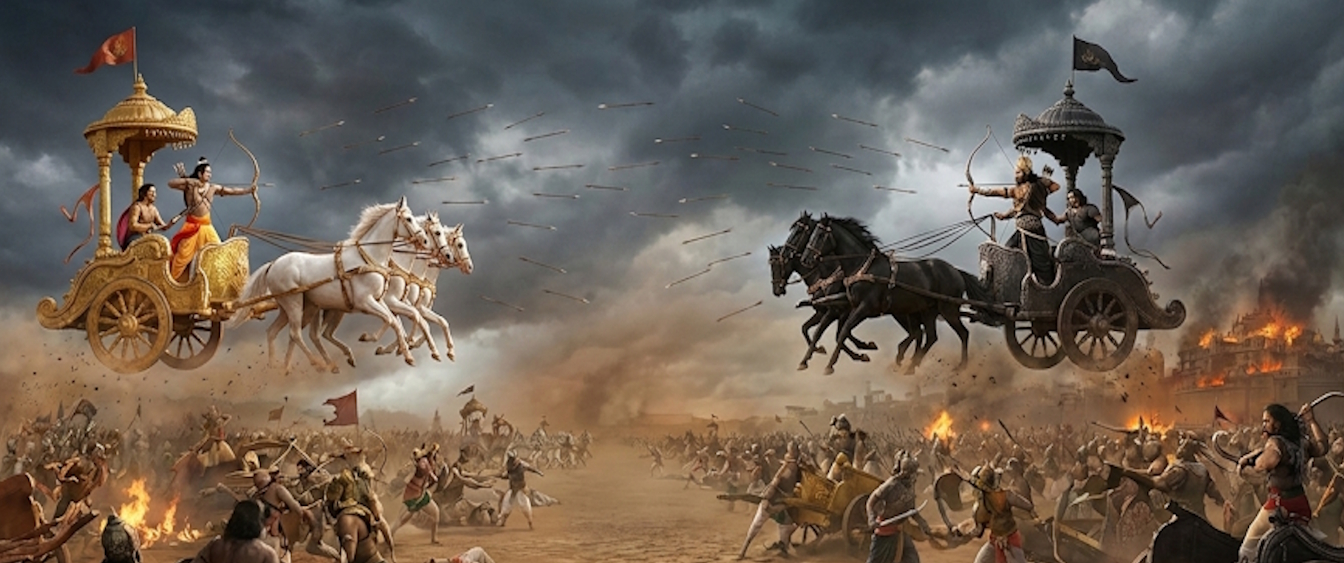
तस्मिन् हते राक्षससैन्यपाले प्लवङ्गमानामृषभेण युद्धे ।
भीमायुधं सागरतुल्यवेगं विदुद्रुवे राक्षसराजसैन्यम् ॥६-५९-१॥
tasmin hate rākṣasasainyapāle plavaṅgamānāṃ vṛṣabheṇa yuddhe |
bhīmāyudhaṃ sāgaratulyavegaṃ vidudruve rākṣasarājasainyam ॥6-59-1॥
Translation
When that commander of the demon army (Prahasta) was killed in battle by the foremost of monkeys (Nila), the army of the King of Demons, possessing terrible weapons and moving with the speed of the ocean, fled in all directions.
हिंदी अनुवाद
वानरों में श्रेष्ठ (नील) द्वारा युद्ध में उस राक्षस सेनापति (प्रहस्त) के मारे जाने पर, वह भयानक आयुधों वाली और सागर के समान वेग वाली राक्षसराज की सेना भाग खड़ी हुई।
English Commentary
This verse marks a turning point in the battle. Prahasta was the chief commander of Ravana's forces, and his death at the hands of Nila, described here as the 'bull among monkeys' (indicating superior strength), shattered the morale of the demon army. The comparison of the army to the ocean suggests its vastness and power, yet the phrase 'vidudruve' (fled) highlights that even a mighty force becomes chaotic without leadership. This defeat sets the stage for Ravana's personal entry into the battlefield.
हिंदी टीका
यह श्लोक युद्ध के एक निर्णायक मोड़ को दर्शाता है। प्रहस्त रावण की सेना का मुख्य सेनापति था और उसका वध वानर सेनापति नील द्वारा किया गया। 'प्लवङ्गमानां वृषभेण' (वानरों में बैल/श्रेष्ठ) विशेषण नील के असाधारण पराक्रम को रेखांकित करता है। जिस प्रकार सेनापति के बिना सेना दिशाहीन हो जाती है, यहाँ राक्षसों की विशाल सेना, जो सागर के समान वेगवान थी, नेतृत्वविहीन होकर बिखर गई। यह घटना रावण के क्रोध और उसके स्वयं युद्ध में उतरने का कारण बनती है।