Srimad Valmiki Ramayana
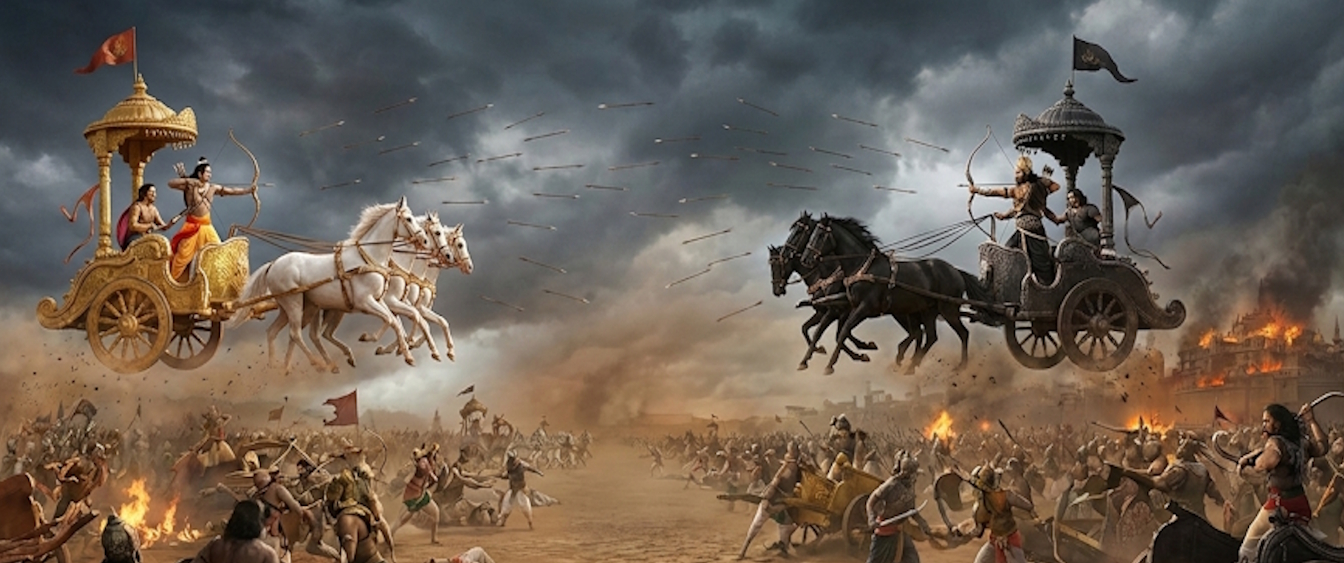
सङ्ख्ये प्रहस्तं निहतं निशम्य शोकार्दितः क्रोधपरीतचेताः ।
उवाच तान्नैर्ऋतयोधमुख्यानिन्द्रो यथा चामरयोधमुख्यान् ॥६-५९-३॥
saṃkhye prahastaṃ nihataṃ niśamya śokārditaḥ krodhaparītacetāḥ |
uvāca tānnairṛtayodhamukhyānindro yathā cāmarayodhamukhyān ॥6-59-3॥
Translation
Hearing that Prahasta was killed in battle, tormented by grief and with a mind seized by anger, he spoke to the chiefs of the demon warriors just as Indra speaks to the chiefs of the immortal warriors.
हिंदी अनुवाद
युद्ध में प्रहस्त को मारा गया सुनकर, शोक से पीड़ित और क्रोध से व्याप्त चित्त वाले रावण ने राक्षस योद्धाओं के मुख्य वीरों से वैसे ही कहा, जैसे इन्द्र अमर योद्धाओं (देवताओं) के मुखियों से कहते हैं।
English Commentary
Valmiki compares Ravana to Indra here, illustrating Ravana's majesty and authority, even while representing the side of adharma. Ravana's mind is conflicted with both 'shoka' (grief) for his friend Prahasta and 'krodha' (anger) towards the enemy. The simile highlights that Ravana addresses his troops with the same commanding presence that Indra, the King of Gods, uses with the celestial army.
हिंदी टीका
वाल्मीकि जी यहाँ रावण की तुलना इन्द्र से करते हैं, जो रावण के ऐश्वर्य और अधिकार को दर्शाता है, भले ही वह अधर्म के पक्ष में हो। रावण के मन में 'शोक' और 'क्रोध' दोनों का द्वंद्व है। शोक प्रहस्त के लिए है और क्रोध शत्रु के प्रति है। यह उपमा यह भी बताती है कि रावण अपनी सेना को उसी अधिकार से संबोधित करता है जैसे देवताओं के राजा इन्द्र अपनी देवसेना को करते हैं।