Srimad Valmiki Ramayana
स शङ्खभैरीपणवप्रणादैरास्फोटितक्ष्वेलितसिंहनादैः ।
पुण्यैः स्तवैश्चाप्यभिपूज्यमानस्तदा ययौ राक्षसराजमुख्यः ॥६-५९-८॥
sa śaṅkhabherīpaṇavapraṇādairāsphoṭitakṣvelitasiṃhanādaiḥ |
puṇyaiḥ stavaiścāpyabhipūjyamānastadā yayau rākṣasarājamukhyaḥ ॥6-59-8॥
Translation
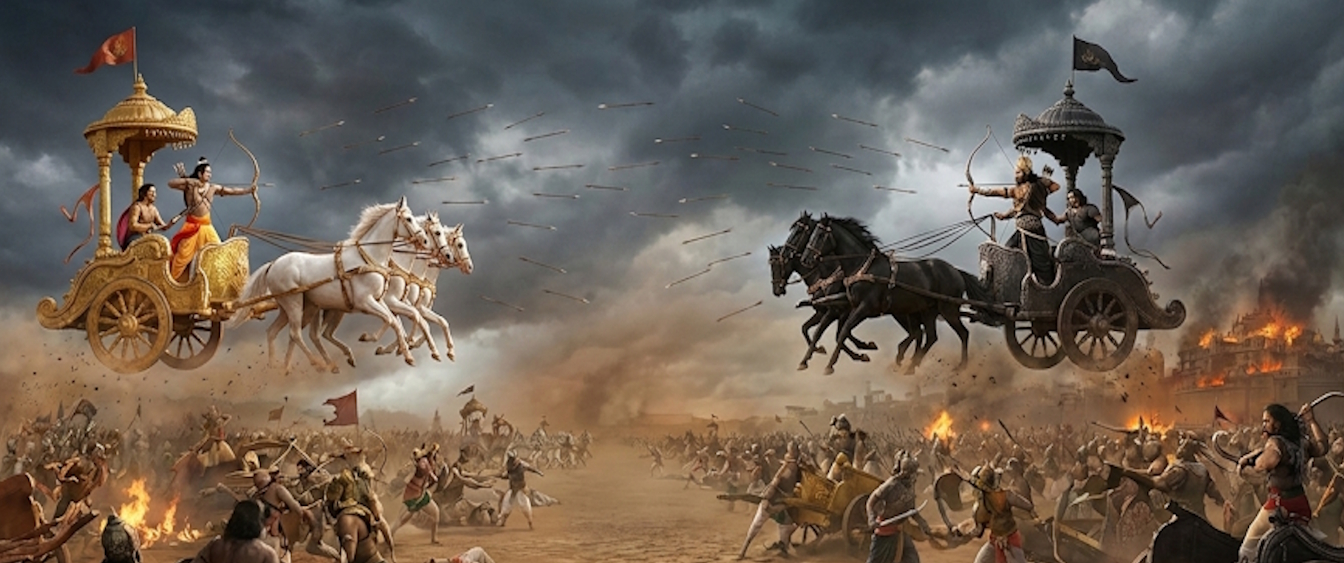
Then, amidst the sounds of conches, kettledrums, and tabors, amidst the sounds of clapping and lion-like roars, and being worshipped with holy eulogies, that chief of the Demon Kings set forth.
हिंदी अनुवाद
तब शंख, भेरी और पणव (ढोल) के नाद के साथ, ताल ठोकने के शब्दों और सिंहनाद के बीच, तथा मंगलमय स्तुतियों से पूजित होकर वह राक्षसराज (रावण) चला।
English Commentary
Ravana's departure resembles that of a great emperor. The sounds of war instruments and 'holy eulogies' might seem contradictory for someone marching for adharma, but to the Rakshasas, he is their revered king and protector. This atmosphere captures the fervor of war and the reverence his followers hold for him.
हिंदी टीका
रावण का प्रस्थान किसी महान सम्राट की भांति होता है। युद्ध के वाद्ययंत्रों (शंख, भेरी) की ध्वनि और 'पुण्यैः स्तवैः' (पवित्र स्तुतियों) का उल्लेख विरोधाभासी लगता है क्योंकि वह अधर्म के लिए जा रहा है, लेकिन राक्षसों के लिए वह उनका राजा और रक्षक है। यह वातावरण युद्ध के उत्साह और रावण के प्रति उसके अनुयायियों की श्रद्धा को दर्शाता है।