Srimad Valmiki Ramayana
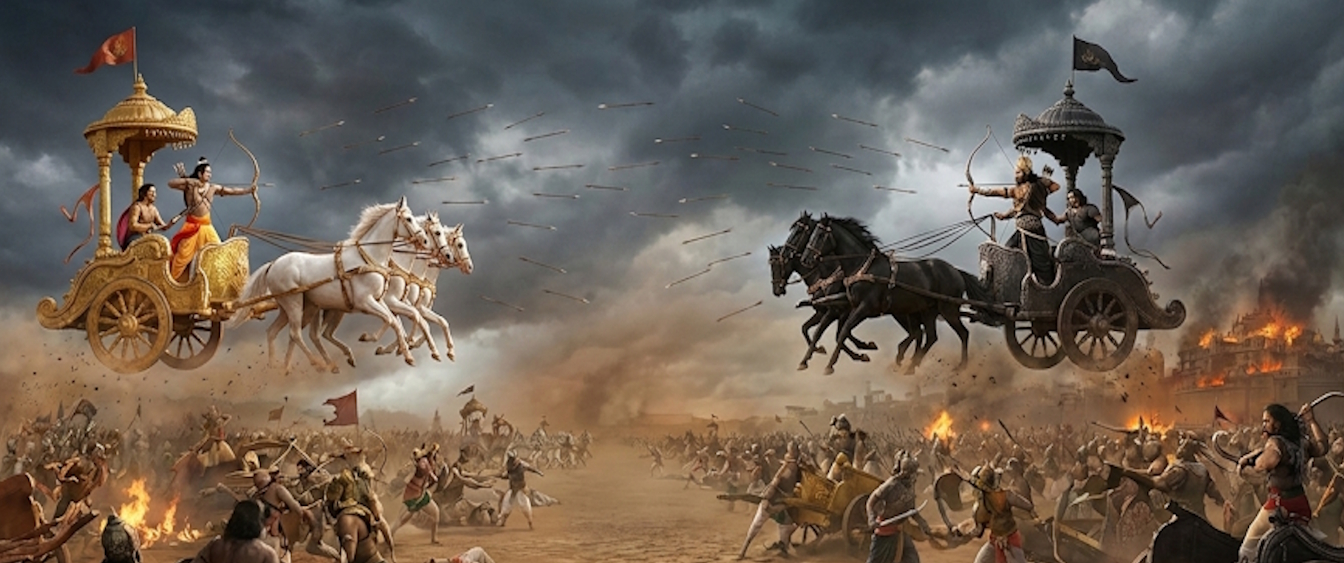
लंकायाम् तु कृतम् कर्म घोरम् दृष्ट्वा भव आवहम् ।
राक्षस इन्द्रो हनुमता शक्रेण इव महात्मना ॥६-६-१॥
laṅkāyāṃ tu kṛtaṃ karma ghoraṃ dṛṣṭvā bhayāvaham । rākṣasendro hanumatā śakreṇeva mahātmanā ॥6-6-1॥
Translation
Seeing the terrible and terrifying deed done in Lanka by the high-souled Hanuman, who was like Indra, the King of Rakshasas (Ravana)...
हिंदी अनुवाद
इन्द्र के समान प्रभावशाली महात्मा हनुमान द्वारा लंका में किए गए उस घोर और भयानक कर्म (विध्वंस) को देखकर राक्षसेन्द्र (रावण)...
English Commentary
The scene shifts from Shri Rama's camp to Ravana's court. This sarga illustrates the psychological aftermath of the Sundara Kanda. Ravana is shaken by the 'ghoram karma' (terrible deed) of Hanuman. Comparing Hanuman to Indra ('Shakreneva') is significant because Ravana had defeated Indra; finding an adversary of equal might in a mere monkey unsettles him. This verse sets the tone of underlying anxiety that pervades Ravana's council, contrasting with the rising morale in Shri Rama's camp.
हिंदी टीका
युद्धकाण्ड का छठा सर्ग रावण की 'मंत्र-सभा' (War Council) से आरम्भ होता है। यहाँ दृश्य श्री राम के शिविर से बदलकर रावण के दरबार में पहुँचता है। हनुमान जी द्वारा सुन्द काण्ड में किए गए लंका दहन और अक्षकुमार वध ने रावण को भीतर तक हिला दिया है। वाल्मीकि जी हनुमान की तुलना 'शक्र' (इन्द्र) से करते हैं, जो यह दर्शाता है कि हनुमान का पराक्रम देवताओं के राजा के समान था। रावण, जो त्रिलोकी विजेता था, पहली बार भय ('भयावहम्') का अनुभव कर रहा है, यद्यपि वह इसे अपने मंत्रियों के सामने छिपाने का प्रयास करता है।