Srimad Valmiki Ramayana
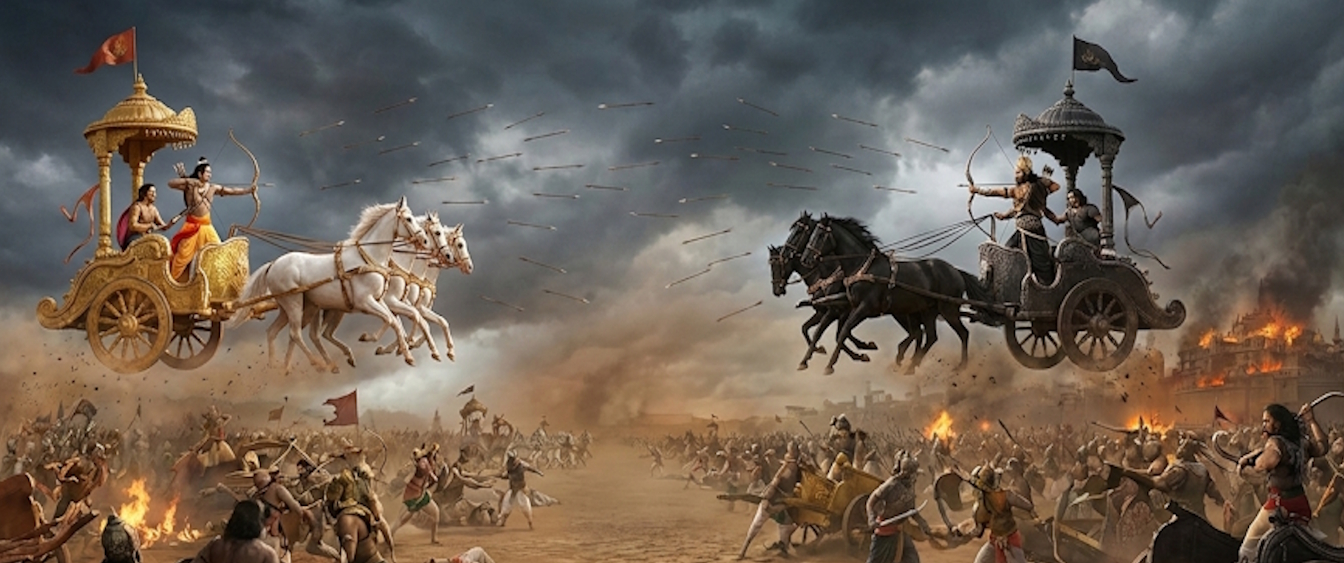
तत् सत्यं नान्यथा वीर दृष्टस्तेऽद्य पराक्रमः ।
एष दाशरथी रामस्तिष्ठत्यद्रिरिवापरः ॥६-६७-११६॥
tat satyaṃ nānyathā vīra dṛṣṭaste'dya parākramaḥ |
eṣa dāśarathī rāmastiṣṭhatyad ririvāparaḥ ॥6-67-116॥
Translation
O Hero! That is true, not otherwise; your prowess has been witnessed by me today. However, look, here stands Shri Rama, the son of Dasharatha, like another mountain.
हिंदी अनुवाद
हे वीर! वह सत्य है, उसमें कोई संदेह नहीं है; आज मैंने तुम्हारा पराक्रम देख लिया है। किन्तु देखो, ये दशरथ पुत्र श्री राम दूसरे पर्वत के समान यहाँ खड़े हैं।
English Commentary
Shri Lakshmana honors the enemy by using the word 'Vira', a trait of a noble Kshatriya. He redirects Kumbhakarna's focus toward Shri Rama. Describing Shri Rama as 'Adrih' (a mountain) symbolizes His immovable and invincible nature. Lakshmana is making it clear that Kumbhakarna is about to collide with the metaphorical Himalayas.
हिंदी टीका
श्री लक्ष्मण यहाँ 'वीर' शब्द का प्रयोग करके शत्रु का सम्मान करते हैं, जो एक श्रेष्ठ क्षत्रिय का गुण है। वे कुम्भकर्ण का ध्यान श्री राम की ओर आकर्षित करते हैं। श्री राम को 'अद्रिः' (पर्वत) कहना उनकी अचल और अजेय स्थिति का प्रतीक है। लक्ष्मण जी स्पष्ट कर रहे हैं कि कुम्भकर्ण का सामना अब हिमालय से होने वाला है।