Srimad Valmiki Ramayana
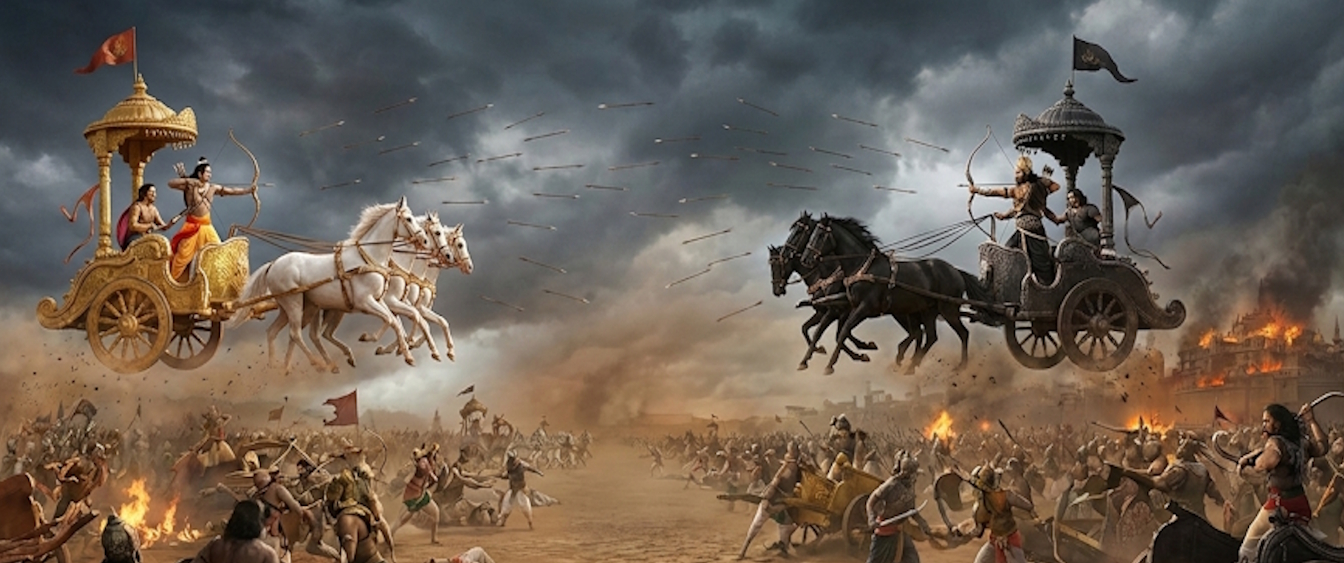
स कुम्भकर्णोऽस्त्रनिकृत्तबाहुर्महेन्द्रकृत्ताग्र इवाचलेन्द्रः ।
उत्पाटयामास करेण वृक्षं ततोऽभिदुद्राव रणे नरेन्द्रम् ॥६-६७-१७१॥
sa kumbhakarṇo'stranikṛttabāhurmahendrakṛttāgra ivācalendraḥ |
utpāṭayāmāsa kareṇa vṛkṣaṃ tato'bhidu drāva raṇe narendram ॥6-67-171॥
Translation
With one arm severed by the missile, Kumbhakarna looked like the king of mountains whose peak was lopped off by Indra. He uprooted a tree with his (remaining) hand and rushed toward the King (Shri Rama) in the battle.
हिंदी अनुवाद
अस्त्र से कटी हुई भुजा वाला वह कुम्भकर्ण, इन्द्र द्वारा शिखर काटे गए पर्वतों के राजा के समान लग रहा था। उसने (दूसरी) भुजा से एक वृक्ष उखाड़ा और युद्ध में राजा (श्री राम) की ओर दौड़ा।
English Commentary
Comparing Kumbhakarna to 'Achalendrah' (the king of mountains) signifies his unmoving steadiness. Despite losing an arm, he did not concede, but uprooted a tree to continue his assault. This testifies to his relentless demonic nature. He intends to fight to the last breath, revealing the pinnacle of a warrior's spirit coupled with an unrighteous resolve.
हिंदी टीका
कुम्भकर्ण की तुलना 'अचलेन्द्रः' (पर्वतराज) से करना उसकी अचल दृढ़ता को दर्शाता है। एक हाथ कटने पर भी उसने हार नहीं मानी, बल्कि वृक्ष को शस्त्र बनाकर पुनः आक्रमण किया। यह उसकी हार न मानने वाली राक्षसी प्रवृत्ति का प्रमाण है। वह अंत तक लड़ना चाहता है, जो उसके योद्धा स्वभाव की श्रेष्ठता और अधर्मी संकल्प की दृढ़ता को प्रकट करता है।