Srimad Valmiki Ramayana
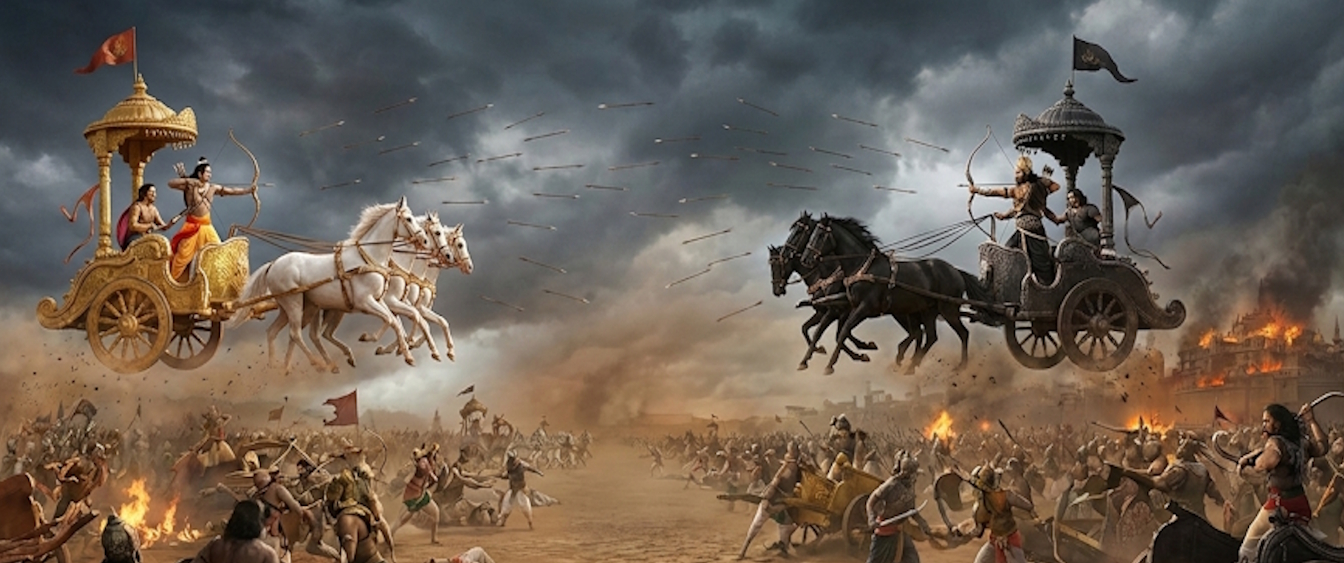
स कुम्भकर्णं सुरसङ्घमर्दनं महत्सु युद्धेषु पराजितश्रमम् ।
ननन्द हत्वा भरताग्रजो रणे महासुरं वृत्रमिवामराधिपः ॥६-६७-१९१॥
sa kumbhakarṇaṃ surasaṅghamardanaṃ mahatsu yuddheṣu parājiatśramam |
nananda hatvā bharatāgrajo raṇe mahāsuraṃ vṛtramivāmarādhipaḥ ॥6-67-191॥
Translation
Having slain Kumbhakarna, the tormentor of the hosts of Gods and one who never felt fatigue in great battles, the elder brother of Bharata (Shri Rama) rejoiced in the battle just as the Lord of the immortals (Indra) rejoiced after killing the great demon Vritra.
हिंदी अनुवाद
देवताओं के समूहों को पीड़ित करने वाले और बड़े-बड़े युद्धों में कभी न थकने वाले (अपराजित) उस कुम्भकर्ण का वध करके, भरत के बड़े भाई श्री राम युद्ध में वैसे ही आनंदित हुए जैसे वृत्रासुर को मारकर इन्द्र प्रसन्न हुए थे।
English Commentary
The sarga concludes with the 'Ananda' (joy) of Shri Rama. Addressing Him as 'Bharatagrajah' (elder brother of Bharata) evokes His familial glory and affection. The end of a 'Mahasura' (great demon) like Kumbhakarna was a supreme benevolent event for the world. The analogy to Indra and Vritrasura enshrines this battle as a victory of eternal values. A major chapter of unrighteousness concludes here.
हिंदी टीका
सर्ग का समापन श्री राम के 'आनंद' के साथ होता है। यहाँ उन्हें 'भरताग्रजः' (भरत के बड़े भाई) कहना उनके पारिवारिक गौरव और स्नेह को पुनः याद दिलाता है। कुम्भकर्ण जैसे 'महासुर' का अंत संसार के लिए एक महान कल्याणकारी घटना थी। इन्द्र और वृत्रासुर की उपमा इस युद्ध को सनातन मूल्यों की विजय के रूप में प्रतिष्ठित करती है। अधर्म का एक महान अध्याय यहाँ समाप्त हुआ।