Srimad Valmiki Ramayana
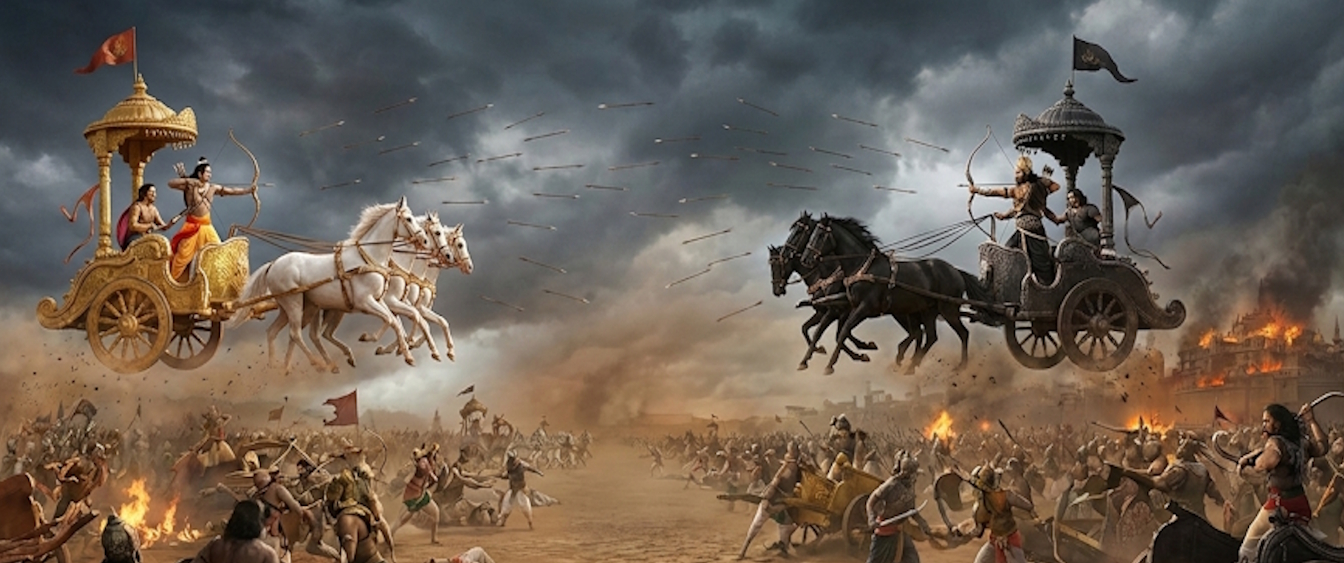
कुम्भकर्णं हतं दृष्ट्वा राघवेण महात्मना ।
राक्षसा राक्षसेन्द्राय रावणाय न्यवेदयन् ॥६-६८-१॥
kumbhakarṇaṃ hataṃ dṛṣṭvā rāghaveṇa mahātmanā |
rākṣasā rākṣasendrāya rāvaṇāya nyavedayan ॥6-68-1॥
Translation
Seeing Kumbhakarna killed by the great-souled Raghava (Shri Rama), the Rakshasas reported this news to the Lord of Rakshasas, Ravana.
हिंदी अनुवाद
महात्मा राघव (श्री राम) के द्वारा कुम्भकर्ण को मारा गया देखकर, राक्षसों ने राक्षसराज रावण को यह समाचार निवेदित किया।
English Commentary
This verse marks the beginning of the aftermath of Kumbhakarna's fall. The surviving soldiers return to their king with the devastating news. The use of the epithet 'Mahatmana' (great-souled) for Shri Rama by the narrator (or implicitly the perspective of the messengers) is significant. It acknowledges Shri Rama's spiritual superiority and righteousness, suggesting that even in the chaos of war, his divine nature was evident to the enemy forces.
हिंदी टीका
यह सर्ग कुम्भकर्ण के वध के बाद की दुखद घटनाओं का वर्णन करता है। युद्धभूमि से बचे हुए सैनिक अपने राजा के पास सबसे बुरी खबर लेकर पहुँचते हैं। यहाँ वाल्मीकि जी ने श्री राम के लिए 'महात्मना' (महान आत्मा वाले) विशेषण का प्रयोग किया है। यह अत्यंत महत्वपूर्ण है कि शत्रु पक्ष के सैनिक भी श्री राम के नैतिक और आध्यात्मिक प्रभाव को स्वीकार कर रहे हैं, भले ही वे उनके हाथों अपने सबसे बड़े योद्धा को खो चुके हों।