Srimad Valmiki Ramayana
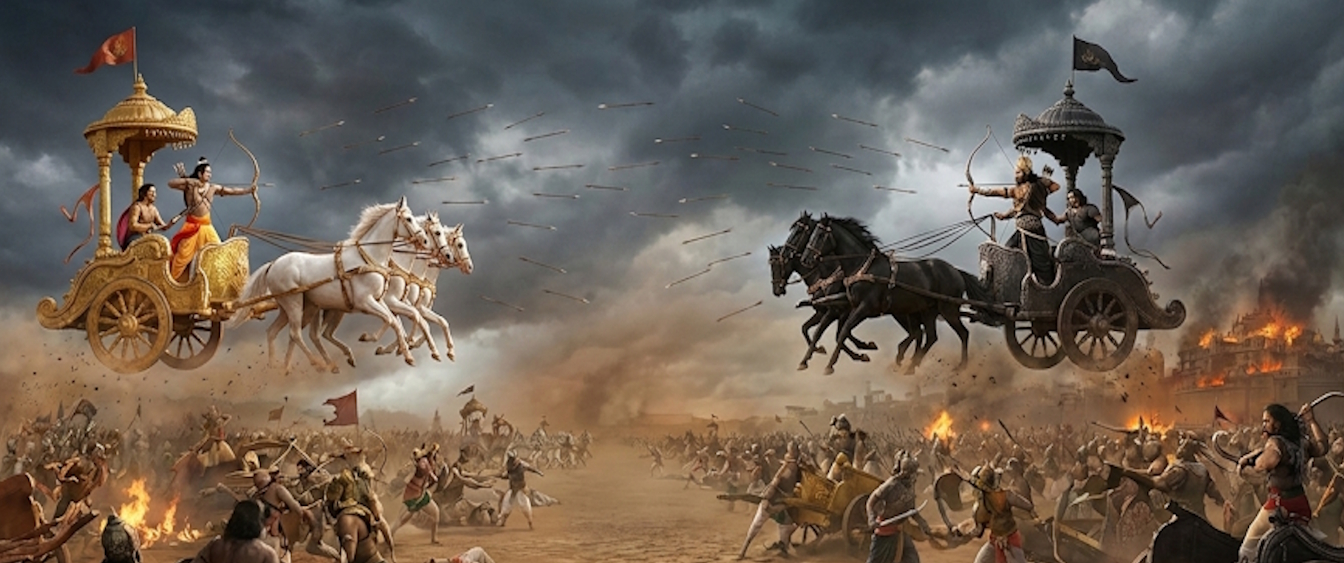
वज्रहस्तो यथा शक्रः पाशहस्त इवान्तकः ।
शूलहस्तो बभौ संख्ये कुम्भकर्णो महाबलः ॥६-६७-३९॥
vajrahasto yathā śakraḥ pāśahasta ivāntakaḥ |
śūlahasto babhau saṃkhye kumbhakarṇo mahābalaḥ ॥6-67-39॥
Translation
The mighty Kumbhakarna, with a trident in hand, shone in the battle like Indra with a thunderbolt or Yama with a noose.
हिंदी अनुवाद
हाथ में शूल लिए हुए महाबली कुम्भकर्ण युद्ध में वैसे ही सुशोभित हो रहे थे, जैसे हाथ में वज्र लिए इन्द्र या हाथ में पाश लिए यमराज।
English Commentary
Kumbhakarna is compared here to the supreme powers of the universe. The analogies of Indra (power) and Yama (death) grant his influence a divine scale of terror. His 'Shula' (trident) has become a symbol of total destruction. By acknowledging the magnitude of the foe, the verse elevates the stakes of the conflict to the highest level.
हिंदी टीका
यहाँ कुम्भकर्ण की तुलना सर्वोच्च शक्तियों से की गई है। इन्द्र (शक्ति) और यमराज (मृत्यु) की उपमा उसके प्रभाव को दैवीय स्तर की भयंकरता प्रदान करती है। उसका 'शूल' यहाँ केवल एक अस्त्र नहीं, बल्कि सम्पूर्ण विनाश का प्रतीक बन चुका है। यह श्लोक शत्रु की महत्ता को स्वीकार करते हुए युद्ध के स्तर को अत्यंत ऊँचा कर देता है।