Srimad Valmiki Ramayana
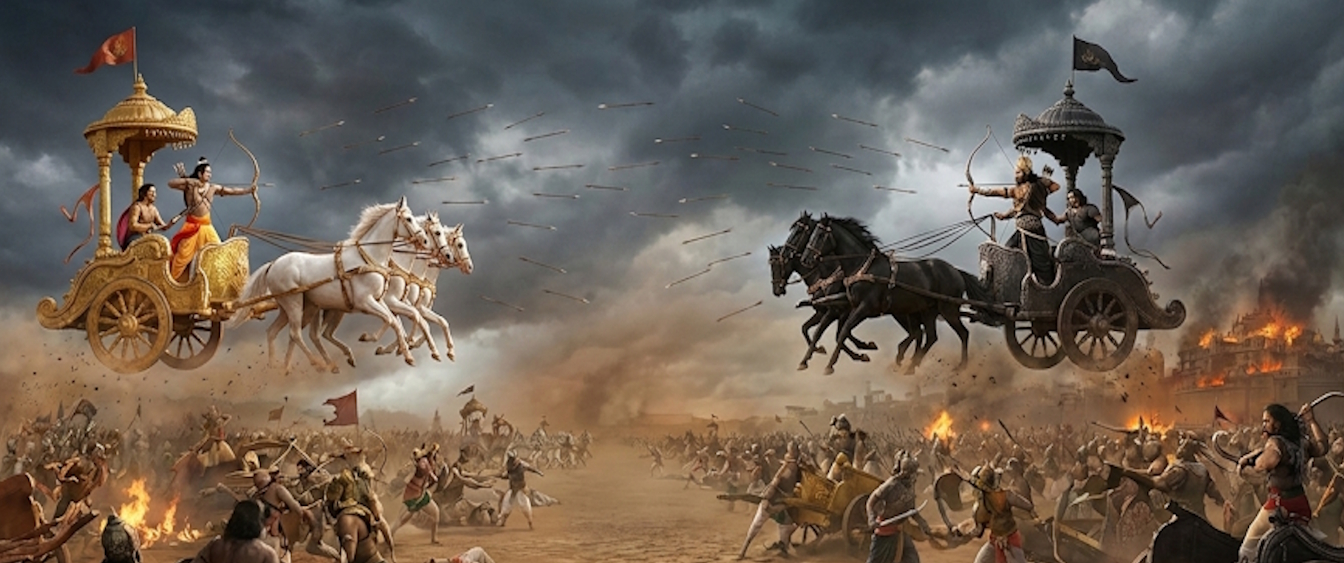
स कुम्भकर्णस्य वचो निशम्य व्याविध्य शैलं सहसा मुमोच ।
तेनाजघानोरसि कुम्भकर्णं शैलेन वज्राशनिसंनिभेन ॥६-६७-६०॥
sa kumbhakarṇasya vaco niśamya vyāvidhya śailaṃ sahasā mumoca |
tenājaghānorasi kumbhakarṇaṃ śailena vajrāśanisaṃnibhena ॥6-67-60॥
Translation
Hearing Kumbhakarna's words, Sugriva brandished the mountain and suddenly released it. He struck Kumbhakarna on the chest with that mountain which was like a thunderbolt.
हिंदी अनुवाद
कुम्भकर्ण के वचनों को सुनकर सुग्रीव ने पर्वत को घुमाया और अचानक छोड़ दिया। उन्होंने वज्र और बिजली के समान उस पर्वत से कुम्भकर्ण की छाती पर प्रहार किया।
English Commentary
Sugriva answered words with a strike. The thunderbolt analogy ('Vajra-ashani') depicts the hardness of the rock and the speed of the hurl. Striking the chest ('Urasi') is a direct assault on the enemy's life-force and courage. This was Sugriva's most powerful blow, intended to shake Kumbhakarna to his core.
हिंदी टीका
सुग्रीव ने बातों का उत्तर प्रहार से दिया। 'वज्र-अशनि' की उपमा पर्वत की कठोरता और प्रहार के वेग को दर्शाती है। छाती (उरसि) पर प्रहार करना शत्रु के प्राणों और उसके साहस पर सीधा आक्रमण है। यह सुग्रीव का सबसे शक्तिशाली वार था, जिसका उद्देश्य कुम्भकर्ण को जड़ से हिला देना था।