Srimad Valmiki Ramayana
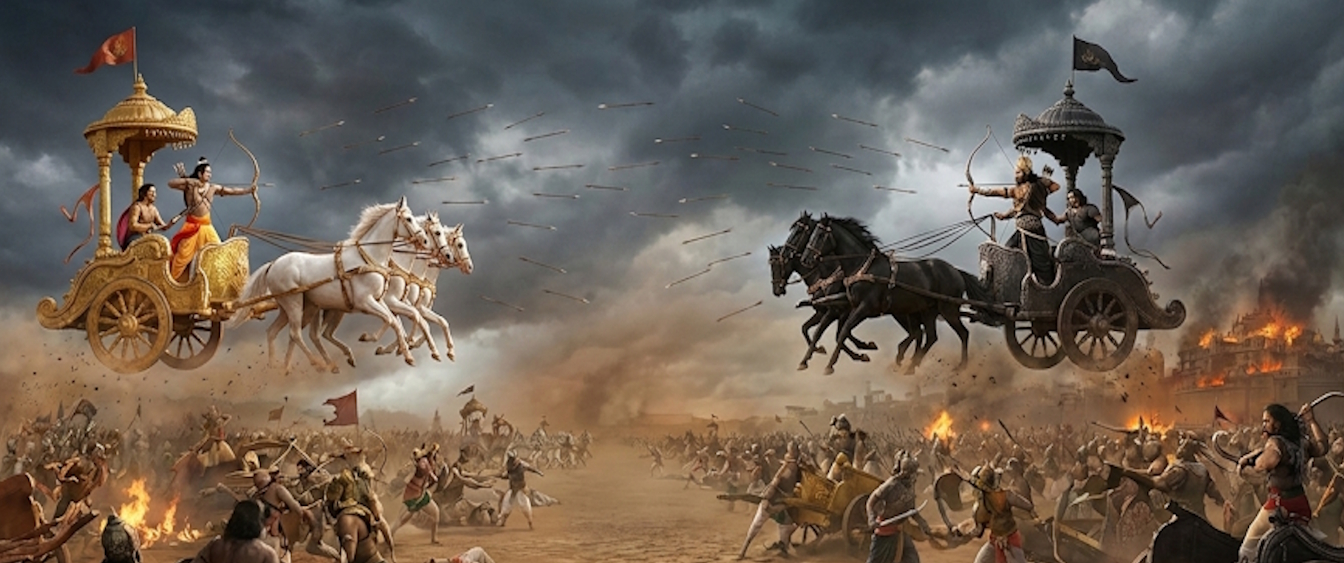
शूलं भग्नं हनुमता दृष्ट्वा वानरवाहिनी ।
हृष्टा ननाद बहुशः सर्वतश्चापि दुद्रुवे ॥६-६७-६५॥
śūlaṃ bhagnaṃ hanumatā dṛṣṭvā vānaravāhinī |
hṛṣṭā nanāda bahuśaḥ sarvataścāpi dudruve ॥6-67-65॥
Translation
Seeing the trident broken by Hanuman, the Vanara army roared repeatedly with joy and rushed (at the enemies) from all sides.
हिंदी अनुवाद
हनुमान जी द्वारा शूल को टूटा हुआ देख वानर सेना हर्षित होकर बार-बार गर्जना करने लगी और सब ओर से (राक्षसों पर) टूट पड़ी।
English Commentary
A single event changed the psychology of the war. The breaking of the trident became a sign of victory for the Vanaras. Their repeated roars ('Nanada bahushah') express their regained confidence. They are no longer just defending but are overwhelming the foes with an aggressive spirit. This reflects the positive impact of a leader's valor on the troops.
हिंदी टीका
एक ही घटना ने युद्ध का मनोविज्ञान बदल दिया। शूल का टूटना वानरों के लिए विजय का संकेत बन गया। 'ननाद बहुशः' (बार-बार गर्जना) उनके लौटे हुए आत्मविश्वास को प्रकट करती है। अब वे केवल रक्षा नहीं कर रहे, बल्कि 'दुद्रुवे' (दौड़ना/आक्रमण करना) के भाव से शत्रुओं पर हावी हो रहे हैं। यह नेतृत्व के शौर्य का सेना पर पड़ने वाला सकारात्मक प्रभाव है।