Srimad Valmiki Ramayana
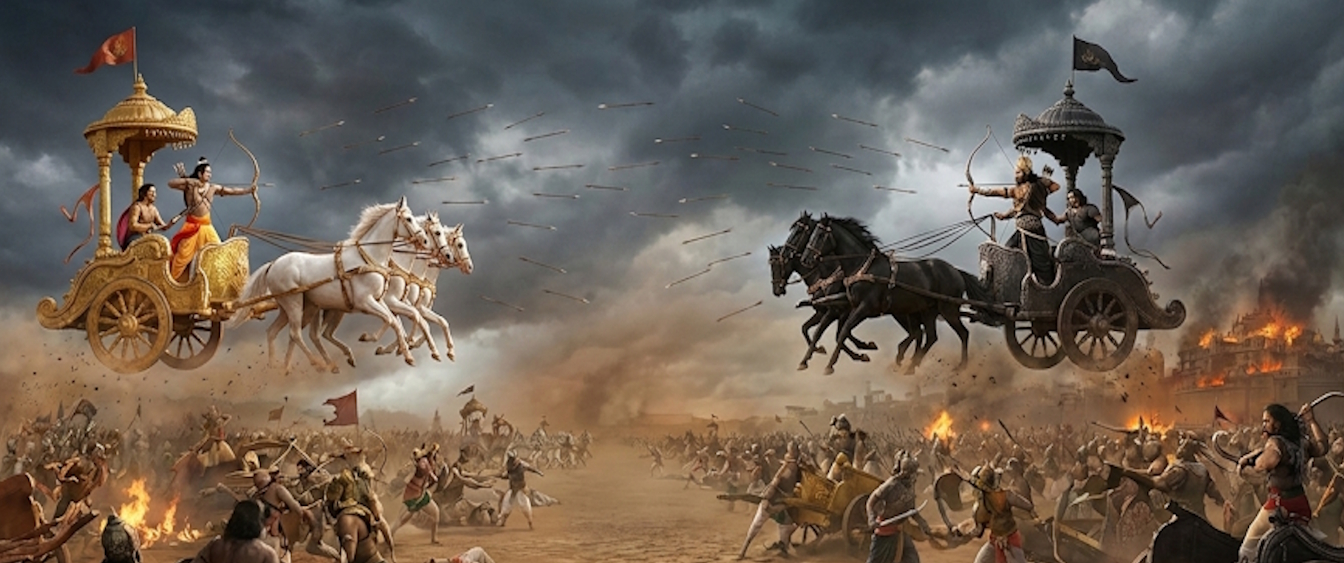
कुम्भकर्णस्तव भ्राता काकुत्स्थशरपीडितः ।
अगण्डभूतो विकृतो दावदग्ध इव द्रुमः ॥६-६८-५॥
kumbhakarṇastava bhrātā kākutsthaśarapīḍitaḥ |
agaṇḍabhūto vikṛto dāvadagdha iva drumaḥ ॥6-68-5॥
Translation
Your brother Kumbhakarna, tormented by Kakutstha's (Shri Rama's) arrows, lies disfigured with his nose and ears cut off, like a tree burnt by a forest fire.
हिंदी अनुवाद
आपके भाई कुम्भकर्ण काकुत्स्थ (श्री राम) के बाणों से पीड़ित होकर, नाक-कान कट जाने से विकृत (डरावने) और दावाग्नि से जले हुए वृक्ष की भाँति (निस्तेज होकर) पड़े हैं।
English Commentary
The imagery is stark and painful. Kumbhakarna is compared to a 'dava-dagdha drumah' (a tree scorched by forest fire), highlighting his charred, massive, and lifeless state. Mentions of disfigurement ('agandhabhuto' - strictly meaning having no cheeks/face due to mutilation) add to the horror, intended to invoke immediate grief and rage in Ravana.
हिंदी टीका
दूत रावण को वास्तविकता की पूरी क्रूरता बताते हैं। कुम्भकर्ण न केवल मरा है, बल्कि 'विकृत' (विरूप) भी हो गया है। उसकी तुलना 'दावदग्ध इव द्रुमः' (जंगल की आग में जले पेड़) से की गई है, जो उसके काले और विशाल शरीर के धराशायी होने का सटीक चित्रण है। यह समाचार रावण के हृदय को विदीर्ण करने वाला था।