Srimad Valmiki Ramayana
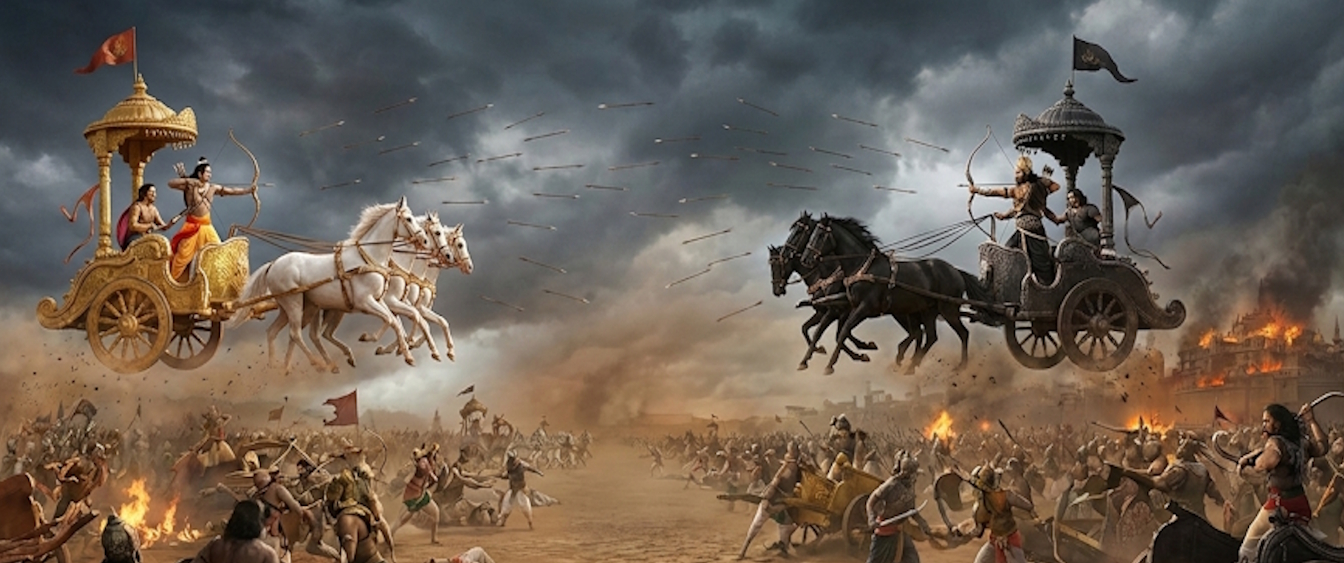
दिशो दश समुद्रं च पृथिवीं चान्वनादयत् ।
विशल्यौ तु महात्मानौ तावुभौ रामलक्ष्मणौ ॥६-७५-३३॥
diśo daśa samudraṃ ca pṛthivīṃ cānvanādayat |
viśalyau tu mahātmānau tāvubhau rāmalakṣmaṇau ॥6-75-33॥
Translation
Resounded through all ten directions, the ocean, and the earth. Meanwhile, the two high-souled ones, Shri Rama and Lakshmana, who were now free from their wounds—
हिंदी अनुवाद
दसों दिशाओं, समुद्र और पृथ्वी को गुँजा रहा था। उधर महात्मा श्री राम और लक्ष्मण, जो अब घावों से मुक्त (विशल्य) हो चुके थे—
English Commentary
Shri Rama and Shri Lakshmana becoming 'Vishalya' (free from the pain of arrows/wounds) is the greatest turning point of the war. The arrival of Garuda had liberated them from the Naga-pasha. The term 'Mahatmanau' re-establishes Their divine dignity. They were now ready to lead the battle with Their full splendor. This verse symbolizes the rise of new hope and power.
हिंदी टीका
श्री राम और श्री लक्ष्मण का 'विशल्य' (बाणों की पीड़ा से मुक्त) होना युद्ध का सबसे बड़ा मोड़ है। गरुड़ के आगमन ने उन्हें नागपाश से मुक्त कर दिया था। 'महात्मानौ' शब्द उनकी दिव्य गरिमा को पुनः स्थापित करता है। वे अब अपने पूर्ण तेज के साथ युद्ध का नेतृत्व करने के लिए तैयार थे। यह श्लोक नई आशा और शक्ति के उदय का प्रतीक है।