Srimad Valmiki Ramayana
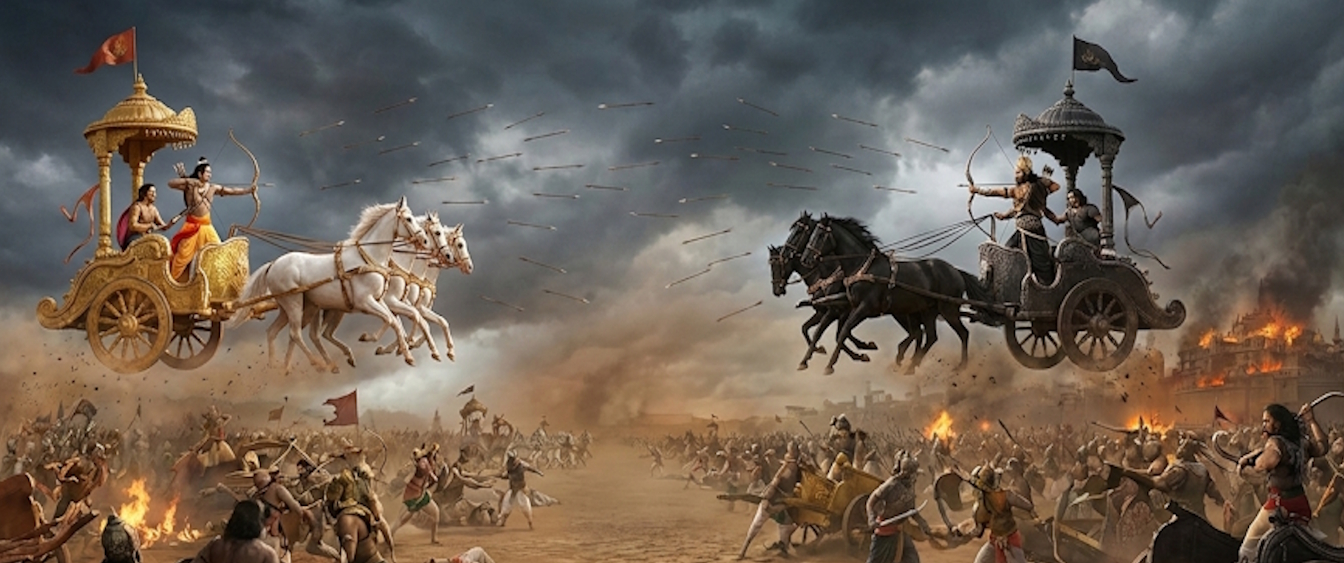
अद्य शूलनिपातैश्च वानराणां महाचमूम् ।
प्रदहिष्यामि सम्प्राप्तः शुष्केन्धनमिवानलः ॥६-७८-१२॥
adya śūlanipātaiśca vānarāṇāṃ mahācamūm |
pradahiṣyāmi samprāptaḥ śuṣkendhanamivānalaḥ ॥6-78-12॥
Translation
Arriving at the battlefield today, I shall burn down the great army of Vanaras with the strikes of my trident, just as fire burns dry fuel.
हिंदी अनुवाद
आज रणभूमि में पहुँचकर मैं शूलों के प्रहार से वानरों की विशाल सेना को वैसे ही भस्म कर दूँगा जैसे अग्नि सूखे ईंधन को जला देती है।
English Commentary
Using a vivid metaphor, Makaraksha compares the Vanara army to 'dry wood' (shushka-indhana) and himself to 'fire.' This imagery conveys his intention of total destruction with ease. It highlights his reliance on the Shula (trident/spear) as his weapon of choice. The verse captures the aggressive and destructive mood of the marching commander.
हिंदी टीका
मकराक्ष यहाँ एक उपमा (अलंकार) का प्रयोग करता है—वानर सेना 'सूखी लकड़ी' है और वह स्वयं 'अग्नि' है। उसका मुख्य आयुध 'शूल' (त्रिशूल या भाला) प्रतीत होता है। यह कथन उसकी क्रूरता और संहारक मंशा को स्पष्ट करता है। वह वानरों को तुच्छ और कमजोर समझ रहा है, जिन्हें नष्ट करना उसके लिए बाएं हाथ का खेल है।