Srimad Valmiki Ramayana
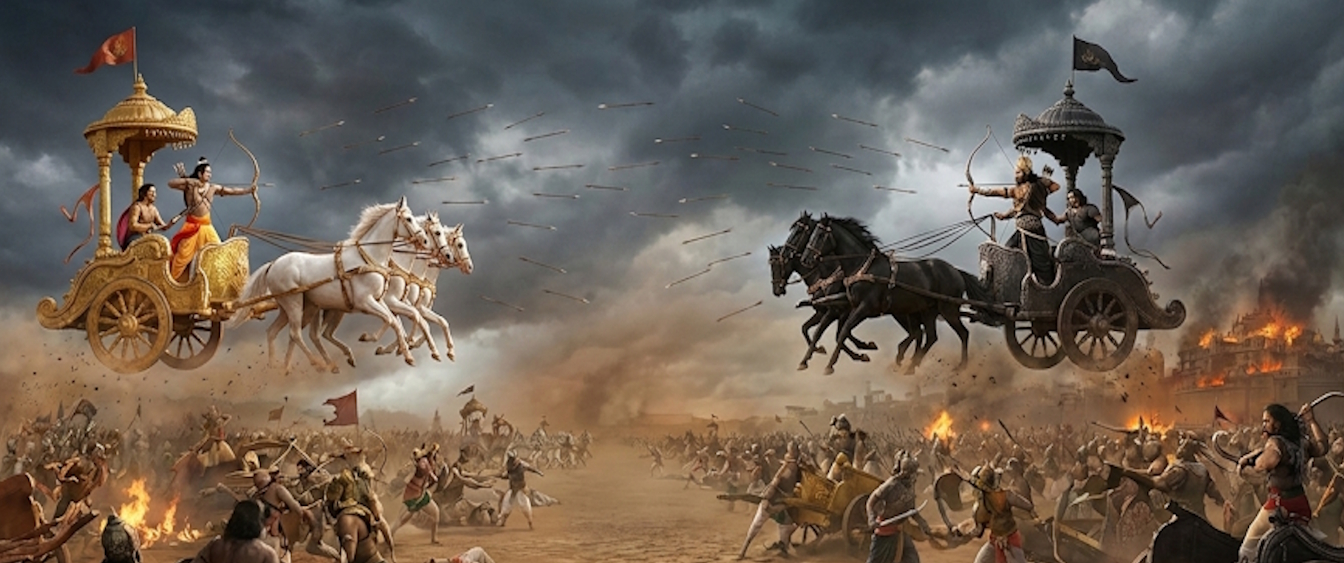
प्रभ्रष्टो ऽथ करात्तस्य प्रतोदः सारथेस्तदा ।
पपात सहसा चैव ध्वजस्तस्य च रक्षसः ॥६-७८-१७॥
prabhraṣṭo'tha karāttasya pratodaḥ sārathestadā |
papāta sahasā caiva dhvajastasya ca rakṣasaḥ ॥6-78-17॥
Translation
Just then, the whip slipped and fell from the charioteer's hand, and the flag of that Rakshasa also suddenly fell down.
हिंदी अनुवाद
उसी समय सारथी के हाथ से चाबुक छूटकर गिर पड़ा और उस राक्षस (मकराक्ष) का ध्वज भी अचानक गिर गया।
English Commentary
In Indian epics, omens (nimitta) play a crucial role in foreshadowing events. The whip slipping from the charioteer's hand symbolizes a loss of control. Even more significant is the sudden fall of the flag (dhvaja), which represents the warrior's honor and identity. These are classic bad omens indicating that the divine will is against Makaraksha and his defeat is imminent.
हिंदी टीका
महाकाव्यों में अपशकुनों (निमित्त) का बहुत महत्व है। युद्ध के लिए निकलते ही सारथी के हाथ से चाबुक का गिरना नियंत्रण खोने का संकेत है। ध्वज का गिरना अत्यंत अशुभ माना जाता है, जो यश और कीर्ति के पतन तथा आसन्न पराजय का सूचक है। देवता और नियति मकराक्ष को चेतावनी दे रहे थे, किन्तु विनाशकाल में बुद्धि विपरीत हो जाती है।